Flags of the world
All 196 national flags, filterable by continent, colour, layout and symbol. Below the gallery: which colours and symbols are most common, the flag families that share a history, why flags come in different shapes, and which designs are the oldest and newest.
Flags reviewed 12 November 2026 · Sources & methodology
All 196 national flags
Combine filters to narrow the gallery: for example, African flags with a star, or European tricolours. A colour counts when it covers at least 6.5% of the flag, so a thin border or a detail inside a coat of arms does not. Filters are kept in the address bar, so a filtered view can be shared.
All 196 national flags, alphabetically. Select a flag for its meaning, history, colours and downloads.
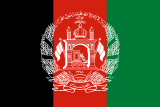 Afghanistan
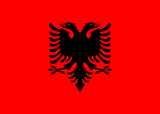 Albania
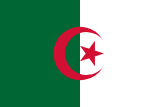 Algeria
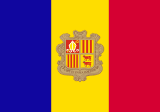 Andorra
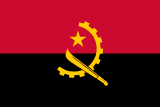 Angola
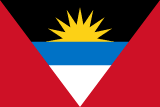 Antigua and Barbuda
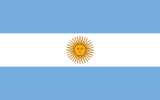 Argentina
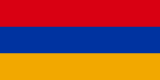 Armenia
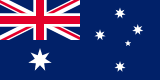 Australia
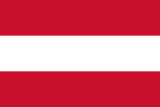 Austria
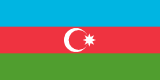 Azerbaijan
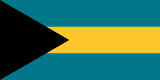 Bahamas
 Bahrain
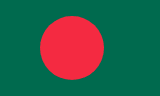 Bangladesh
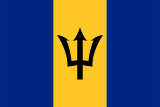 Barbados
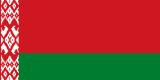 Belarus
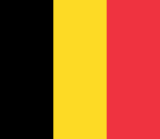 Belgium
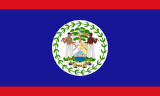 Belize
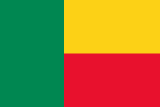 Benin
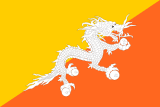 Bhutan
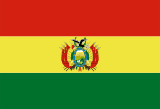 Bolivia
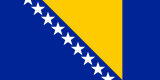 Bosnia and Herzegovina
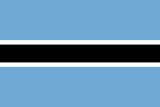 Botswana
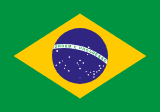 Brazil
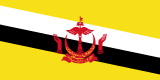 Brunei
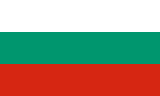 Bulgaria
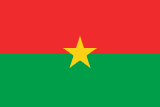 Burkina Faso
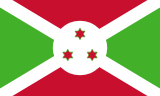 Burundi
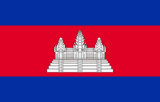 Cambodia
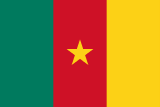 Cameroon
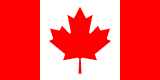 Canada
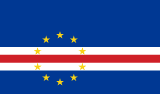 Cape Verde
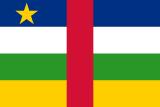 Central African Republic
 Chad
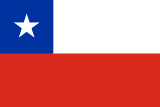 Chile
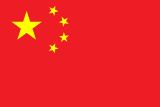 China
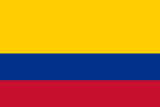 Colombia
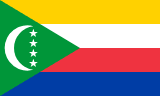 Comoros
 Costa Rica
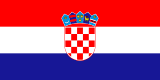 Croatia
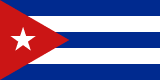 Cuba
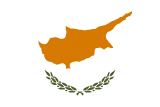 Cyprus
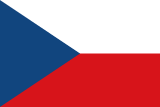 Czech Republic
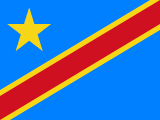 Democratic Republic of the Congo
 Denmark
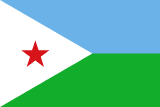 Djibouti
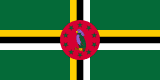 Dominica
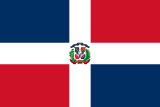 Dominican Republic
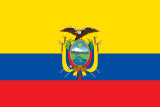 Ecuador
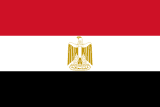 Egypt
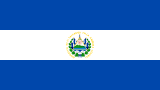 El Salvador
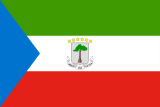 Equatorial Guinea
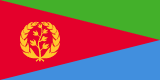 Eritrea
 Estonia
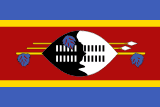 Eswatini
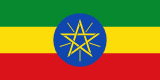 Ethiopia
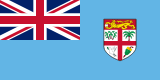 Fiji
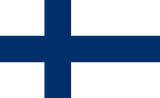 Finland
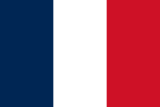 France
 Gabon
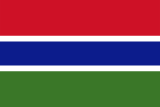 Gambia
 Georgia
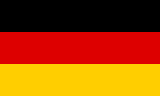 Germany
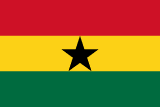 Ghana
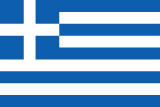 Greece
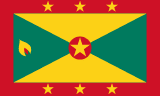 Grenada
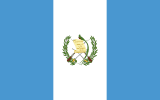 Guatemala
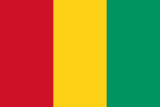 Guinea
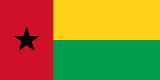 Guinea-Bissau
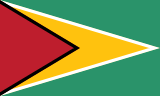 Guyana
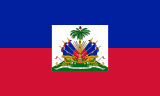 Haiti
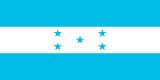 Honduras
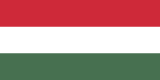 Hungary
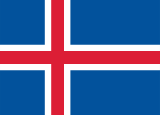 Iceland
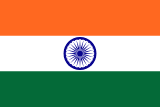 India
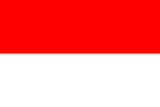 Indonesia
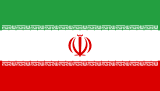 Iran
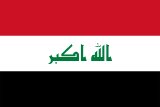 Iraq
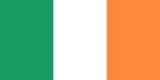 Ireland
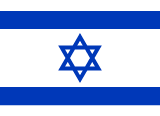 Israel
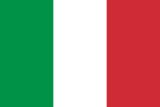 Italy
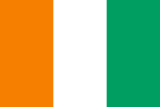 Ivory Coast
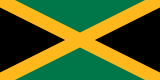 Jamaica
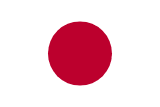 Japan
 Jordan
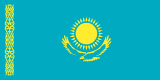 Kazakhstan
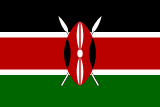 Kenya
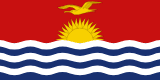 Kiribati
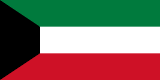 Kuwait
 Kyrgyzstan
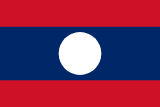 Laos
 Latvia
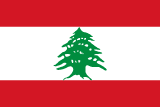 Lebanon
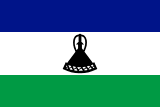 Lesotho
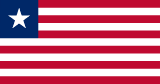 Liberia
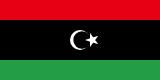 Libya
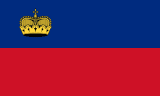 Liechtenstein
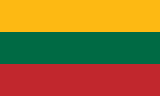 Lithuania
 Luxembourg
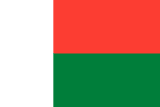 Madagascar
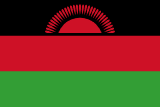 Malawi
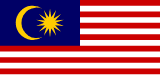 Malaysia
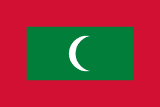 Maldives
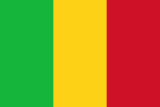 Mali
 Malta
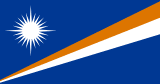 Marshall Islands
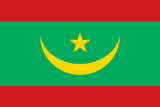 Mauritania
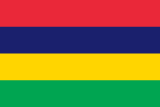 Mauritius
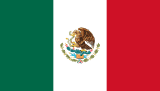 Mexico
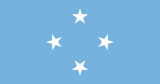 Micronesia
 Moldova
 Monaco
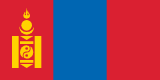 Mongolia
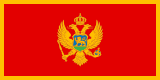 Montenegro
 Morocco
 Mozambique
 Myanmar
 Namibia
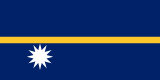 Nauru
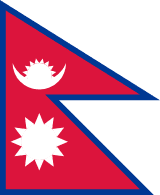 Nepal
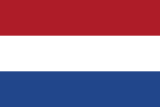 Netherlands
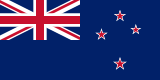 New Zealand
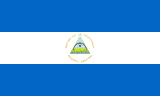 Nicaragua
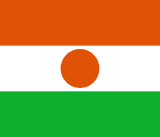 Niger
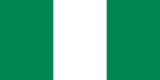 Nigeria
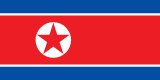 North Korea
 North Macedonia
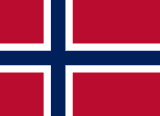 Norway
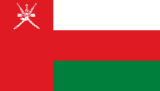 Oman
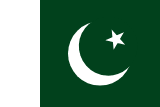 Pakistan
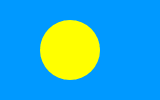 Palau
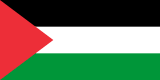 Palestine
 Panama
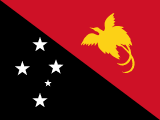 Papua New Guinea
 Paraguay
 Peru
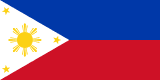 Philippines
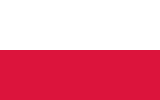 Poland
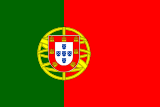 Portugal
 Qatar
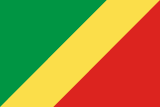 Republic of the Congo
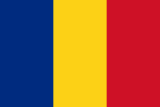 Romania
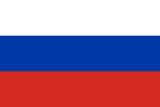 Russia
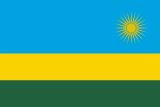 Rwanda
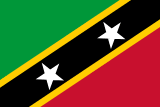 Saint Kitts and Nevis
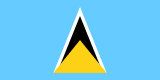 Saint Lucia
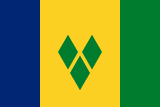 Saint Vincent and the Grenadines
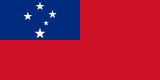 Samoa
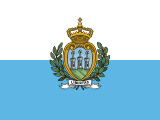 San Marino
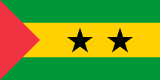 Sao Tome and Principe
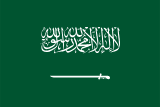 Saudi Arabia
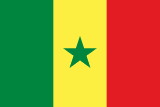 Senegal
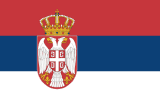 Serbia
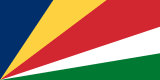 Seychelles
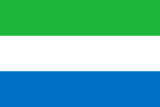 Sierra Leone
 Singapore
 Slovakia
 Slovenia
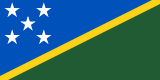 Solomon Islands
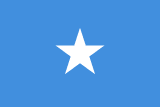 Somalia
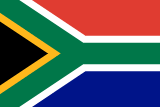 South Africa
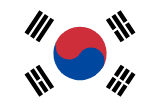 South Korea
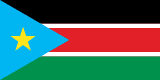 South Sudan
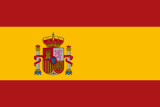 Spain
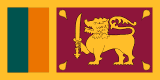 Sri Lanka
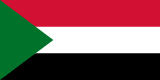 Sudan
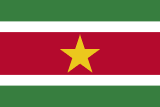 Suriname
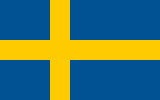 Sweden
 Switzerland
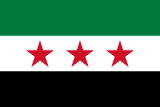 Syria
 Taiwan
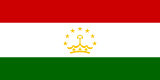 Tajikistan
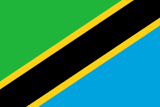 Tanzania
 Thailand
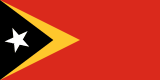 Timor-Leste
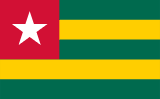 Togo
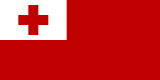 Tonga
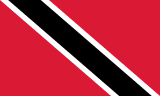 Trinidad and Tobago
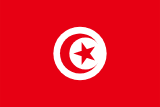 Tunisia
 Turkey
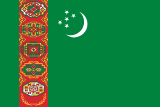 Turkmenistan
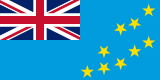 Tuvalu
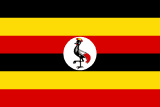 Uganda
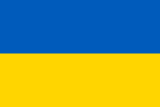 Ukraine
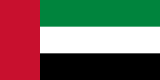 United Arab Emirates
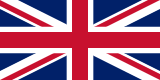 United Kingdom
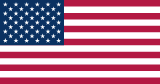 United States
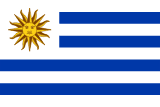 Uruguay
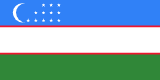 Uzbekistan
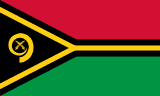 Vanuatu
 Vatican City
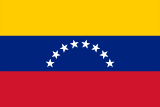 Venezuela
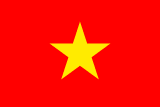 Vietnam
 Yemen
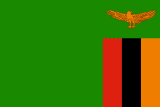 Zambia
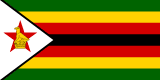 Zimbabwe
No flag matches all of these filters. Try removing one, or reset.
Which colours appear most often?
Red is the most widespread flag colour by a clear margin: it fills a significant part of 146 of the 196 flags.White (111), blue (incl. light blue) (96) and green (80) follow. Purple is absent as a main colour; the nearest cases are the dark reds of Qatar and Latvia, which measure as maroon and are grouped with red here. Only 50 flags have no significant red at all.
Flags containing each colour family, out of 196. A flag can count in several rows.
Most flags are built from three main colours (99 flags), followed by two (60) and four (19). The 31 flags whose main colours are exactly red, white and blue range from France and the Netherlands to Cuba, Thailand and Taiwan—one reason those colours dominate any quick “which flag is this?” search. Among the 60 two-colour flags, Indonesia, Monaco and Poland are a classic trap: all are plain red and white bicolours that differ only in stripe order or proportions; see red and white flags for that group.
Colour meanings are set country by country and should not be generalised from one flag to another: the same green can stand for Islam, for agriculture or for forests, depending on the flag law or tradition behind it. Each country’s flag page gives its own explanation. Use the colour filter above to list every flag with a given colour.
Stripes, crosses, stars and crescents
Horizontal stripes are the most common layout (73 flags), well ahead of vertical stripes (26). 54 flags are tricolours—three bands in three different colours—of which 18 run vertically in the style of the French tricolore and 36 horizontally, like Germany’s. Hoist triangles and chevrons (29 flags) are especially common in Africa, the Caribbean and the Arab world.
| Layout | Flags | Examples |
|---|---|---|
| Horizontal stripes | 73 | Angola, Argentina, Armenia, Austria |
| Triangle or band at the hoist | 29 | Bahamas, Bahrain, Belarus, Benin |
| Vertical stripes | 26 | Afghanistan, Algeria, Andorra, Barbados |
| Plain field with a symbol | 19 | Albania, Bangladesh, China, Cyprus |
| Canton | 14 | Australia, Chile, Fiji, Greece |
| Cross or saltire | 12 | Burundi, Denmark, Dominica, Dominican Republic |
| Other layouts | 12 | Antigua and Barbuda, Bosnia and Herzegovina, Brazil, Grenada |
| Diagonal | 11 | Bhutan, Brunei, Democratic Republic of the Congo, Marshall Islands |
Stars are the most common symbol: 64 flags show at least one. They range from the single star of Vietnam, Somalia or Morocco’s pentagram to the 50 of the United States. Crescents appear on 15 flags. Most belong to Muslim-majority countries, from Türkiye and Pakistan to Malaysia and the Comoros, but not all: Singapore’s crescent stands for a young nation on the rise, and Nepal’s moon is paired with a sun. 62 flags carry no symbol at all and rely on colour and layout alone.
Symbols are counted only when clearly visible on the flag. “Bird or animal” means the main charge or the dominant figure of an emblem (Albania’s eagle, Bhutan’s dragon), not small figures inside a coat of arms. Bolivia, Costa Rica, El Salvador and Nicaragua are shown with the arms of their state flags, as used on this site.
Flag families: shared colours, shared history
Many flags resemble each other on purpose. Colours borrowed from a liberation movement, a federation or an older empire signal a political or cultural link. Recognising the family is often the fastest way to narrow down an unknown flag.
Pan-African colours: green, gold and red
Ethiopia, which was never colonised except for the Italian occupation of 1936–1941, used green, yellow and red long before the wave of independence. Ghana adopted the colours in 1957 as a symbol of African unity, and many states that became independent around 1960 followed. A second pan-African set, the red, black and green of Marcus Garvey’s Universal Negro Improvement Association (1920), appears in the flags of Kenya, Malawi and South Sudan.
Pan-Arab colours: red, white, black and green
The flag of the Arab Revolt of 1916 combined black, green and white stripes with a red hoist triangle. Its descendants either keep the triangle (Jordan, Palestine, Sudan) or rearrange the four colours into stripes and hoist bands (Kuwait, the United Arab Emirates). Egypt, Iraq and Yemen use a red–white–black horizontal triband, and Syria’s restored independence flag keeps black and green with three red stars.
Pan-Slavic colours: white, blue and red
Red, white and blue were adopted as pan-Slavic colours at the Prague Slavic Congress of 1848, modelled on the Russian tricolour. Several Slavic states use them with a coat of arms to tell otherwise similar stripes apart—compare Slovakia, Slovenia and Russia. Not every Slavic country follows the pattern: Poland, Ukraine, Bulgaria and Belarus use other colours.
The Nordic cross
All five Nordic states fly an off-centre cross whose upright sits closer to the hoist. Denmark’s Dannebrog is the model; Sweden, Norway, Finland and Iceland adapted it with their own colours. Norway and Iceland add a second, bordered cross.
The Southern Cross
The Crux constellation, visible only from the southern hemisphere, appears on five national flags. New Zealand shows four red stars; Australia, Papua New Guinea and Samoa show five white stars; Brazil places Crux among the 27 stars on its blue globe, one for each federal unit.
The Union Jack in the canton
Four sovereign states other than the United Kingdom keep the Union Jack in the upper hoist. Many British Overseas Territories do the same, which is why Bermuda, the Cayman Islands or the Falklands can look like national flags.
Gran Colombia: yellow, blue and red
Colombia, Ecuador and Venezuela inherited the yellow, blue and red of Francisco de Miranda’s flag and of Gran Colombia (1819–1831). Colombia and Ecuador make the yellow band twice as deep as the others; Venezuela uses equal bands with an arc of eight stars.
Central America: blue, white, blue
The blue–white–blue stripes of the Federal Republic of Central America (1823–1841) survive in Honduras, El Salvador and Nicaragua; Guatemala turned them vertical, and Costa Rica added a red centre stripe in 1848.
Shapes and proportions
Flags are not all the same shape. Of the 187 flags with an official ratio recorded in Wikidata, 85 use 2:3 (height to length), 52 use 1:2 and 16 use 3:5; the remaining 34 use 20 other ratios. Galleries that crop every flag to the same box—as most flag sites do—hide these differences. The images on this page keep their own proportions.
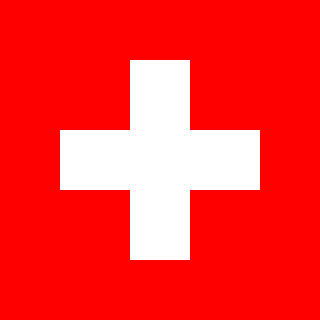
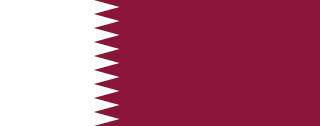
The squarest and the longest rectangles: Switzerland (1:1) and Qatar (11:28).
- Square: Switzerland and Vatican City are the only two square national flags.
- Longest: Qatar’s 11:28 flag is the longest national flag, more than two and a half times as long as it is high.
- Not a rectangle: Nepal’s flag of two stacked pennants is the only non-rectangular national flag; its construction is defined step by step in the constitution.
- Unusual ratios: Belgium’s official flag is 13:15, Denmark’s 28:37 and El Salvador’s 189:335. North Korea changed its flag from 1:2 to 20:33 in its March 2026 constitution; Wikidata and our image still show the earlier 1:2 shape.
| Ratio | Flags | Countries |
|---|---|---|
| 2:3 | 85 | Antigua and Barbuda, Angola, Austria, Barbados, Burkina Faso, Benin and 79 more |
| 1:2 | 52 | United Arab Emirates, Armenia, Australia, Azerbaijan, Bosnia and Herzegovina, Brunei and 46 more |
| 3:5 | 16 | Bangladesh, Bulgaria, Bahrain, Burundi, Costa Rica, Germany and 10 more |
| 5:8 | 5 | Argentina, Guatemala, Poland, Palau, Sweden |
| 3:4 | 4 | Democratic Republic of the Congo, Gabon, Papua New Guinea, San Marino |
| 1:1.9 | 4 | Micronesia, Liberia, Marshall Islands, United States |
| 4:7 | 3 | Iran, Mexico, Oman |
| 7:10 | 2 | Andorra, Brazil |
| 8:11 | 2 | Israel, Norway |
| 5:7 | 1 | Albania |
| 13:15 | 1 | Belgium |
| 15:22 | 1 | Bolivia |
| 28:37 | 1 | Denmark |
| 189:335 | 1 | El Salvador |
| 7:11 | 1 | Estonia |
| 11:18 | 1 | Finland |
| 18:25 | 1 | Iceland |
| 4:5 | 1 | Monaco |
| 6:7 | 1 | Niger |
| 11:20 | 1 | Paraguay |
| 11:28 | 1 | Qatar |
| 1:1 | 1 | Switzerland |
| 1:1.618 | 1 | Togo |
No ratio is recorded for Afghanistan, Belize, Cape Verde, United Kingdom, Cambodia, Nepal, Syria, Vatican City, Vanuatu. Nepal’s flag has no ratio because it is not a rectangle; the United Kingdom’s national flag is used at both 1:2 and 3:5.
The oldest and newest national flags
Claims about the “oldest flag” depend on whether a legend, the first written record or continuous official use is meant. The defensible answer is Denmark: Guinness World Records recognises the Dannebrog as the oldest continuously used national flag, dating the current design to 1625 and the square-ended shape to 1748. The story that the flag fell from the sky during a battle in 1219 is a legend; the white cross on red is documented from the 14th century.
- Austria: red–white–red arms were adopted by Duke Friedrich II in 1230 and appear in a coloured document of 1232. The tale of a blood-soaked tunic at the siege of Acre in 1191 is a later legend.
- Latvia: the Livonian Rhymed Chronicle describes a red banner with a white stripe around 1279–1280, the first credible mention. The modern flag was used at the proclamation of the state in 1918, fixed by law in the early 1920s and restored on 27 February 1990.
- Netherlands: the orange–white–blue Prince’s flag of the Dutch Revolt (late 16th century) later became red, white and blue. The colours were confirmed by royal decree only on 19 February 1937.
At the other end, these national flags were newly adopted or changed in design since 2000. Changes of shade or official colour specification (Albania 2002, Italy 2006, Honduras since 2022) are not listed.
| Date | Country | What changed |
|---|---|---|
| March 2026 | North Korea | Constitutional amendment changed the proportions from 1:2 to 20:33; no official construction sheet has been published. |
| Dec 2024 / 13 Mar 2025 | Syria | Green–white–black independence flag with three red stars, in use since the fall of the Assad government and formally adopted in the interim constitution. |
| 22 Dec 2023 | Kyrgyzstan | The sun’s 40 wavy rays were straightened; hoisted from 1 January 2024. |
| 28 Nov 2017 | Mauritania | Red stripes added at top and bottom after the August 2017 referendum. |
| 28 May 2012 | Malawi | The original 1964 rising-sun flag was restored after the 2010 full-sun design. |
| 2011 | Libya | The plain green flag of 1977–2011, then the only single-colour national flag, was replaced by the restored 1951 flag. |
| 9 Jul 2011 | South Sudan | The former regional flag of Southern Sudan became the national flag at independence. |
| 21 Oct 2010 | Myanmar | Yellow–green–red tricolour with a large white star replaced the socialist-era flag. |
| 29 Jan 2008 | Iraq | The three green stars were removed and the takbir rewritten in Kufic script. |
| 4 Oct 2006 | Lesotho | Blue–white–green flag with a black Basotho hat, for the 40th anniversary of independence. |
| 12 Mar 2006 | Venezuela | An eighth star added to the arc. |
| 18 Feb 2006 | Democratic Republic of the Congo | Sky-blue flag with a yellow star and a red diagonal stripe, under the new constitution. |
| Aug 2004 | Serbia | Red–blue–white tricolour with the coat of arms (arms redrawn in 2010). |
| 15 Sep 2004 | Montenegro | Red flag with a gold border and the double-headed eagle; kept at independence in 2006. |
| 14 Jan 2004 | Georgia | The five-cross flag replaced the 1990 flag after the Rose Revolution. |
| 20 May 2002 | Timor-Leste | Flag raised at independence. |
| 14 Feb 2002 | Bahrain | The serrated edge reduced to five white points. |
| 23 Dec 2001 | Comoros | New four-stripe flag with a green triangle, crescent and four stars. |
| 25 Oct 2001 | Rwanda | Blue–yellow–green flag with a sun replaced the red flag associated with the 1994 genocide. |
| 24 Jan 2001 | Turkmenistan | Ratio changed to 2:3 and the carpet guls redrawn. |
Afghanistan is a special case. Since August 2021 the Taliban authorities have used a white flag bearing the black shahada, but they are not recognised at the United Nations, where Afghanistan’s seat is still held by a diplomat appointed by the former government. For that reason this gallery and the Afghan flag pageshow the republic’s black–red–green tricolour.
Flags by continent, quizzes and comparisons
| Continent | Flags | Gallery | Quiz |
|---|---|---|---|
| Africa | 54 | Flags of Africa | Africa flag quiz |
| Americas | 35 | Flags of Americas | Americas flag quiz |
| Asia | 46 | Flags of Asia | Asia flag quiz |
| Europe | 47 | Flags of Europe | Europe flag quiz |
| Oceania | 14 | Flags of Oceania | Oceania flag quiz |
| World | 196 | This page | World flag quiz |
Two guides go deeper into identification: flags that look alike compares ten easily confused pairs such as Chad and Romania or Indonesia and Monaco, and red and white flags sorts that large group by pattern.
Frequently asked questions
How many national flags are there?
This page shows 196 national flags, one for each country in our directory: the 193 UN member states, Vatican City, Palestine and Taiwan. Dependent territories such as Greenland, Puerto Rico or Bermuda have their own flags but are not counted as national flags of sovereign countries here.
What is the most common colour on national flags?
Red. It covers at least 6.5% of the area in 146 of 196 flags in our measurements, followed by white (111) and blue (incl. light blue) (96). Only 50 flags have no significant red.
Which flag is not a rectangle?
Nepal’s flag, two stacked pennants, is the only national flag that is not a rectangle or square. Switzerland and Vatican City are the two square national flags.
How many flags have stars?
64 of 196 national flags show at least one star, from a single star (Vietnam, Somalia) to the 50 stars of the United States. 15 flags show a crescent.
Which flags have the Union Jack?
Australia, Fiji, New Zealand and Tuvalu, besides the United Kingdom itself. Several British Overseas Territories also include it.
Sources & methodology
The gallery covers the 196 countries in our directory and uses the same flag images as each country’s flag page. Colour families come from a pixel measurement of those images: the most common colours covering at least 6.5% of the area each, named by hue and lightness, with maroon counted as red and light blue as blue. Layouts and symbols are an editorial classification made by eye; each flag has exactly one layout and any number of symbols. Ratios are official proportions recorded in Wikidata and are not measured from the images.
- Flag artwork used across this site
Locally hosted national-flag images. Colour shares are measured from these images; layouts and symbols were classified by eye from the same images on 12 November 2026.
- Wikidata: flag aspect ratios (P2061)
Official height-to-length ratios for 187 flags, retrieved 2026-10-26 and checked against the images. Flags without a recorded ratio are listed rather than guessed.
- Guinness World Records: oldest continuously used national flag
Denmark; current design adopted 1625, square-ended shape 1748. Accessed 12 November 2026.
- Guinness World Records: longest national flag (official aspect ratio)
Qatar, 11:28, the only national flag more than twice as long as it is high. Accessed 12 November 2026.
- Flags of the World (FOTW): national flag histories
Adoption dates in the table of recent changes (country pages last modified 2023–2026), Austria’s 1230/1232 arms, the Dutch Prince’s flag and 1937 decree, Nepal as the only non-rectangular flag, Switzerland and Vatican City as the square flags, and Paraguay’s two-sided design. Accessed 12 November 2026.
- Latvian Institute: the Latvian flag
The Livonian Rhymed Chronicle as the first credible mention (published 28 November 2025).
- ConstitutionNet: North Korea’s 2026 constitutional revision
The March 2026 revision, including the new flag proportions (7 May 2026).
- Rudaw: Syria’s independence flag (12 December 2024) and FOTW: Syria
De facto use from December 2024; Article 6 of the Constitutional Declaration of 13 March 2025.
- AKIpress: Kyrgyzstan’s flag law signed (22 December 2023)
Straight sun rays replacing the wavy ones.
- KabulNow: UN says no movement on Afghanistan’s seat (August 2026)
Afghanistan’s UN seat remains with a diplomat appointed by the former government.
- Swiss Confederation: the Swiss flag
The square national flag and its white cross.
Country lists follow our 196-profile directory convention: 193 UN members, Vatican City, Palestine and Taiwan. Dependent territories are identified separately. A missing observation never means zero.