Flag of Slovakia
Slovak Republic

Flag details
- Proportions
- 2:3 height : width
- ISO code
- SK / SVK
- Emoji
- Unicode
- U+1F1F8 U+1F1F0
Flag colors
- red#ee1c2538%
- white#ffffff33%
- blue#0b4ea226%
Share of the flag's surface, measured from the image. Names describe the measured shade.
Download the flag
Meaning and history of the flag of Slovakia
The flag of Slovakia was adopted on September 1, 1992, shortly before the dissolution of Czechoslovakia. It has three equal horizontal stripes of white, blue, and red, the pan-Slavic colors shared by numerous Slavic nations. To distinguish it from the flag of Russia, which has the same stripes, Slovakia added its coat of arms, shifted toward the hoist.
The coat of arms shows a silver double cross rising from three blue hills, a symbol dating back to the twelfth century that represents the country's Christian tradition. The three hills symbolize the Tatra, Fatra, and Matra mountain ranges, though the last of these now lies within Hungarian territory. The double cross, also called a patriarchal cross, is one of the oldest and most recognizable symbols of Slovak identity.
Combining the pan-Slavic tricolor with the heraldic coat of arms makes the flag distinguishable from those of Russia, Slovenia, and other countries that share similar color schemes. Before 1992, Slovakia flew various flags throughout its history, including that of the Slovak State during World War II. The current flag represents recovered sovereignty and the continuity of Slovak national tradition.
Colours and shape
Measured from the image, the main colours of the flag of Slovakia are red, white and blue. Its official proportions are 2:3 (height to width), the same shape as at least 84 other national flags.
The flag emoji 🇸🇰 is built from the two regional indicator letters S and K (U+1F1F8 U+1F1F0). Most phones and Macs draw it as a flag; Windows shows the two letters instead.
Part of a flag family: Pan-Slavic colours
Red, white and blue, after the Russian tricolour; the Prague Slavic Congress of 1848 promoted them as the colours of the Slavic peoples.
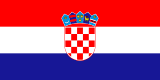 Croatia
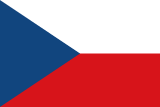 Czech Republic
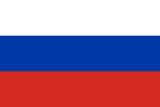 Russia
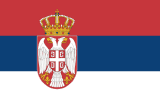 Serbia
 Slovenia