Flags that look alike
Some flags differ by a stripe order or a star. Others are so similar that a small image cannot support a confident answer. Compare ten pairs, learn the most dependable clue for each, and test your eye in a short quiz.
Research reviewed 1 October 2026 · Sources & methodology
A reliable order for checking a flag
- Find the hoist. This is the edge attached to the pole. Left-to-right color rules assume you are looking at the front face with the hoist on the left.
- Look for symbols. Count stars and serration points, or inspect a shield. A missing or added symbol is often decisive.
- Check the geometry. Compare stripe widths and the height-to-length ratio. A square or elongated shape can help if the image has not been stretched.
- Use color last. Lighting, dye, printing, compression and screens can all change a shade. Color is useful evidence, but tiny hue differences are fragile clues.
The illustrations below preserve their source-image proportions. They are identification aids, not manufacturing specifications; official flag protocols can define permitted variants and precise color standards.
Ten easily confused pairs, side by side
Some pairs differ by a clear symbol, others by stripe order, proportions or a subtle shade. The strength of the clue matters. Australia and New Zealand can be distinguished through their star patterns in a clear image; Romania and Chad are much harder to distinguish confidently from a small, poorly reproduced picture because colour reproduction can conceal the intended shade difference.
For each pair, read the visual clue alongside the images rather than relying on the caption alone. If an image has been cropped, stretched, reversed or photographed in poor light, the relevant evidence may be missing. In that case, surrounding context or an authoritative original image is more useful than a confident guess based on one pixel colour.
Indonesia and Monaco
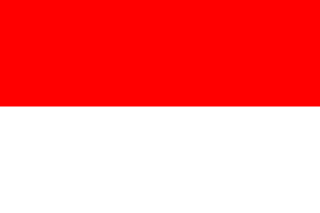
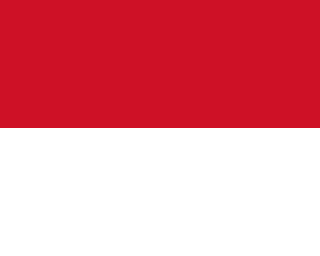
Check the silhouette before the shade of red.
Both have equal horizontal bands of red above white. Monaco’s conventional height-to-length ratio is 4:5; Indonesia’s is 2:3. A correctly proportioned Monaco flag looks shorter and closer to square. If an icon has been stretched into a standard rectangle, this clue disappears.
Limit of the clue: An unlabeled red-over-white image with altered proportions may not contain enough information to distinguish them.
Poland and Indonesia
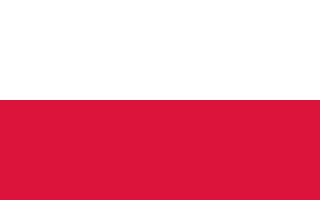
Read the top band: Poland starts with white.
The two bands are reversed. Poland has white above red; Indonesia has red above white. This is an ordering clue, so it remains useful in faded images where small differences between reds would be impossible to judge.
Limit of the clue: Make sure the image is upright. A flag hanging vertically needs orientation context.
Romania and Chad
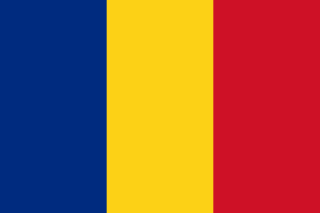
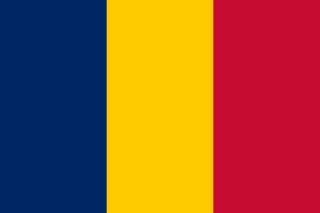
The designs are almost identical; context can be more reliable than color.
Both display vertical blue, yellow and red bands in that order from the hoist. Chad is commonly rendered with a darker blue, but compression, printing and screen settings can erase the distinction. Neither of these national designs has a central emblem.
Limit of the clue: Do not give a certain identification from an indistinct thumbnail. Look for a country label, location or event context.
Ireland and Ivory Coast
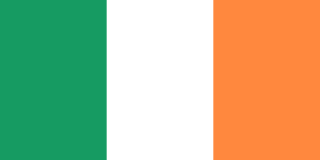
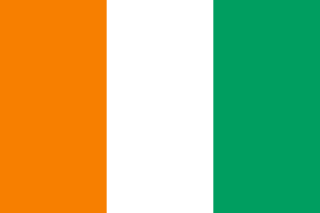
Find the hoist: Ireland begins with green; Ivory Coast begins with orange.
Both are vertical tricolors with white in the center. On the front face with the hoist at the left, Ireland reads green–white–orange and Ivory Coast reads orange–white–green. The ordering is the strongest clue; Ireland’s standard flag is also more elongated.
Limit of the clue: The reverse face changes the apparent left-to-right order. Identify the pole side before applying the rule.
Netherlands and Luxembourg
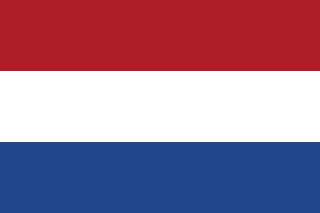
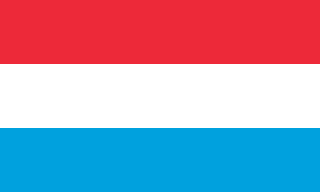
Luxembourg uses a lighter blue; the Netherlands uses a darker blue.
Both have horizontal red, white and blue stripes. Luxembourg’s blue is commonly rendered sky blue, while the Dutch lower stripe is deeper. The displayed flags also differ in proportions, but Luxembourg permits more than one flag format, so shape alone is a weaker clue.
Limit of the clue: A washed-out Dutch flag can resemble Luxembourg’s. Use more than one cue in photographs.
Australia and New Zealand
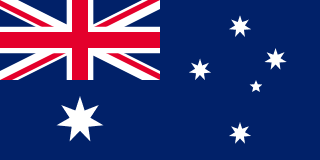
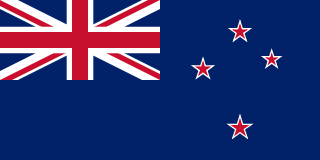
Look below the Union Jack and then count the stars.
Australia has a large white Commonwealth Star below the Union Jack, plus five white Southern Cross stars on the fly. New Zealand has four red Southern Cross stars with white borders and no Commonwealth Star below the canton. Star arrangement works better than trying to compare the blue fields.
Limit of the clue: On a small icon, red centers can disappear. Enlarge the stars before deciding.
Slovenia and Slovakia
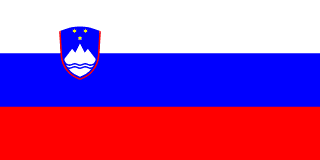
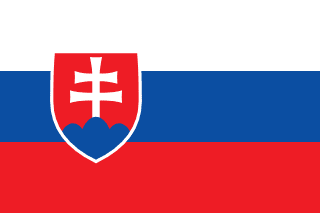
Zoom in on the shield: mountain and stars versus a double cross.
Both place an emblem toward the hoist over horizontal white, blue and red bands. Slovenia’s shield contains a white mountain, wavy blue lines and three gold stars. Slovakia’s shield has a white double cross rising from three blue hills on a red background.
Limit of the clue: The country names are similar too. Match the emblem to the name instead of treating either tricolor alone as distinctive.
Mali and Guinea
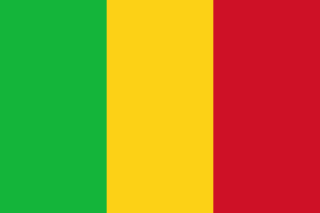
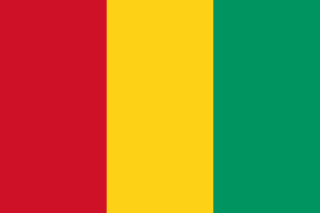
Mali starts with green; Guinea starts with red.
Their vertical tricolors share a yellow center. With the hoist at the left, Mali reads green–yellow–red and Guinea reads red–yellow–green. Neither shown design has a star. Senegal resembles Mali but adds a green star to the yellow band.
Limit of the clue: Ordering rules require the front face and a known hoist side.
Bahrain and Qatar
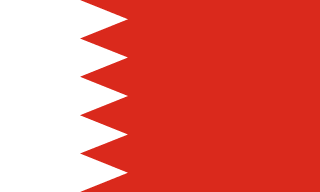

Count the white points: five for Bahrain, nine for Qatar.
Both have a white hoist meeting a colored field along a serrated edge. Bahrain’s field is red; Qatar’s is maroon. Qatar is also much more elongated. The number of points is a structural difference and is more robust than color alone.
Limit of the clue: Count the triangular tips pointing into the colored field, not both edges of each triangle.
Austria and Latvia
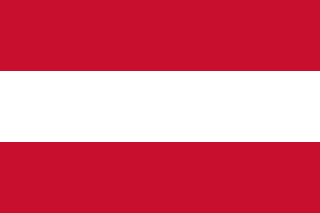
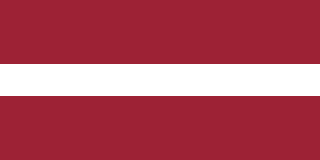
Austria has equal bands; Latvia has a narrower white stripe.
Both use red–white–red horizontal stripes. Austria divides the height into three equal parts. Latvia uses a 2:1:2 arrangement, with carmine red above and below a white stripe half as tall as either red stripe.
Limit of the clue: Even in grayscale, the relative stripe heights can separate these two designs.
Can you identify these six flags?
Each question has two choices and an explanation after you answer. All six use structural clues explained above. We leave Romania and Chad out of the scored quiz because a subtle shade difference is an unreliable test across screens.
When the right answer is “not enough information”
A flag emoji, square avatar or stretched badge may remove the precise feature that distinguishes two designs. Monaco and Indonesia are a good example: if the image is recolored and resized to a common shape, there may be no dependable visual difference left.
A reversed photo introduces another problem. The order of vertical stripes changes when you see the reverse face. Ireland and Ivory Coast, or Mali and Guinea, should be identified relative to the hoist—not simply the left edge of any picture.
Look for independent context when the design alone is ambiguous: a country label, a location, the language on a nearby sign, or the event at which the flag appears. Treat those as supporting evidence rather than rewriting the visible flag to fit an assumption.
Does a similar flag mean a similar country?
No. These pairings are visual comparisons, not claims of common political identity or a single shared origin. Explaining a flag’s history requires its own evidence. This guide focuses on the observable differences that help you identify the design in front of you.
Sources & methodology
Reviewed 1 October 2026. Pair selection is editorial and is not a computed global similarity ranking. Notes compare current national designs in the locally hosted artwork, supported by official and specialist references for the geometric distinctions. We avoid treating differences in a particular digital color value as proof of national identity.
- Australia: official national-flag guide
The Commonwealth Star and five-star Southern Cross distinguish Australia’s design.
- New Zealand: Ministry for Culture and Heritage
Four red stars with white borders, and official design specifications.
- Latvia: Law on the National Flag
Carmine red and the 2:1:2 band proportions provide independent color and geometry clues.
- Qatar: national symbols
Maroon, white and nine serrated points.
- Bahrain Ministry of Education: national flag guide
Government educational guide describing the current five-point design.
- Flags of the World: Monaco
Specialist reference documents Monaco’s 4:5 format and discusses other proportions in use. Shape is a clue, not proof for every physical flag.
- Flag artwork
The locally hosted images are displayed without cropping or forcing all flags into one shape. Identification notes describe the displayed designs.
Country lists follow our 196-profile directory convention: 193 UN members, Vatican City, Palestine and Taiwan. Dependent territories are identified separately. A missing observation never means zero.