Flag of Bolivia
Plurinational State of Bolivia
Flag details
- Proportions
- 15:22 height : width
- ISO code
- BO / BOL
- Emoji
- Unicode
- U+1F1E7 U+1F1F4
Flag colors
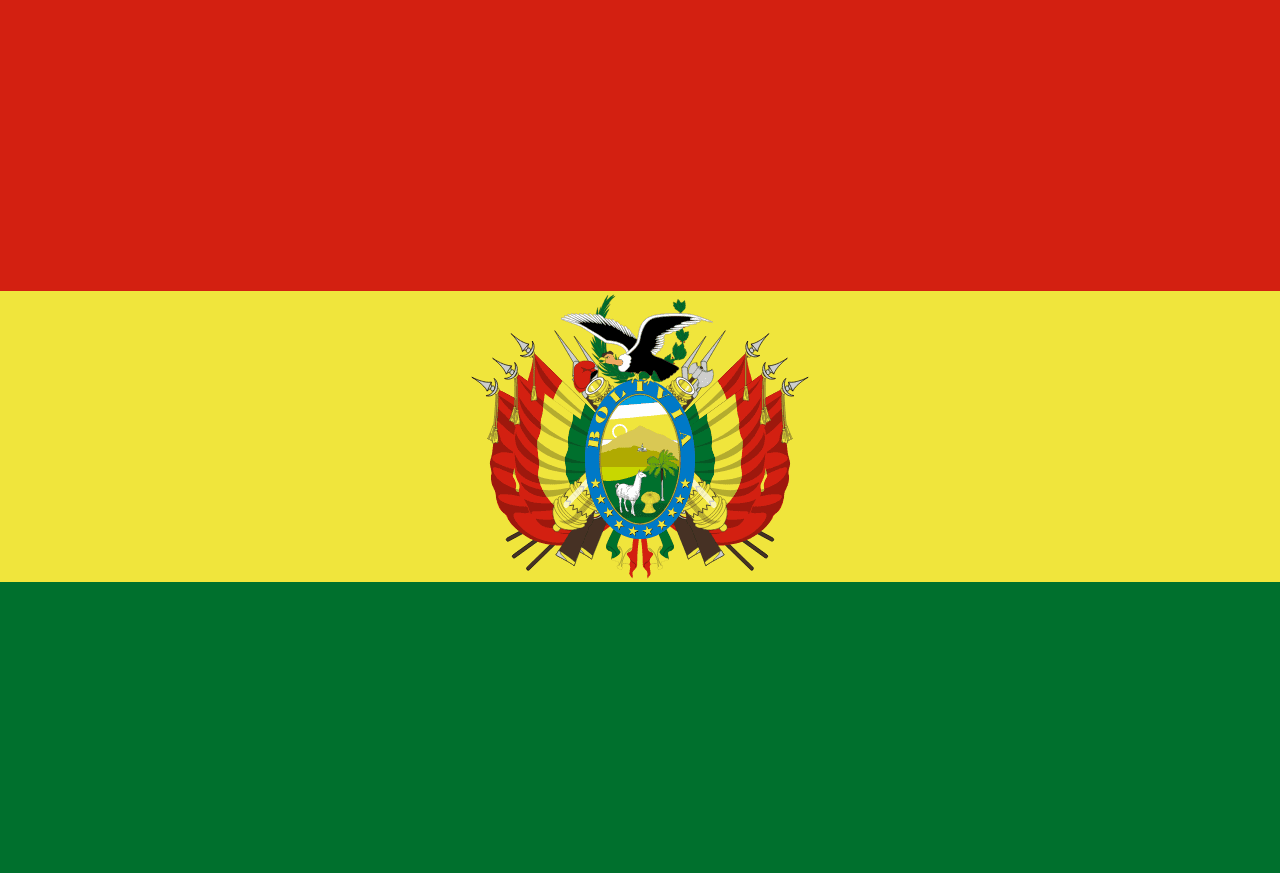
- red#d3201134%
- green#00702d33%
- yellow#f0e53c28%
Share of the flag's surface, measured from the image. Names describe the measured shade.
Download the flag
Meaning and history of the flag of Bolivia
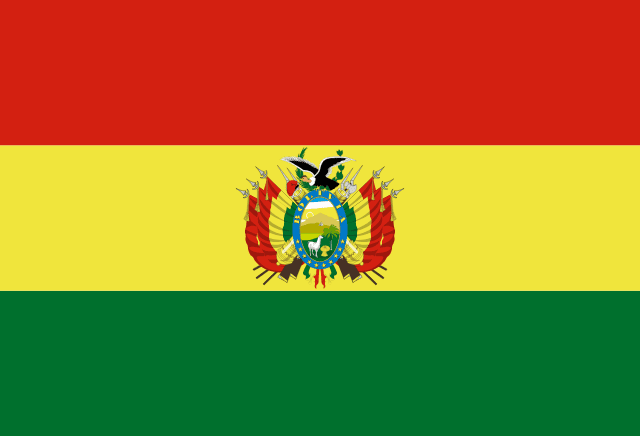
The flag of Bolivia is made up of three equal horizontal stripes: red on top, yellow in the middle, and green on the bottom. Red represents the blood shed by the heroes of independence, yellow symbolizes the country's mineral wealth, especially its tin and other metal deposits, and green embodies the fertility of the land and hope.
The state version of the flag includes the coat of arms at the center of the yellow stripe, depicting the Cerro Rico of Potosí, an alpaca, a sheaf of wheat, a palm tree, and other elements representative of Bolivia's geography and economy. Bolivia also has a second official flag, the wiphala, a square banner of seven-colored checkered squares arranged diagonally that represents the Andean indigenous peoples and was recognized as a national symbol in the 2009 constitution.
Bolivia's flag shares its colors with several other Latin American and African flags. Leaving the emblems aside, it is nearly identical in color to the flags of Ghana and Ethiopia, reflecting how widespread the red-yellow-green combination is. It was adopted on October 31, 1851, and its design has remained essentially unchanged since, making it one of the oldest flags in continuous use in South America.
Colours and shape
Measured from the image, the main colours of the flag of Bolivia are red, green and yellow. Its official proportions are 15:22 (height to width) — no other national flag has exactly this shape.
The flag emoji 🇧🇴 is built from the two regional indicator letters B and O (U+1F1E7 U+1F1F4). Most phones and Macs draw it as a flag; Windows shows the two letters instead.