Flag of Turkey
Republic of Türkiye

Flag details
- Proportions
- 2:3 height : width
- ISO code
- TR / TUR
- Emoji
- Unicode
- U+1F1F9 U+1F1F7
Flag colors
- red#e30a1793%
Share of the flag's surface, measured from the image. Names describe the measured shade.
Download the flag
Meaning and history of the flag of Turkey
Turkey's flag, known as "Ay Yıldız" (moon and star), consists of a red field with a white waning crescent and a white five-pointed star positioned slightly toward the hoist side. This iconic design was officially adopted on May 29, 1936, though its origins date back to the 18th century, during the Ottoman Empire.
The flag's red has deep roots in Turkish and Ottoman history, traditionally associated with sovereignty and military valor. According to popular legend, the red represents the blood of soldiers who fell at the Battle of Kosovo in 1389, whose reflection in a pool formed the image of the crescent and star. The crescent and star are Islamic symbols adopted by the Ottomans, though their use in Anatolia predates the arrival of Islam itself.
The Turkish flag has had an enormous influence on the vexillology of many Muslim countries. The flags of Tunisia, Algeria, Libya, Pakistan, Azerbaijan, and several other nations incorporate the crescent and star in various forms, all rooted in the Ottoman tradition. Turkey's flag is a deeply respected national symbol, protected by specific laws governing its use and display, and it flies prominently throughout the country as an expression of Turkish national pride.
Colours and shape
Measured from the image, the main colour of the flag of Turkey is red; red alone covers about 93% of the surface. Its official proportions are 2:3 (height to width), the same shape as at least 84 other national flags.
The flag emoji 🇹🇷 is built from the two regional indicator letters T and R (U+1F1F9 U+1F1F7). Most phones and Macs draw it as a flag; Windows shows the two letters instead.
Part of a flag family: Crescent
A crescent moon, usually with a star — a symbol associated with Islam and the Ottoman Empire, though some countries give it other meanings (on Singapore’s flag it stands for a young nation).
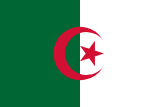 Algeria
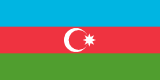 Azerbaijan
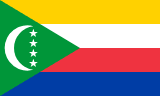 Comoros
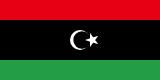 Libya
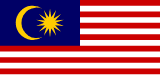 Malaysia
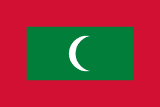 Maldives
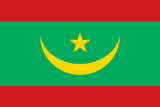 Mauritania
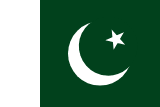 Pakistan
 Singapore
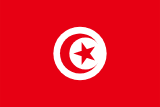 Tunisia
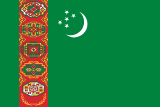 Turkmenistan
 Uzbekistan