Flag of Greece
Hellenic Republic
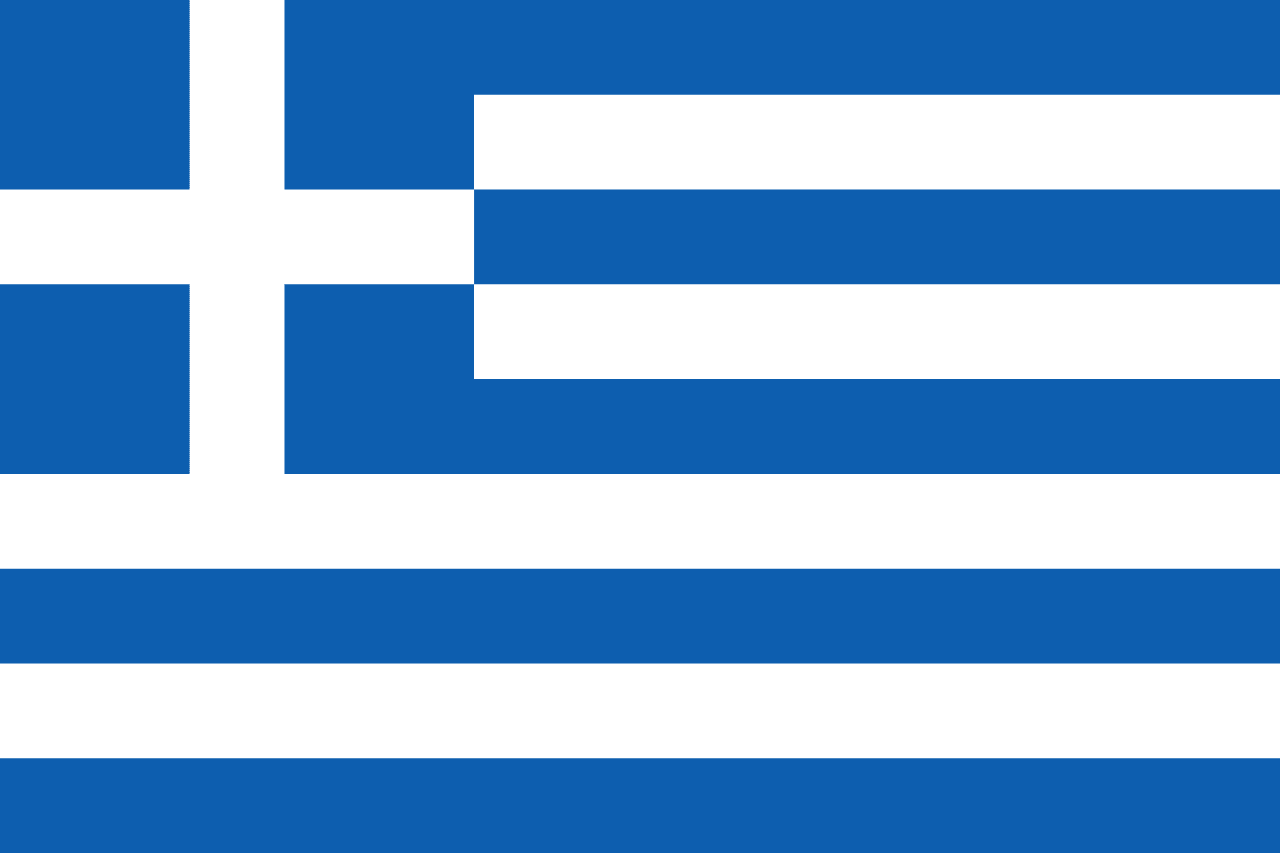
Flag details
- Country
- Greece
- Official name
- Hellenic Republic
- Capital
- Athens
- ISO code
- GR / GRC
- Region
- Southern Europe
Flag colors
- #0d5eaf54%
- #ffffff40%
Share of the flag's surface, measured from the image.
Download the flag
Meaning and history of the flag of Greece
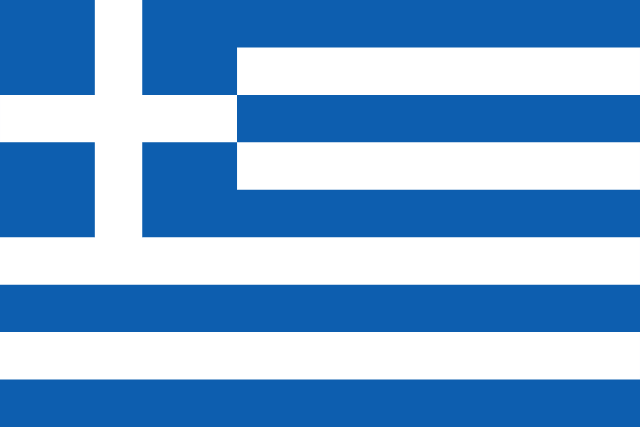
Greece's flag, known as the galanolefki, or blue and white, consists of nine alternating horizontal stripes of blue and white, with a white cross on a blue field in the upper-left canton. It was officially adopted in its current form on December 22, 1978, though its use dates back to the Greek War of Independence in 1821.
Tradition holds that the nine stripes correspond to the nine syllables of the Greek phrase 'Eleftheria i Thanatos' (Freedom or Death), the motto of the revolution against Ottoman rule. The cross symbolizes the Greek Orthodox faith, a cornerstone of Greek identity. The blue represents the sky and the Aegean Sea, elements inseparable from the Hellenic landscape, while the white evokes sea foam and purity.
Throughout modern Greek history, the country alternated between this striped flag for naval use and a simple white-cross-on-blue flag for use on land. The two versions were unified in 1978, with the striped design prevailing. The exact shade of blue is not specified by law, which has led to variations ranging from light to dark blue. The Greek flag is one of the most recognizable in the Mediterranean.
You can view the flag of Greece in high resolution above and download it in several sizes for personal, educational or reference use. To explore more, visit the full Greece profile, its map, or the current local time in Athens.