Flag of Ghana
Republic of Ghana
Flag details
- Proportions
- 2:3 height : width
- ISO code
- GH / GHA
- Emoji
- Unicode
- U+1F1EC U+1F1ED
Flag colors
- red#ce112633%
- green#006b3f33%
- yellow#fcd11630%
Share of the flag's surface, measured from the image. Names describe the measured shade.
Download the flag
Meaning and history of the flag of Ghana
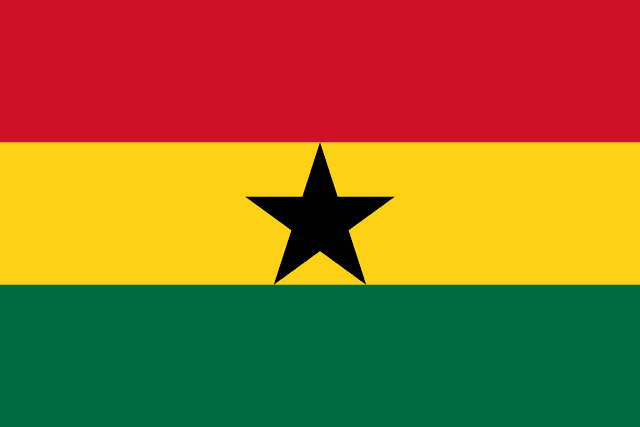
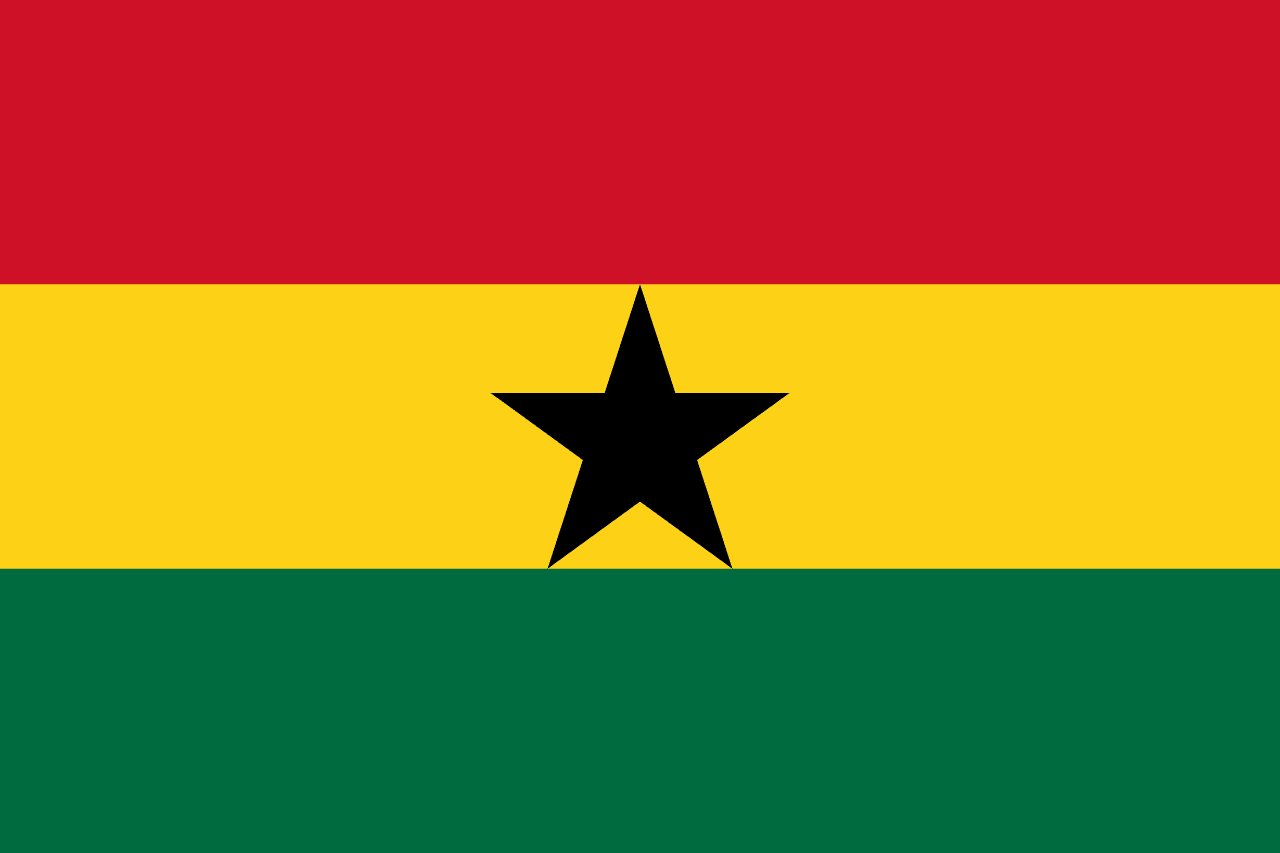
Ghana's flag was adopted on March 6, 1957, when the country became the first in sub-Saharan Africa to win independence from a European colonial power. It consists of three equal horizontal stripes of red, gold, and green, with a black five-pointed star at the center of the gold stripe. It was designed by Theodosia Okoh.
The red represents the blood shed by those who fought for independence, the gold symbolizes the country's mineral wealth -- Ghana was historically known as the Gold Coast -- and the green represents its forests and natural resources. The black star, known as the Black Star of Africa, is a symbol of African freedom, inspired by Marcus Garvey's Black Star Line shipping company and his pioneering role in Pan-Africanism.
Ghana's flag was the first in Africa to combine red, gold, and green with a black star, establishing a template later followed by numerous countries on the continent. Its influence can be seen in the flags of Guinea-Bissau, Burkina Faso, and Sao Tome and Principe, among others. For a brief period between 1964 and 1966, the gold stripe was replaced with white, but the original design was restored after the 1966 coup.
Colours and shape
Measured from the image, the main colours of the flag of Ghana are red, green and yellow. Its official proportions are 2:3 (height to width), the same shape as at least 84 other national flags.
The flag emoji 🇬🇭 is built from the two regional indicator letters G and H (U+1F1EC U+1F1ED). Most phones and Macs draw it as a flag; Windows shows the two letters instead.
Part of a flag family: Pan-African colours
Red, yellow and green, the colours of Ethiopia’s flag. Ethiopia was never colonised (apart from the Italian occupation of 1936–1941), and Ghana took its colours at independence in 1957; many states followed.
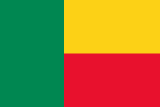 Benin
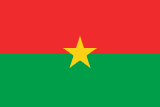 Burkina Faso
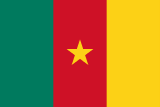 Cameroon
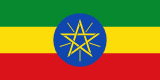 Ethiopia
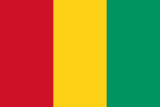 Guinea
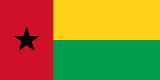 Guinea-Bissau
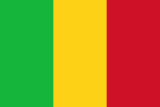 Mali
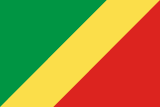 Republic of the Congo
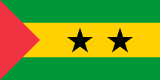 Sao Tome and Principe
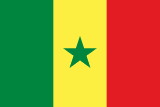 Senegal
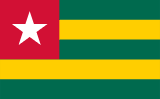 Togo