
Flag of the Philippines
Republic of the Philippines
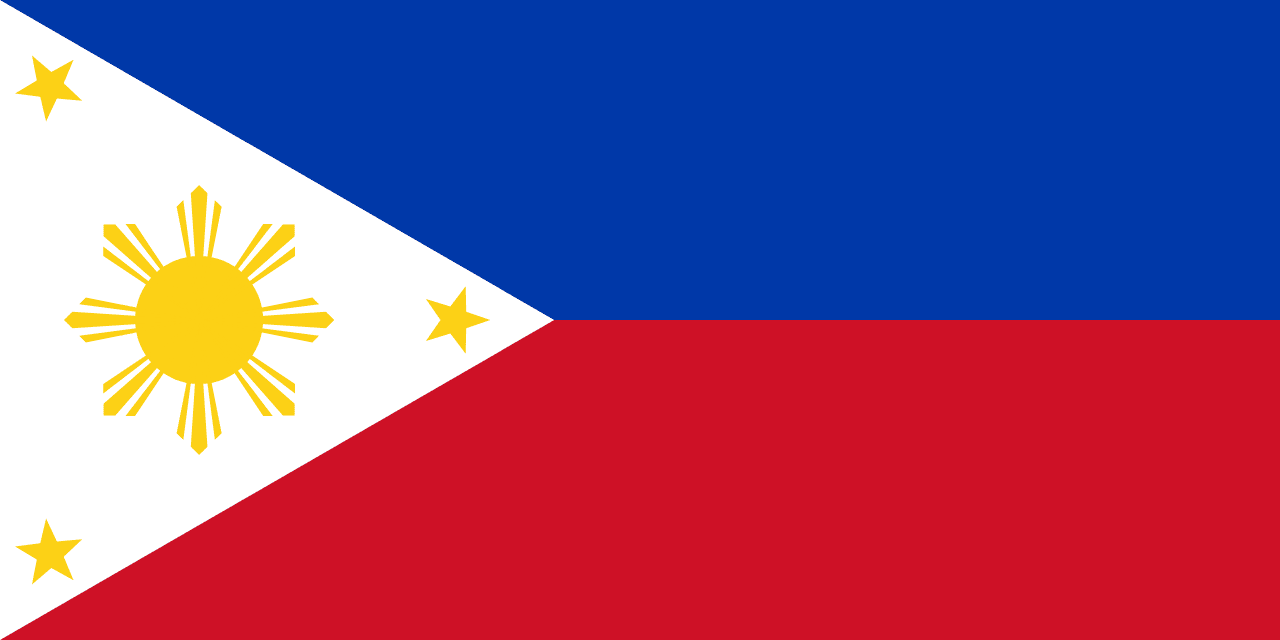
Flag details
- Country
- Philippines
- Official name
- Republic of the Philippines
- Capital
- Manila
- ISO code
- PH / PHL
- Region
- Southeast Asia
Flag colors
- #ce112639%
- #0038a839%
- #ffffff17%
Share of the flag's surface, measured from the image.
Download the flag
Meaning and history of the flag of the Philippines
The flag of the Philippines is notable for being the only national flag in the world that is flown differently in wartime than in peacetime. In peacetime, the blue stripe is on top; in wartime, the flag is inverted so the red stripe is uppermost. The design consists of two horizontal stripes, blue and red, with a white equilateral triangle at the hoist.
Within the white triangle is a golden sun with eight rays, representing the eight provinces that launched the revolution against Spain in 1896. At each corner of the triangle is a five-pointed star symbolizing the archipelago's three main geographic regions: Luzon, Visayas, and Mindanao. White in the triangle represents equality and fraternity, blue represents peace and justice, and red represents patriotism and valor.
The flag was designed by Emilio Aguinaldo during his exile in Hong Kong in 1897 and was first flown at the proclamation of Philippine independence on June 12, 1898. Its design reflects Masonic influences, visible in the triangle and the sun. It is one of the most symbolically dense flags in the world, with every element carrying a precise historical meaning.
You can view the flag of the Philippines in high resolution above and download it in several sizes for personal, educational or reference use. To explore more, visit the full the Philippines profile, its map, or the current local time in Manila.