Flag of Lebanon
Lebanese Republic
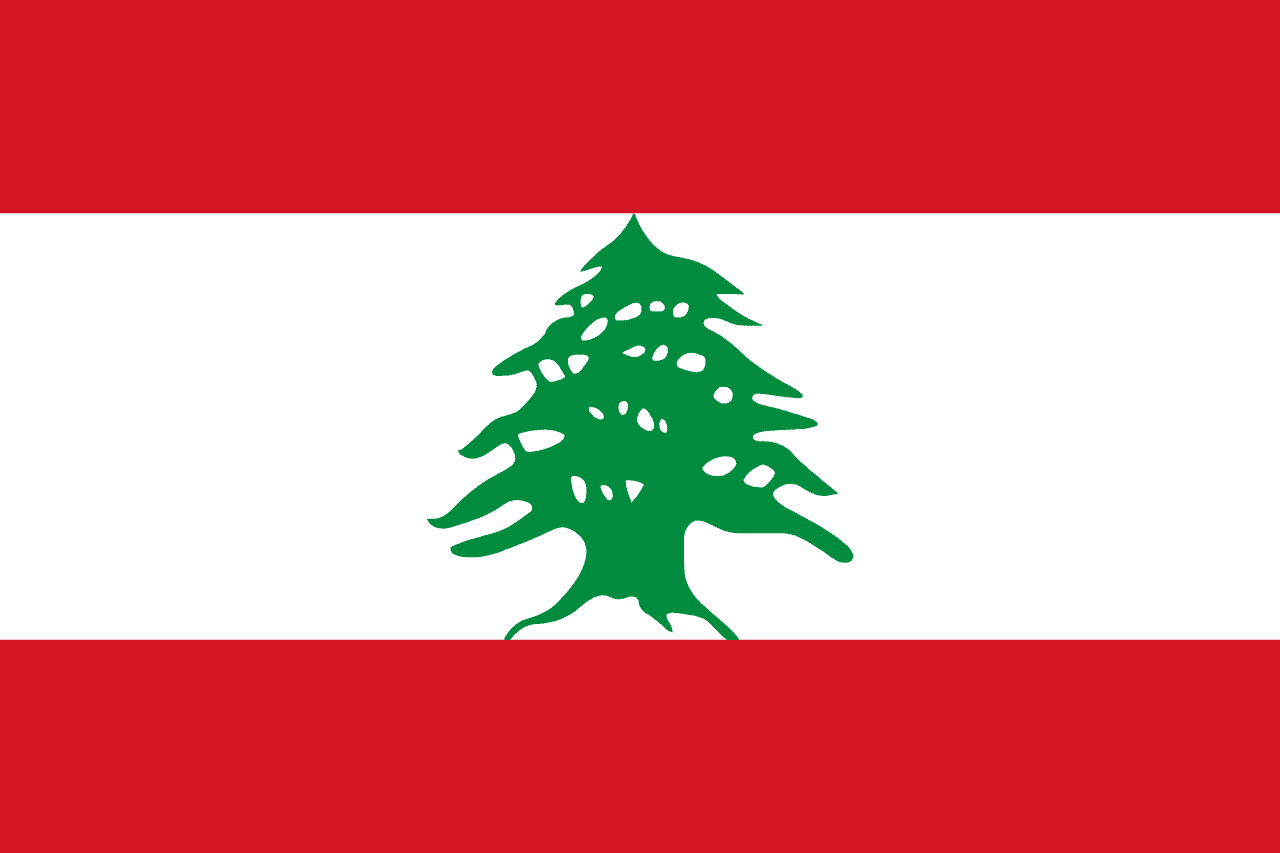
Flag details
- Country
- Lebanon
- Official name
- Lebanese Republic
- Capital
- Beirut
- ISO code
- LB / LBN
- Region
- Western Asia
Flag colors
- #d3162449%
- #ffffff42%
Share of the flag's surface, measured from the image.
Download the flag
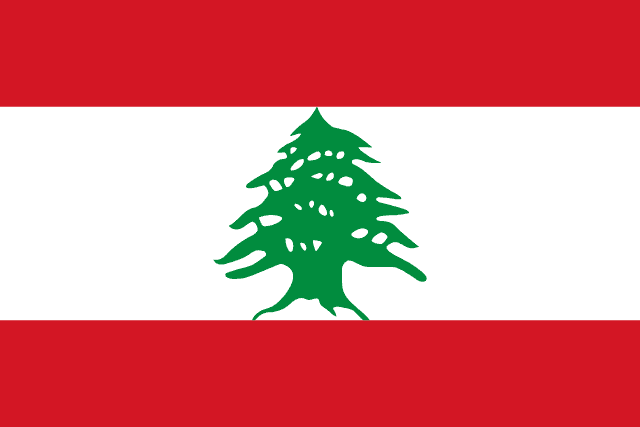
Meaning and history of the flag of Lebanon
Lebanon's flag has three horizontal stripes: red at the top and bottom, each occupying a quarter of the flag's height, and a white band in the middle taking up the other half. At the center of the white stripe stands a green cedar tree, the country's foremost national symbol. The red stripes symbolize the blood shed for liberation, the white stripe represents peace and the purity of snow on Lebanon's mountains, and the green cedar embodies immortality and steadfastness.
The flag was adopted on December 7, 1943, following Lebanon's independence from the French mandate. The cedar of Lebanon (Cedrus libani) is an ancient tree mentioned in the Bible and in the Epic of Gilgamesh, and it has symbolized this land since antiquity. The Phoenicians, ancestors of the Lebanese, traded in its prized timber, which was used in the construction of Solomon's Temple in Jerusalem.
Lebanon's flag is one of the few in the world to feature a tree as its central element, a trait it shares with Equatorial Guinea and Belize, among others. The cedar must be drawn with its trunk touching the lower red stripe and its crown touching the upper red stripe, rendered entirely in green. It is a design that pairs the pan-Arab colors with a unique natural symbol, setting it apart from the flags of other Arab countries, which more often feature stars, crescents, or Islamic calligraphy.
You can view the flag of Lebanon in high resolution above and download it in several sizes for personal, educational or reference use. To explore more, visit the full Lebanon profile, its map, or the current local time in Beirut.