Flag of Eswatini
Kingdom of Eswatini
Flag details
- Proportions
- 2:3 height : width
- ISO code
- SZ / SWZ
- Emoji
- Unicode
- U+1F1F8 U+1F1FF
Flag colors
- blue#3e5eb939%
- red#b10c0c32%
- yellow#ffd90011%
Share of the flag's surface, measured from the image. Names describe the measured shade.
Download the flag
Meaning and history of the flag of Eswatini
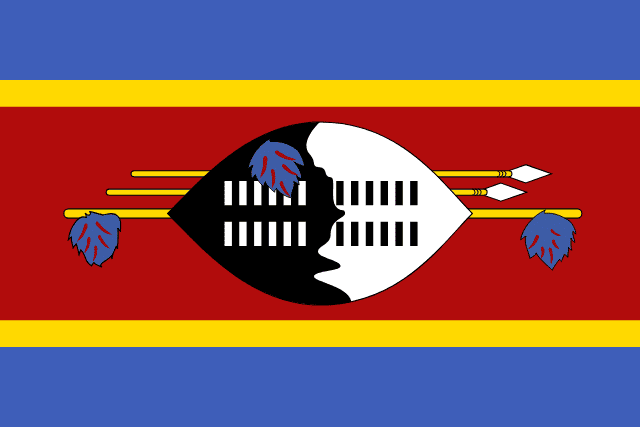
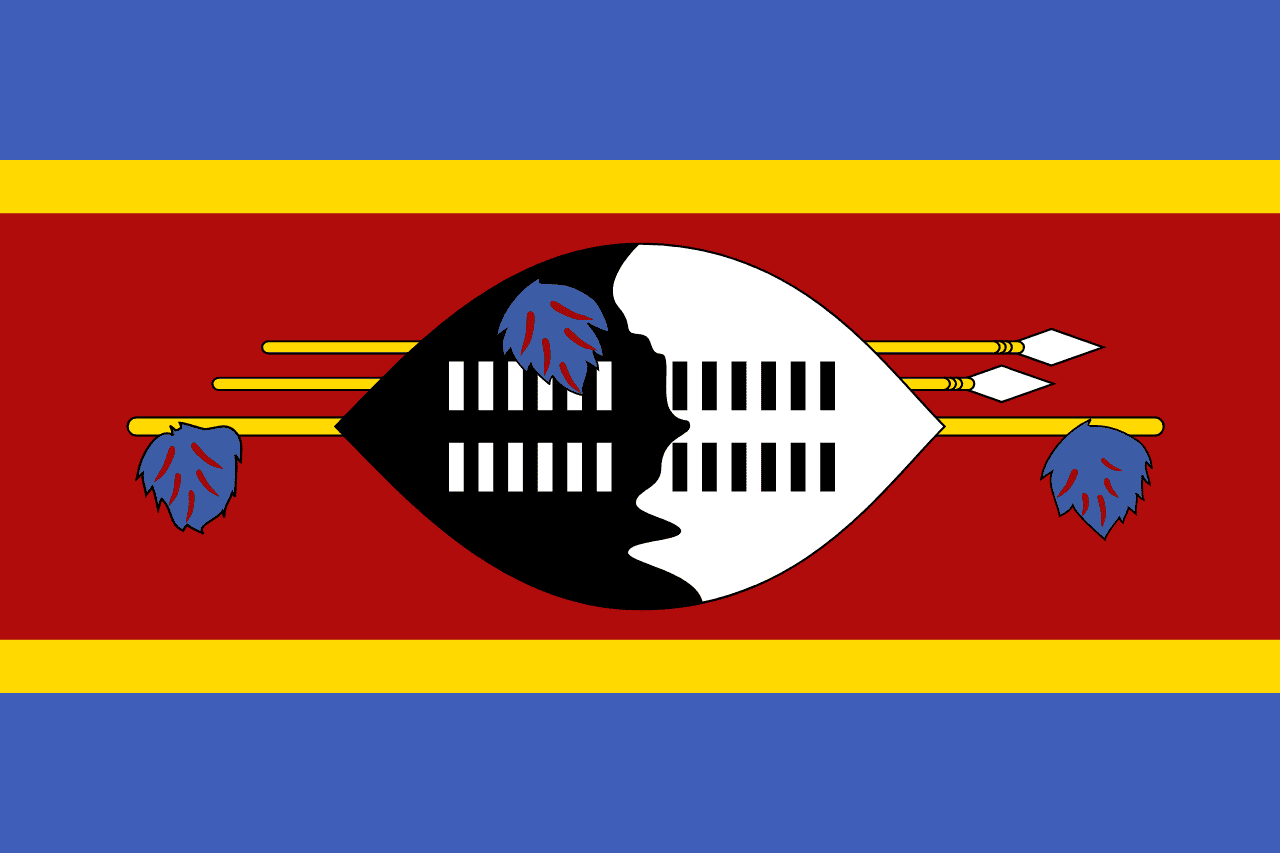
The flag of Eswatini (formerly Swaziland) was adopted on September 6, 1968, upon independence from the United Kingdom. The design features five horizontal stripes: blue, yellow, crimson, yellow, and blue. The wider central crimson stripe carries a black-and-white Swazi war shield decorated with two spears and a tasseled staff called a tinjobo.
The black-and-white Nguni shield, laid horizontally, is a traditional symbol of the Swazi monarchy and represents the protection of the people. The spears and feathered staff symbolize the defense of the nation against its enemies. Blue represents peace and stability, yellow the country's mineral resources, and crimson the battles of the past.
Eswatini's flag is one of the few in the world to incorporate traditional African weaponry as its central feature, and the war shield sets it clearly apart from the flags of its neighbors in southern Africa. The country's name was officially changed from Swaziland to Eswatini in 2018 by King Mswati III, though the flag itself remained unchanged.
Colours and shape
Measured from the image, the main colours of the flag of Eswatini are blue, red and yellow. Its official proportions are 2:3 (height to width), the same shape as at least 84 other national flags.
The flag emoji 🇸🇿 is built from the two regional indicator letters S and Z (U+1F1F8 U+1F1FF). Most phones and Macs draw it as a flag; Windows shows the two letters instead.