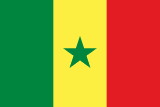
Flag of Senegal
Republic of Senegal

Flag details
- Proportions
- 2:3 height : width
- ISO code
- SN / SEN
- Emoji
- Unicode
- U+1F1F8 U+1F1F3
Flag colors
- green#00853f35%
- red#e31b2333%
- yellow#fdef4230%
Share of the flag's surface, measured from the image. Names describe the measured shade.
Download the flag
Meaning and history of the flag of Senegal
The flag of Senegal consists of three equal vertical stripes of green, yellow, and red, with a green five-pointed star at the center of the yellow stripe. It is one of many designs across the continent to use the pan-African colors, reflecting both African cultural heritage and the legacy of independence from France.
It was adopted on August 20, 1960, at independence. Green represents Islam, the country's majority religion, along with hope and the fertility of the land; yellow symbolizes wealth, culture, and the fruits of labor; and red embodies the nation's sacrifice and the vitality of its people. The green star is known as the "Star of African Unity" and points skyward as a symbol of aspiration. The flag is nearly identical to that of Mali, which replaces the star with a stylized human figure known as the kanaga; before 1961 both countries shared the same flag as part of the Mali Federation.
Colours and shape
Measured from the image, the main colours of the flag of Senegal are green, red and yellow. Its official proportions are 2:3 (height to width), the same shape as at least 84 other national flags.
The flag emoji 🇸🇳 is built from the two regional indicator letters S and N (U+1F1F8 U+1F1F3). Most phones and Macs draw it as a flag; Windows shows the two letters instead.
Part of a flag family: Pan-African colours
Red, yellow and green, the colours of Ethiopia’s flag. Ethiopia was never colonised (apart from the Italian occupation of 1936–1941), and Ghana took its colours at independence in 1957; many states followed.
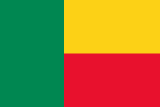 Benin
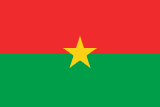 Burkina Faso
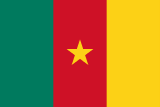 Cameroon
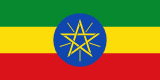 Ethiopia
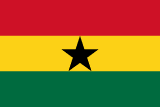 Ghana
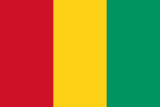 Guinea
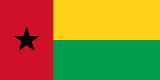 Guinea-Bissau
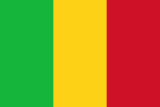 Mali
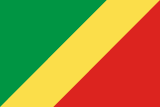 Republic of the Congo
 Sao Tome and Principe
 Togo