Flag of Vanuatu
Republic of Vanuatu
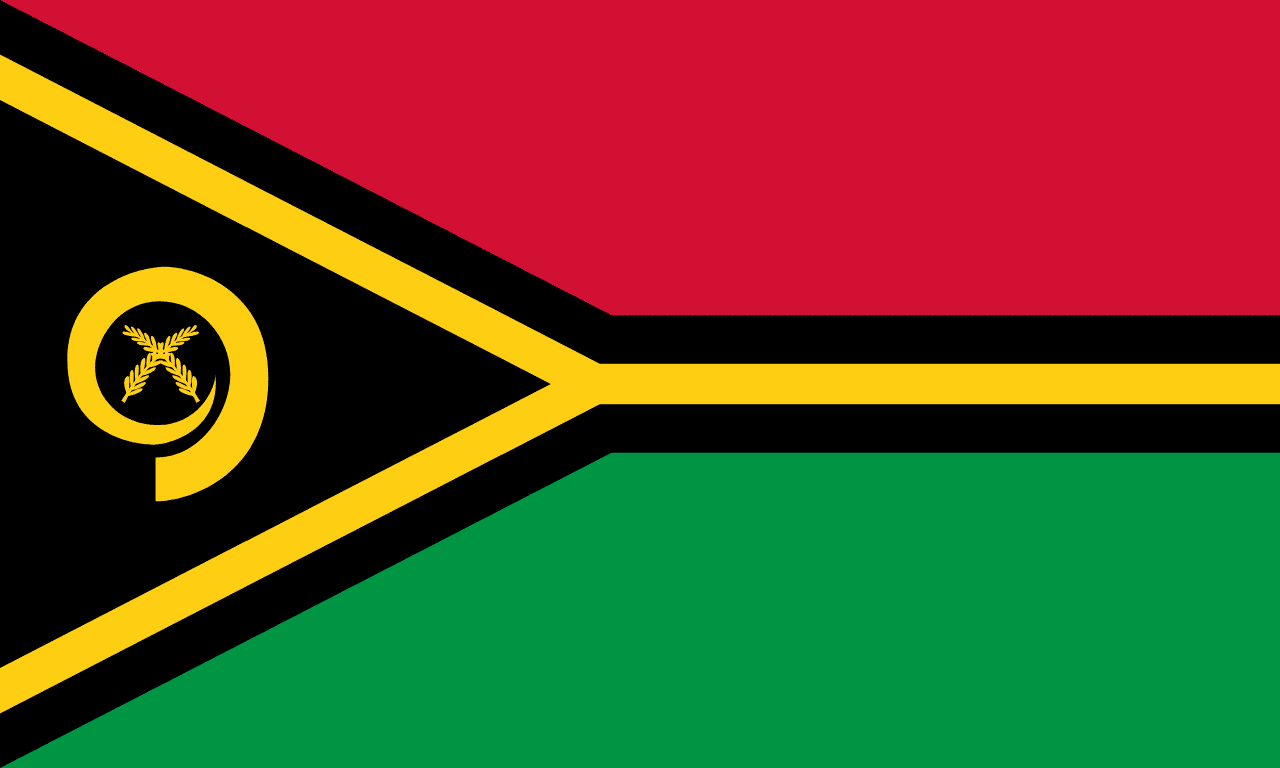
Flag details
- Country
- Vanuatu
- Official name
- Republic of Vanuatu
- Capital
- Port Vila
- ISO code
- VU / VUT
- Region
- Melanesia
Flag colors
- #d2103431%
- #00954331%
- #00000024%
- #fdce129%
Share of the flag's surface, measured from the image.
Download the flag
Meaning and history of the flag of Vanuatu
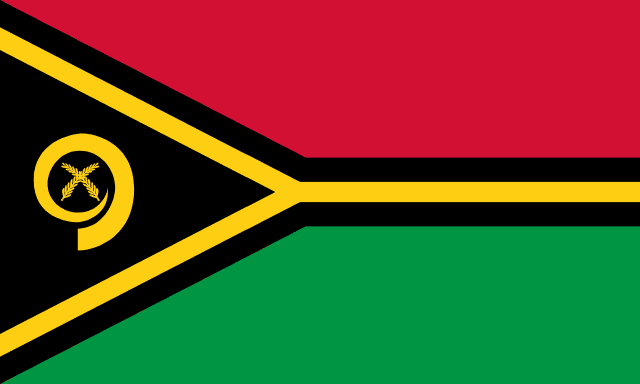
Vanuatu's flag was adopted on February 13, 1980, upon independence from the Anglo-French condominium of the New Hebrides. The design features two horizontal stripes, red on top and green on the bottom, separated by a black band that widens toward the hoist to form a triangle. A narrow yellow line in the same shape overlays the black band. Within the black triangle at the hoist sits a yellow emblem depicting a boar's tusk crossed with two fern leaves.
Red symbolizes the blood of men and sacrifice, while green represents the islands' wealth and lush tropical vegetation. Black honors the Melanesian people, the archipelago's majority ethnic group. Yellow represents the light of peace shining over the islands. The boar's tusk is a traditional symbol of prosperity and is used as ceremonial currency in ni-Vanuatu culture; the more curved the tusk, the greater its value.
The two crossed fern leaves within the tusk are namele leaves, from a plant considered sacred in Melanesian culture and symbolizing peace. Each leaf has exactly six fronds, without a specific numerical meaning, though popular interpretations link them to the country's six provinces. Vanuatu's flag is unique in the Pacific for its color combination and for incorporating the boar's tusk, an element found on no other national flag in the world and one that reflects Melanesian cultural identity deeply.
You can view the flag of Vanuatu in high resolution above and download it in several sizes for personal, educational or reference use. To explore more, visit the full Vanuatu profile, its map, or the current local time in Port Vila.