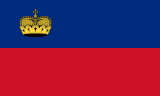
Flag of Liechtenstein
Principality of Liechtenstein
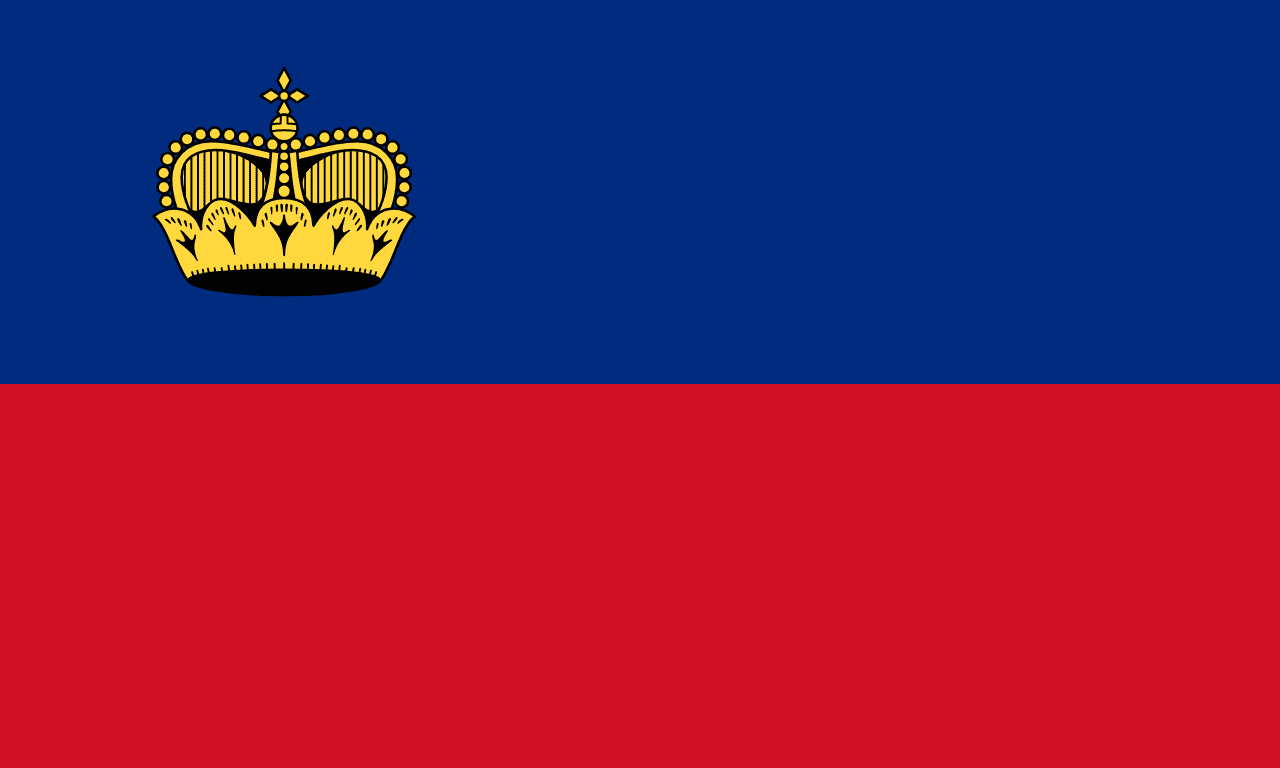
Flag details
- Country
- Liechtenstein
- Official name
- Principality of Liechtenstein
- Capital
- Vaduz
- ISO code
- LI / LIE
- Region
- Central Europe
Flag colors
- #ce112650%
- #002b7f46%
Share of the flag's surface, measured from the image.
Download the flag
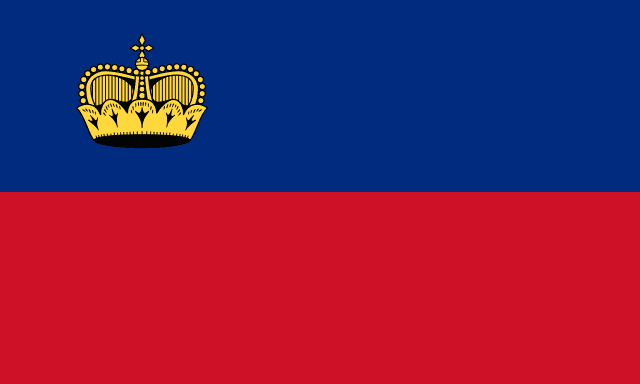
Meaning and history of the flag of Liechtenstein
Liechtenstein's flag consists of two equal horizontal stripes, blue on top and red below. In the upper hoist corner sits a golden princely crown. Blue represents the sky above the country, and red symbolizes the fires lit in homes on winter nights. The golden crown was added in 1937 and represents the unity of the people with their ruling house, the princely family of Liechtenstein.
The crown's addition has a curious backstory: at the 1936 Berlin Olympics, it was discovered that Liechtenstein's flag, then simply blue and red, was identical to Haiti's. To avoid future mix-ups, Liechtenstein added the princely crown the following year. The flag's current colors had been in use since 1921, when they replaced the earlier blue-and-gold colors used during the 19th century.
Liechtenstein is one of Europe's smallest microstates, and its flag reflects its nature as a sovereign principality. It is one of the few national flags to feature a crown as a distinguishing element, alongside flags such as those of San Marino and Spain. The official proportions are 3:5. Despite its simplicity, the golden crown atop the blue and red gives it an aristocratic elegance that sets it apart from other European bicolor flags.
You can view the flag of Liechtenstein in high resolution above and download it in several sizes for personal, educational or reference use. To explore more, visit the full Liechtenstein profile, its map, or the current local time in Vaduz.