Flag of Lithuania
Republic of Lithuania
Flag details
- Country
- Lithuania
- Official name
- Republic of Lithuania
- Capital
- Vilnius
- ISO code
- LT / LTU
- Region
- Northern Europe
Flag colors
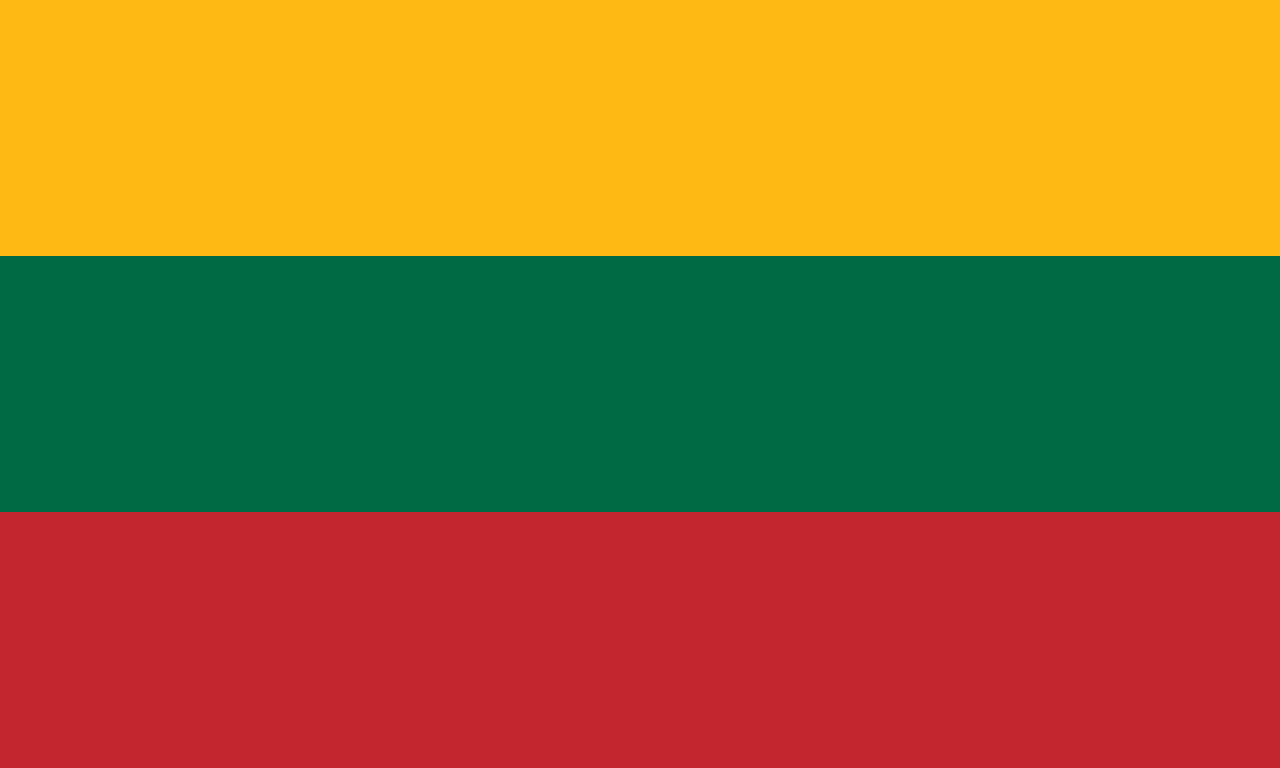
- #fdb91333%
- #006a4433%
- #c1272d33%
Share of the flag's surface, measured from the image.
Download the flag
Meaning and history of the flag of Lithuania
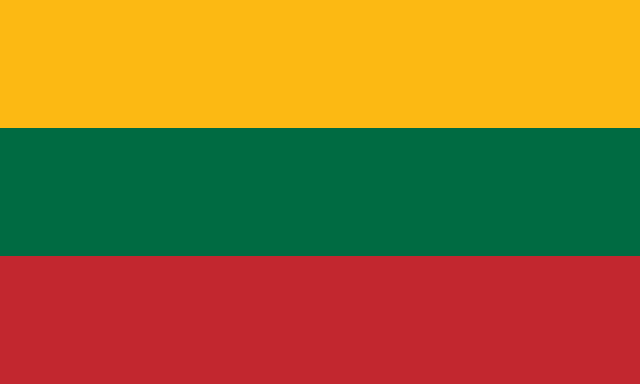
Lithuania's flag is a horizontal tricolor made up of three equal stripes: yellow on top, green in the middle, and red at the bottom. Yellow symbolizes golden wheat fields and sunlight, green represents the country's forests and hope, and red embodies the blood shed for the homeland and the courage of the Lithuanian people. The flag's official proportions are 3:5.
The Lithuanian tricolor was first used in 1918, when Lithuania declared independence from the Russian Empire. It was banned during the Soviet occupation from 1940 to 1990, and flying it could bring imprisonment or deportation to Siberia. On March 11, 1990, Lithuania became the first Soviet republic to restore its national flag and declare independence from the USSR, an act of remarkable courage that preceded the Soviet collapse.
Lithuania's flag stands out among European tricolors for its unusual combination of yellow, green, and red, colors uncommon in European flags but common in African ones, such as Ethiopia's. It shares its horizontal tricolor layout with its Baltic neighbors, Latvia and Estonia, though with entirely different colors. All three Baltic flags became powerful symbols of the late-1980s Singing Revolution, when millions of people formed human chains carrying them to demand freedom.
You can view the flag of Lithuania in high resolution above and download it in several sizes for personal, educational or reference use. To explore more, visit the full Lithuania profile, its map, or the current local time in Vilnius.