Flag of Togo
Togolese Republic
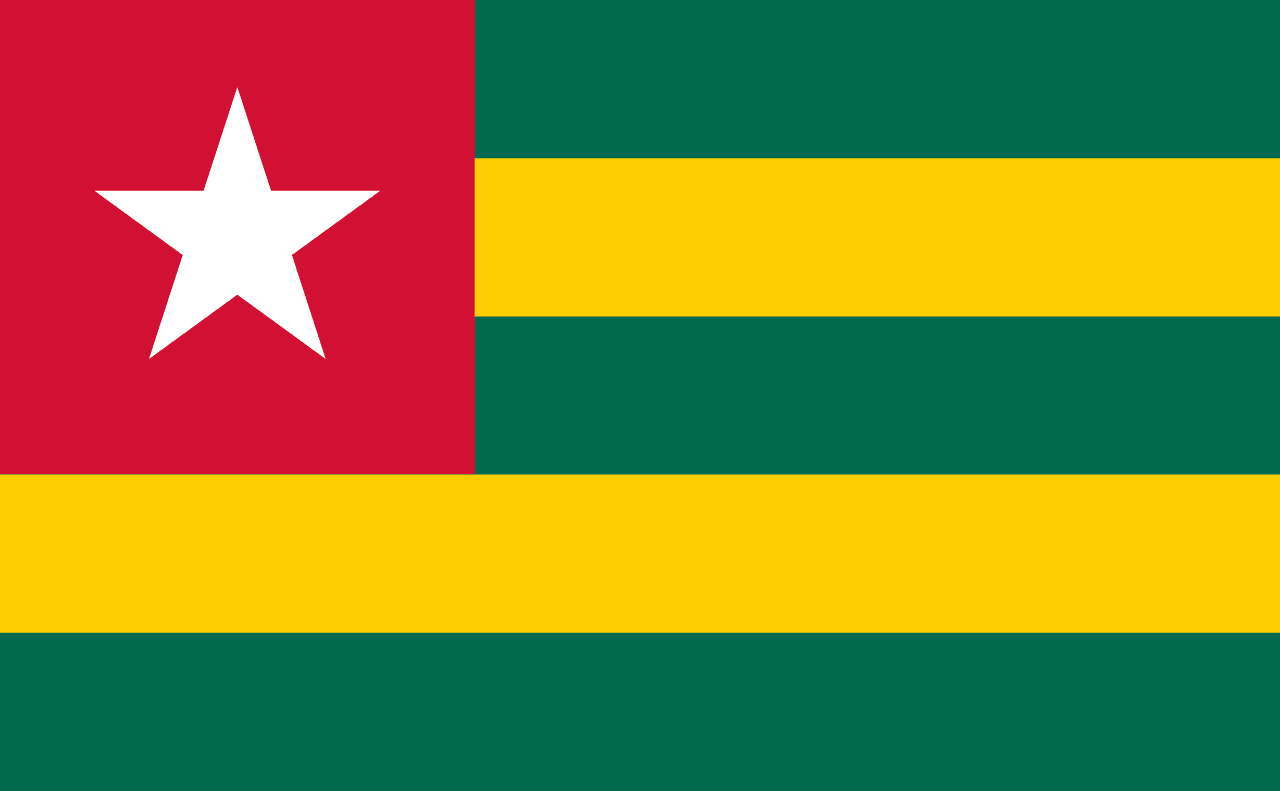
Flag details
- Country
- Togo
- Official name
- Togolese Republic
- Capital
- Lomé
- ISO code
- TG / TGO
- Region
- West Africa
Flag colors
- #006a4e43%
- #ffce0031%
- #d2103419%
Share of the flag's surface, measured from the image.
Download the flag
Meaning and history of the flag of Togo
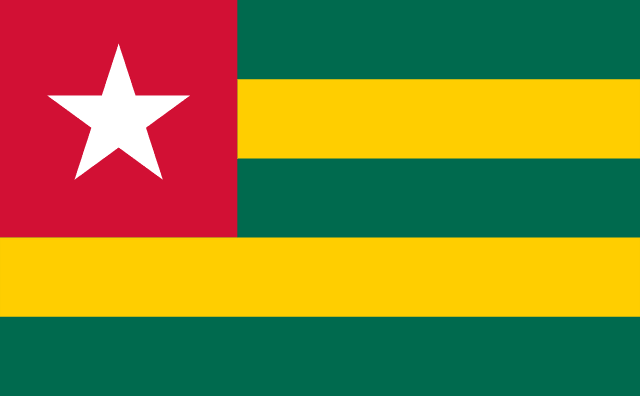
Togo's flag was adopted on April 27, 1960, when the country proclaimed its independence from France. It consists of five alternating horizontal stripes of green and yellow (three green, two yellow). The upper hoist canton bears a red square with a white five-pointed star at its center.
The five horizontal stripes represent the country's five administrative regions. Green symbolizes hope, agriculture, and the tropical forests covering much of the territory. Yellow represents mineral wealth, especially the phosphate deposits that are one of Togo's leading exports. The red of the canton evokes the blood shed by patriots in the struggle for independence, while the white star symbolizes life, purity, peace, and the dignity of the Togolese people.
The flag's design was created by artist Paul Ahyi, regarded as one of West Africa's most distinguished artists. The combination of horizontal stripes with a red canton and star is somewhat reminiscent of the structure of the United States flag, though rendered in the traditional pan-African colors of green, yellow, and red. It is easily distinguished from other African flags by its unusual alternation of five stripes, a rare trait in the continent's vexillology.
You can view the flag of Togo in high resolution above and download it in several sizes for personal, educational or reference use. To explore more, visit the full Togo profile, its map, or the current local time in Lomé.