Flag of Slovenia
Republic of Slovenia

Flag details
- Proportions
- 1:2 height : width
- ISO code
- SI / SVN
- Emoji
- Unicode
- U+1F1F8 U+1F1EE
Flag colors
- red#ff000033%
- blue#0000ff32%
- white#ffffff31%
Share of the flag's surface, measured from the image. Names describe the measured shade.
Download the flag
Meaning and history of the flag of Slovenia
The flag of Slovenia was adopted on June 25, 1991, the date of its declaration of independence from Yugoslavia. It has three equal horizontal stripes of white, blue, and red, the pan-Slavic colors. In the upper hoist corner, overlaid on the white and blue stripes, sits the national coat of arms.
The coat of arms shows the silhouette of Mount Triglav, Slovenia's highest peak and a national symbol, in white against a blue background. Below the mountain are two wavy blue lines representing the Adriatic Sea and Slovenia's rivers. Above Triglav are three golden six-pointed stars arranged in an inverted triangle, taken from the coat of arms of the Counts of Celje, an important medieval Slovenian dynasty.
At first glance, the Slovenian flag can be mistaken for those of Russia and Slovakia, since all three share the same three colors in the same order. The coat of arms in the upper hoist corner, however, clearly sets it apart. The flag's proportions are 1:2, and its current design was chosen after a public debate that weighed several alternative proposals with far more radical designs.
Colours and shape
Measured from the image, the main colours of the flag of Slovenia are red, blue and white. Its official proportions are 1:2 (height to width), the same shape as at least 51 other national flags.
The flag emoji 🇸🇮 is built from the two regional indicator letters S and I (U+1F1F8 U+1F1EE). Most phones and Macs draw it as a flag; Windows shows the two letters instead.
Part of a flag family: Pan-Slavic colours
Red, white and blue, after the Russian tricolour; the Prague Slavic Congress of 1848 promoted them as the colours of the Slavic peoples.
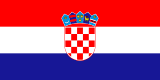 Croatia
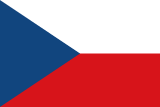 Czech Republic
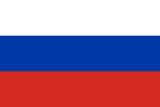 Russia
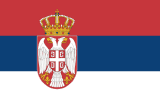 Serbia
 Slovakia