Flag of Norway
Kingdom of Norway
Flag details
- Proportions
- 8:11 height : width
- ISO code
- NO / NOR
- Emoji
- Unicode
- U+1F1F3 U+1F1F4
Flag colors
- red#ba0c2f60%
- blue#00205b20%
- white#ffffff16%
Share of the flag's surface, measured from the image. Names describe the measured shade.
Download the flag
Meaning and history of the flag of Norway
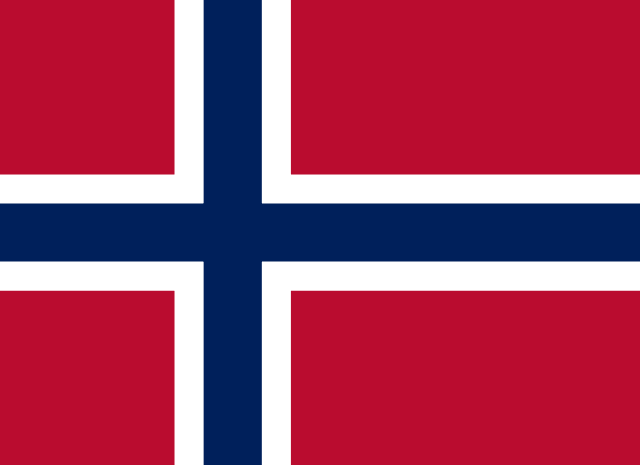
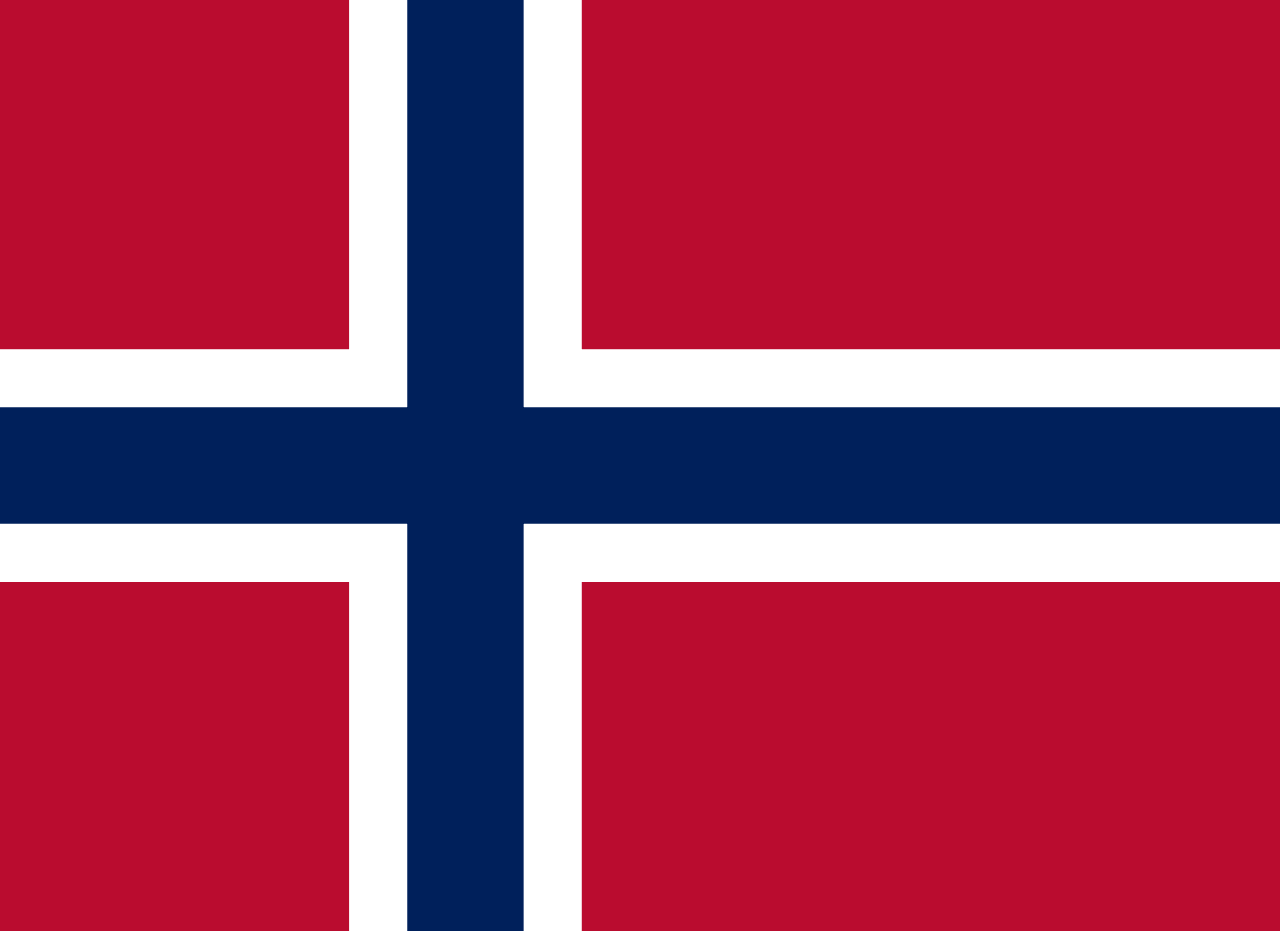
Norway's flag is red with a dark blue Scandinavian cross outlined in white. The cross is offset toward the hoist, following the Nordic tradition established by the Danish Dannebrog. It was officially adopted on July 17, 1821, making it one of the oldest national designs still in use.
Red, white, and blue were chosen by parliamentarian Fredrik Meltzer as colors representing liberty, inspired by the flags of France, the United States, the Netherlands, and the United Kingdom — all nations associated with democratic and liberal ideals. The Scandinavian cross links Norway to the shared tradition of the Nordic countries: Denmark, Sweden, Finland, and Iceland.
Norway's flag was designed during the country's union with Sweden and represented an act of national assertion. Notably, it contains within it the colors of several other flags: the blue cross on a red field with white borders can be seen as a layering of Denmark's flag (a white cross on red) with the red, white, and blue of France and the Netherlands. It is the only Nordic flag to combine these three "colors of liberty" with the Scandinavian cross format.
Colours and shape
Measured from the image, the main colours of the flag of Norway are red, blue and white; red alone covers about 60% of the surface. Its official proportions are 8:11 (height to width), a shape it shares with only one other national flag: Israel.
The flag emoji 🇳🇴 is built from the two regional indicator letters N and O (U+1F1F3 U+1F1F4). Most phones and Macs draw it as a flag; Windows shows the two letters instead.
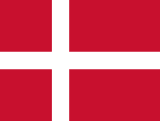 Denmark
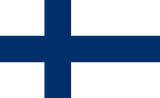 Finland
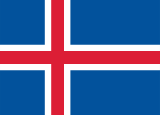 Iceland
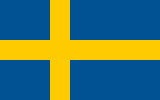 Sweden