Flag of Italy
Italian Republic
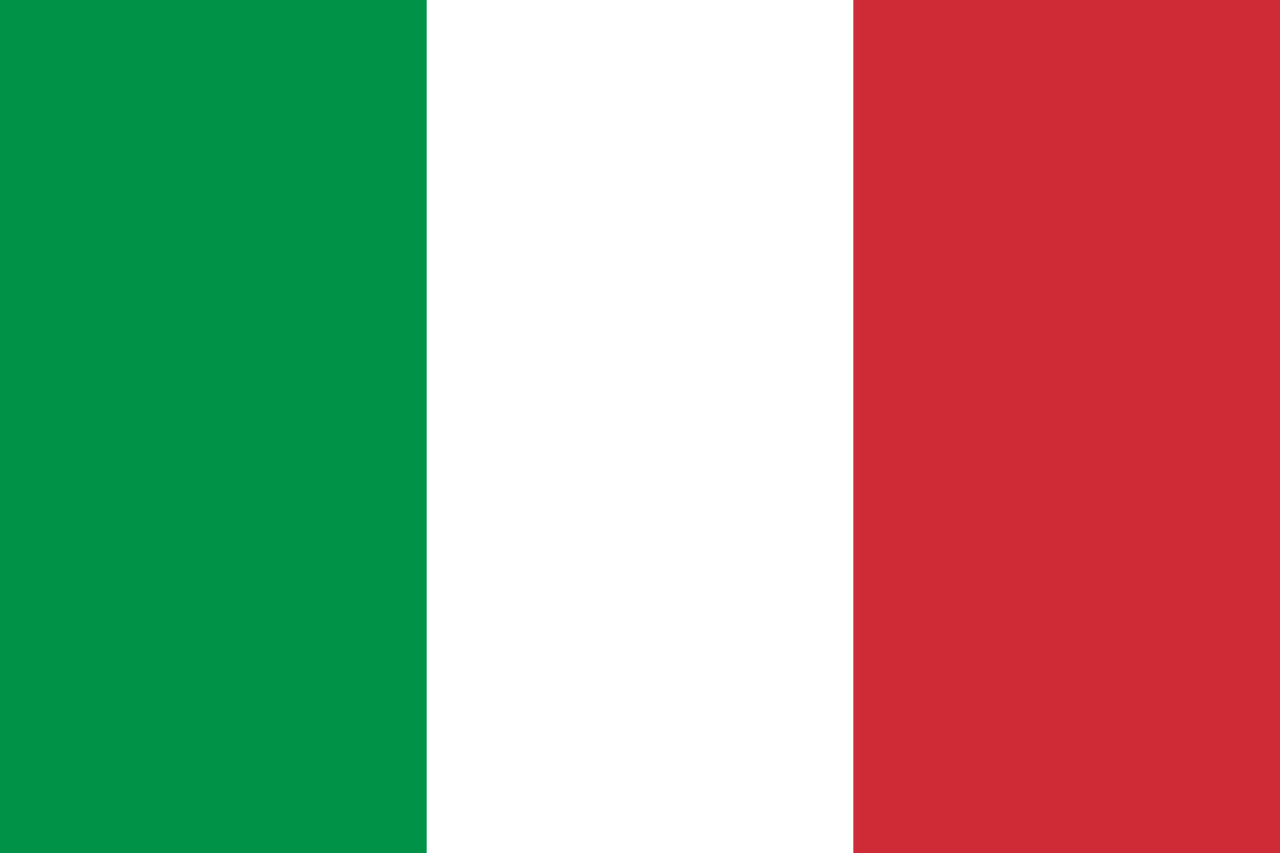
Flag details
- Proportions
- 2:3 height : width
- ISO code
- IT / ITA
- Emoji
- Unicode
- U+1F1EE U+1F1F9
Flag colors
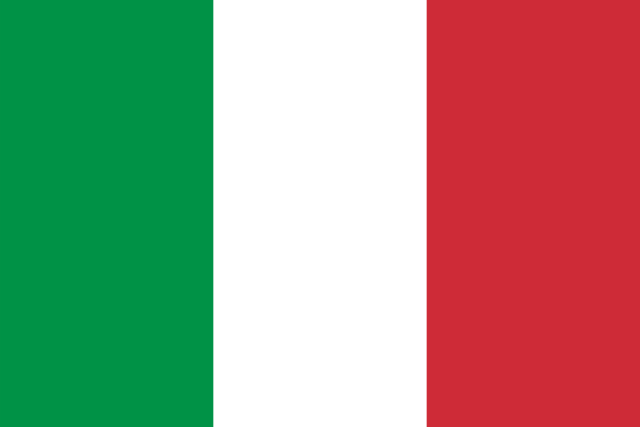
- green#00924633%
- red#ce2b3733%
- white#ffffff33%
Share of the flag's surface, measured from the image. Names describe the measured shade.
Download the flag
Meaning and history of the flag of Italy
Italy's flag, known as il Tricolore, is a vertical tricolor of three equal stripes: green at the hoist, white in the middle, and red at the fly. The official proportions are 2:3. By tradition, green represents Italy's plains and hills, white the snow of the Alps, and red the blood shed in the wars of independence, though other interpretations link the colors to hope, faith, and charity.
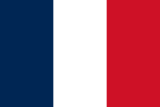
Italy's tricolor was directly inspired by the French flag, with green substituted for blue. It was first used in 1797 by the Cispadane Republic, a state created by Napoleon Bonaparte in northern Italy. After Italian unification in 1861, it became the flag of the Kingdom of Italy, bearing the coat of arms of the House of Savoy at its center. The shield was removed on June 19, 1946, when Italy became a republic following a referendum.
Italy's flag is often confused with Mexico's, which is also a green-white-red vertical tricolor, though Mexico's includes the national coat of arms in the center stripe and uses darker shades of green and red. It also resembles Ireland's flag, which substitutes orange for red. Italy celebrates Flag Day on January 7, commemorating the tricolor's first adoption in 1797 in the city of Reggio Emilia.
Colours and shape
Measured from the image, the main colours of the flag of Italy are green, red and white. Its official proportions are 2:3 (height to width), the same shape as at least 84 other national flags.
The flag emoji 🇮🇹 is built from the two regional indicator letters I and T (U+1F1EE U+1F1F9). Most phones and Macs draw it as a flag; Windows shows the two letters instead.