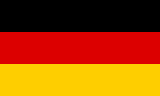
Flag of Germany
Federal Republic of Germany
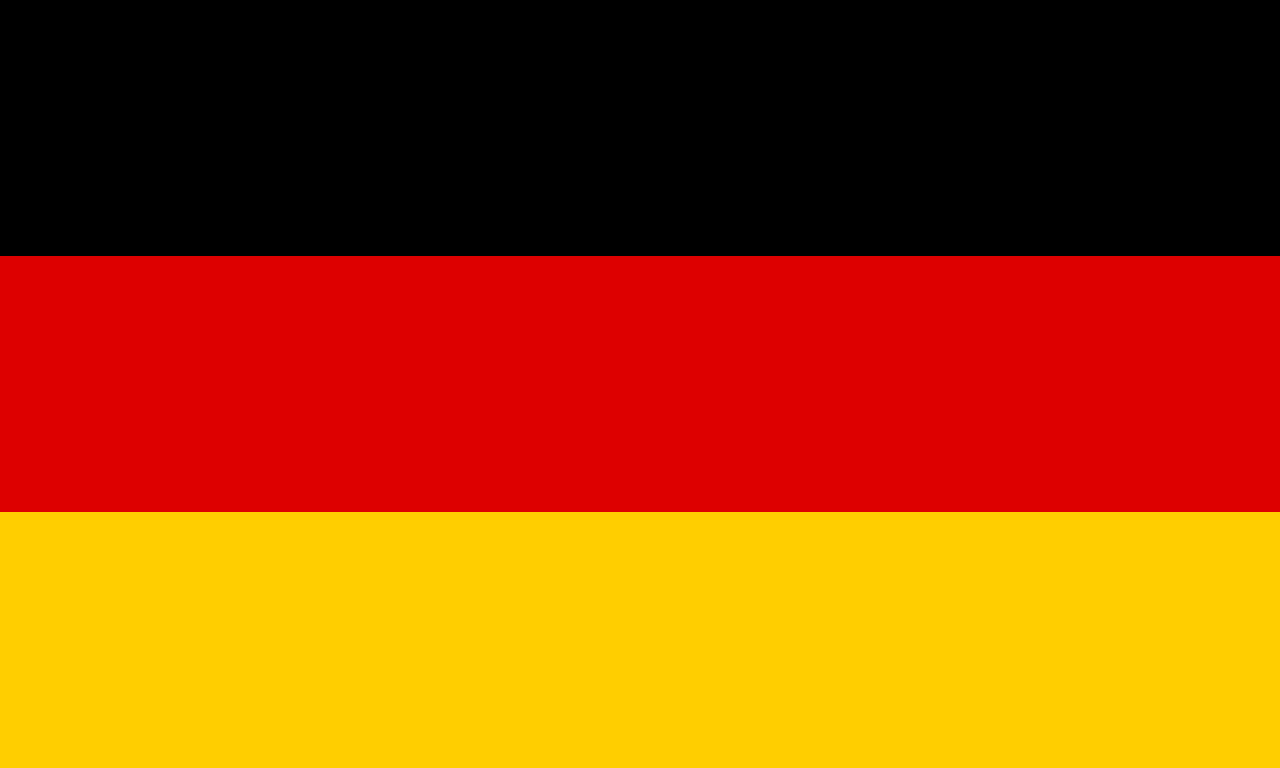
Flag details
- Country
- Germany
- Official name
- Federal Republic of Germany
- Capital
- Berlin
- ISO code
- DE / DEU
- Region
- Western Europe
Flag colors
- #00000033%
- #dd000033%
- #ffce0033%
Share of the flag's surface, measured from the image.
Download the flag
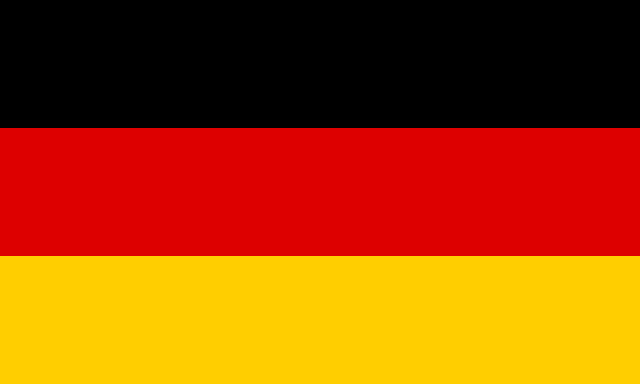
Meaning and history of the flag of Germany
Germany's flag consists of three equal horizontal stripes of black, red, and gold, from top to bottom. These colors have deep roots in German history, tracing back to the Napoleonic Wars, when volunteers of the Lutzow Free Corps wore black uniforms with gold buttons and red trim. The liberal, nationalist German student movement later adopted the same colors in 1817.
The black-red-gold tricolor was first used as a national flag during the Revolution of 1848 and the short-lived Frankfurt Parliament. After German unification under Bismarck in 1871, it was replaced by the black-white-red flag of the German Empire. It reemerged with the Weimar Republic in 1919, was supplanted by the swastika flag under the Nazi regime, and was finally restored after World War II by both West Germany and East Germany -- though the latter added its own coat of arms at the center.
Germany's flag can be mistaken at first glance for Belgium's, which uses the same colors but in vertical stripes and a slightly different shade of yellow. It also bears a resemblance to the inverted flag of the old Habsburg monarchy. The current design was officially readopted on May 23, 1949.
You can view the flag of Germany in high resolution above and download it in several sizes for personal, educational or reference use. To explore more, visit the full Germany profile, its map, or the current local time in Berlin.