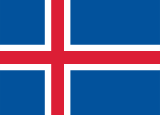
Flag of Iceland
Republic of Iceland
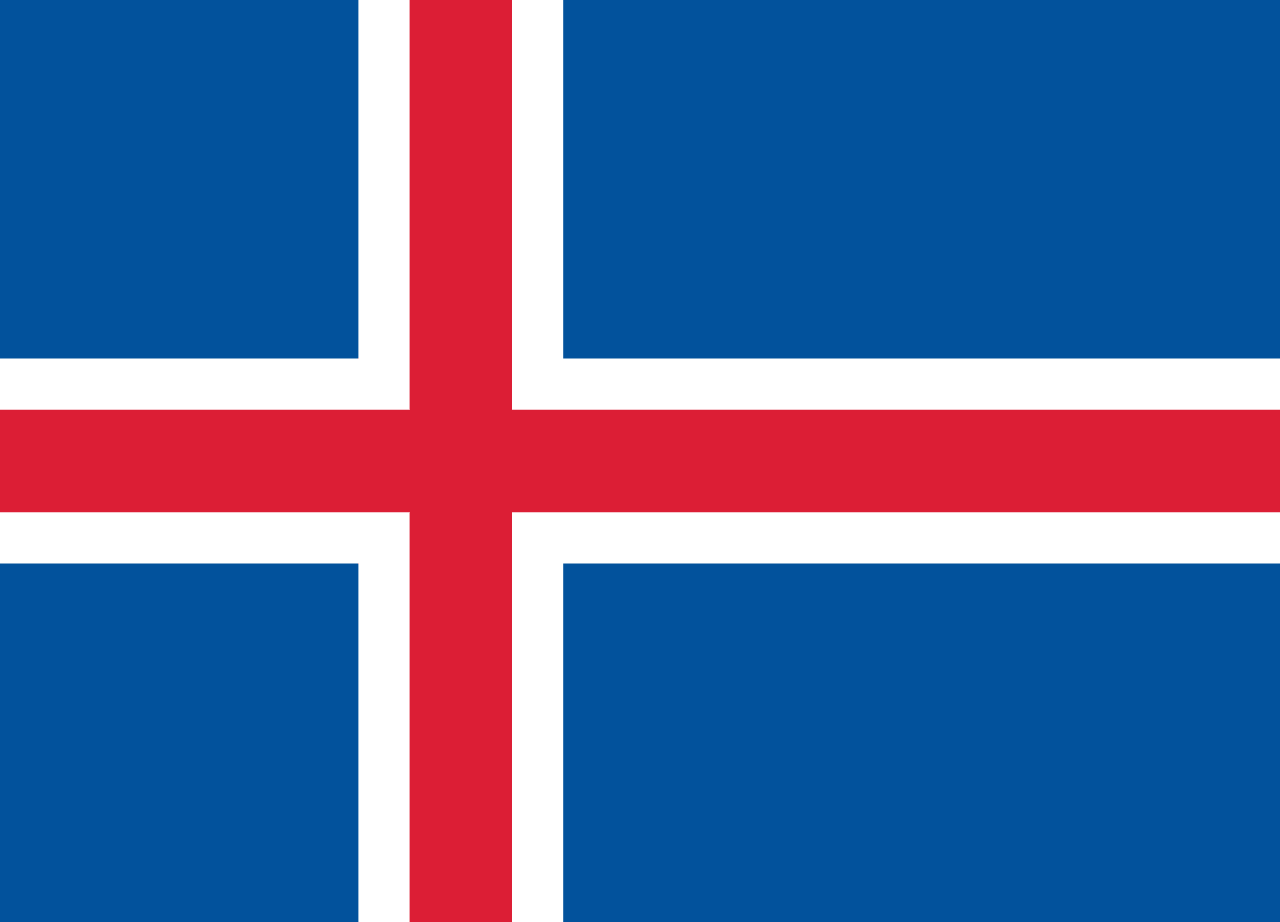
Flag details
- Country
- Iceland
- Official name
- Republic of Iceland
- Capital
- Reykjavik
- ISO code
- IS / ISL
- Region
- Northern Europe
Flag colors
- #02529c64%
- #dc1e3518%
- #ffffff15%
Share of the flag's surface, measured from the image.
Download the flag
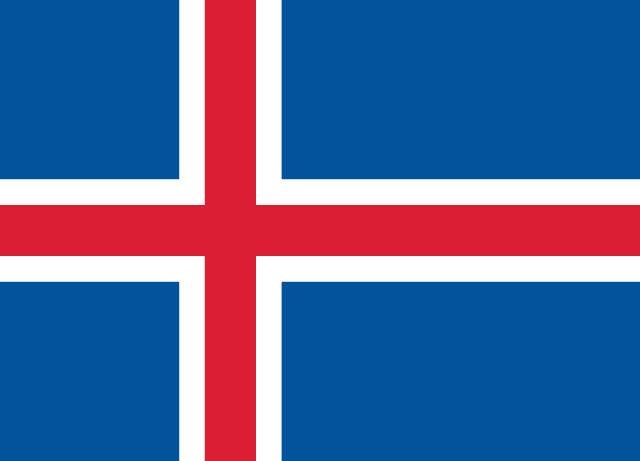
Meaning and history of the flag of Iceland
Iceland's flag has a dark blue field with a red Scandinavian cross outlined in white. The cross extends to the flag's edges and sits off-center toward the hoist, following the traditional Nordic cross pattern. The blue represents the country's mountains as seen from the coast, the white evokes the snow and glaciers covering much of the island, and the red symbolizes the fire of its volcanoes, capturing Iceland's identity as a 'land of ice and fire.'
The flag was designed by Matthias Thordarson and officially adopted on June 17, 1944, when Iceland declared itself a republic independent of Denmark. The design, however, had already been in use since 1915 for domestic purposes under Danish home rule. The choice of the Nordic cross links Iceland to the Scandinavian tradition shared with Denmark, Sweden, Norway, and Finland.
Iceland's flag is the only one among the Nordic group to combine blue and red on a blue field; Norway uses a similar combination but with red as the background color. The official proportions are 18:25, slightly different from those of the other Nordic flags. It is one of the youngest Nordic flags, yet its symbolism of volcanoes, ice, and ocean makes it a remarkably precise visual portrait of Iceland's geography.
You can view the flag of Iceland in high resolution above and download it in several sizes for personal, educational or reference use. To explore more, visit the full Iceland profile, its map, or the current local time in Reykjavik.