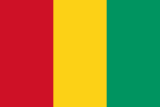
Flag of Guinea
Republic of Guinea
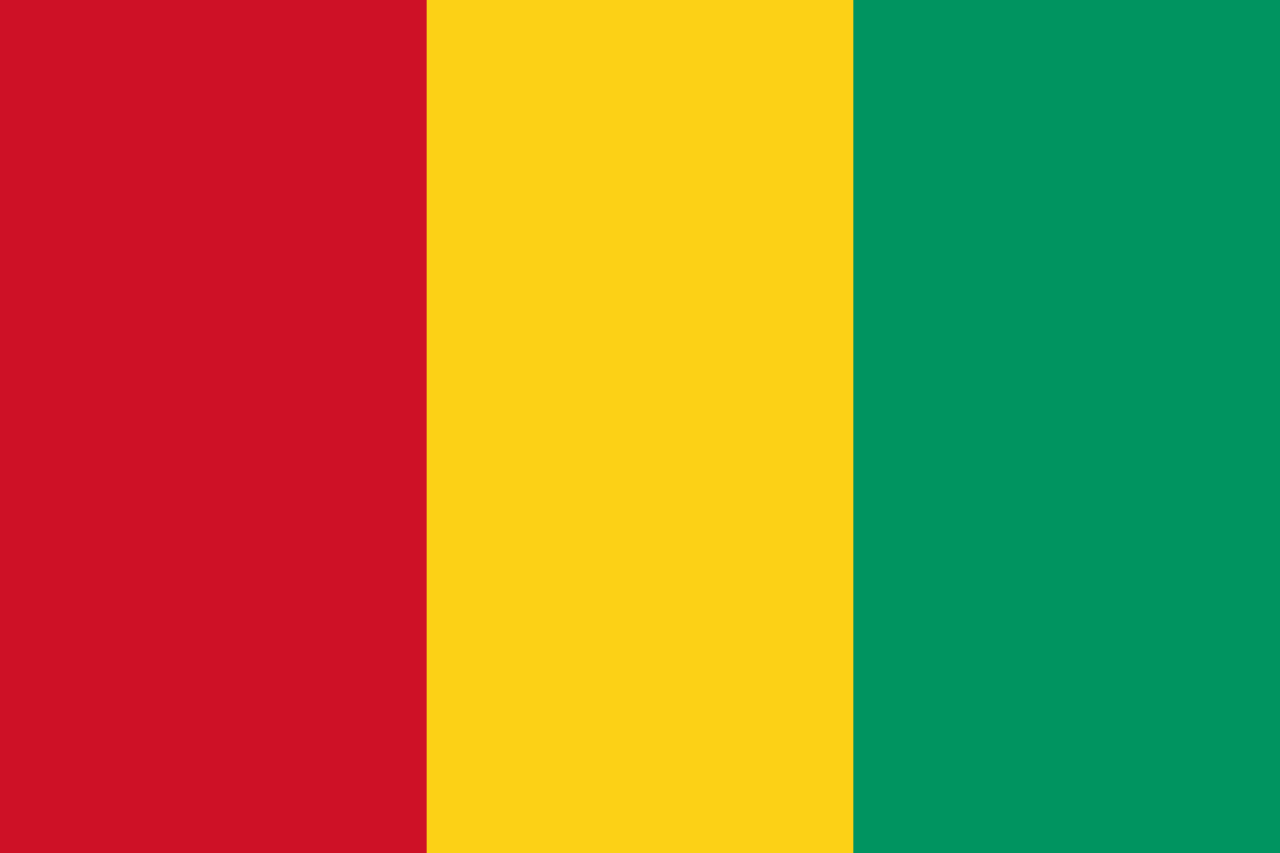
Flag details
- Country
- Guinea
- Official name
- Republic of Guinea
- Capital
- Conakry
- ISO code
- GN / GIN
- Region
- West Africa
Flag colors
- #ce112633%
- #00946033%
- #fcd11633%
Share of the flag's surface, measured from the image.
Download the flag
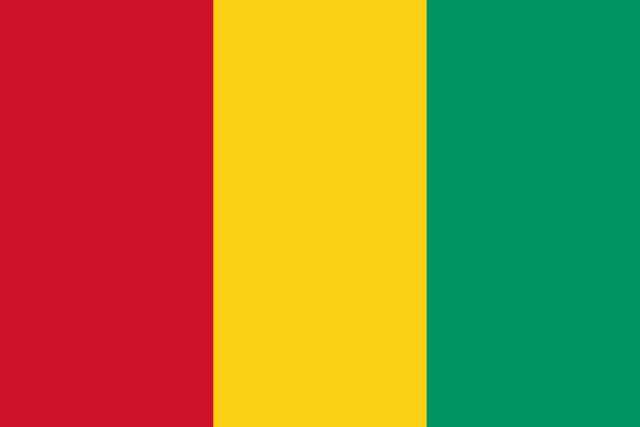
Meaning and history of the flag of Guinea
Guinea's flag was adopted on November 10, 1958, following independence from France. It consists of three equal vertical stripes of red, yellow, and green, from left to right. The design draws directly on the French flag, swapping its horizontal layout for a vertical one and replacing the colors with the pan-African palette.
The red represents the blood of the martyrs who gave their lives fighting colonialism and for freedom. The yellow symbolizes the African sun and the country's mineral wealth, especially bauxite, of which Guinea holds the world's largest reserves. The green represents the country's lush tropical vegetation and hope for the nation's future.
Guinea's flag is identical in design to Mali's, but with the colors in reverse order: Guinea runs red-yellow-green, Mali green-yellow-red. It also bears similarities to the flags of Senegal and Cameroon. Ahmed Sekou Toure, Guinea's first president and independence leader, deliberately chose the pan-African colors to express solidarity with Africa's liberation movement and with the legacy of the ancient Ghana Empire.
You can view the flag of Guinea in high resolution above and download it in several sizes for personal, educational or reference use. To explore more, visit the full Guinea profile, its map, or the current local time in Conakry.