
Flag of the United Kingdom
United Kingdom of Great Britain and Northern Ireland
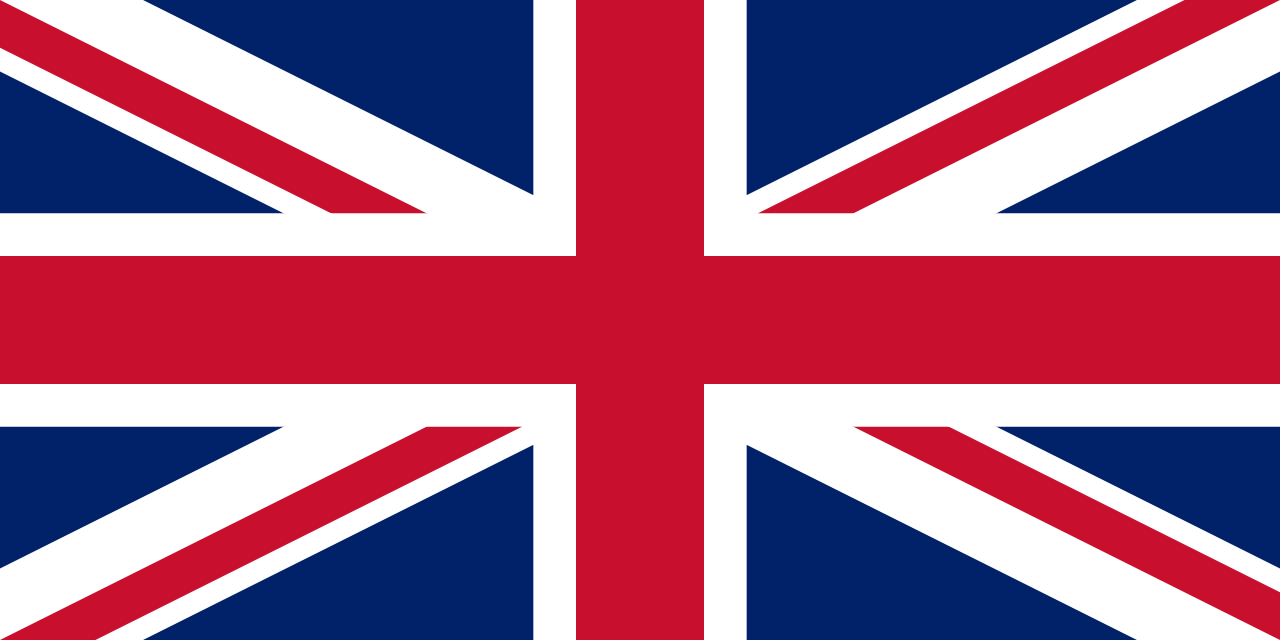
Flag details
- Country
- United Kingdom
- Official name
- United Kingdom of Great Britain and Northern Ireland
- Capital
- London
- ISO code
- GB / GBR
- Region
- Northern Europe
Flag colors
- #c8102e36%
- #ffffff31%
- #01216926%
Share of the flag's surface, measured from the image.
Download the flag
Meaning and history of the flag of the United Kingdom
The flag of the United Kingdom, popularly known as the Union Jack or Union Flag, combines three overlapping crosses on a dark blue field: the red cross of St. George (patron saint of England) with a white border, the white diagonal cross of St. Andrew (patron saint of Scotland), and the red diagonal cross of St. Patrick (patron saint of Ireland). The design reflects the political union of the three kingdoms that formed the British state.
The first version appeared in 1606, when James I united the crowns of England and Scotland, combining the crosses of St. George and St. Andrew. In 1801, following the union with Ireland, the cross of St. Patrick was added, creating the flag as it appears today. Notably, Wales is not represented on the flag, since it was considered a principality of England when the original design was created. The asymmetry of the red and white diagonals is deliberate, allowing observers to tell whether the flag is flying right side up or upside down—in a naval context, an inverted flag traditionally signaled distress.
You can view the flag of the United Kingdom in high resolution above and download it in several sizes for personal, educational or reference use. To explore more, visit the full the United Kingdom profile, its map, or the current local time in London.