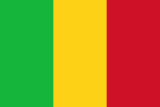
Flag of Mali
Republic of Mali

Flag details
- Proportions
- 2:3 height : width
- ISO code
- ML / MLI
- Emoji
- Unicode
- U+1F1F2 U+1F1F1
Flag colors
- green#14b53a33%
- red#ce112633%
- yellow#fcd11633%
Share of the flag's surface, measured from the image. Names describe the measured shade.
Download the flag
Meaning and history of the flag of Mali
Mali's flag is made up of three vertical stripes of equal width: green at the hoist, yellow in the middle, and red on the outer edge. It was adopted on March 1, 1961, shortly after independence from France. The flag originally featured a black stylized human figure, the kanaga, on the central stripe, which was removed for Islamic religious reasons.
Green symbolizes the fertility of the land and hope, yellow represents the country's mineral wealth, particularly the gold that has historically been abundant in the region, and red honors the blood shed by Malians in their struggle for freedom. These are the pan-African colors, inspired by the flag of Ethiopia.
Mali's flag is identical in structure to the flags of Guinea and Senegal, all built as vertical tricolors, though with the colors in a different order. It also bears some resemblance to the flags of Romania and Ireland. The green-yellow-red layout is shared by several West African countries, reflecting the region's historical and cultural ties.
Colours and shape
Measured from the image, the main colours of the flag of Mali are green, red and yellow. Its official proportions are 2:3 (height to width), the same shape as at least 84 other national flags.
The flag emoji 🇲🇱 is built from the two regional indicator letters M and L (U+1F1F2 U+1F1F1). Most phones and Macs draw it as a flag; Windows shows the two letters instead.
Part of a flag family: Pan-African colours
Red, yellow and green, the colours of Ethiopia’s flag. Ethiopia was never colonised (apart from the Italian occupation of 1936–1941), and Ghana took its colours at independence in 1957; many states followed.
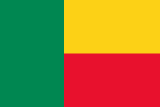 Benin
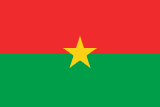 Burkina Faso
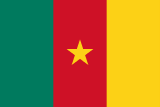 Cameroon
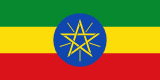 Ethiopia
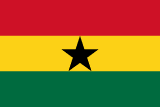 Ghana
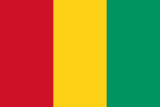 Guinea
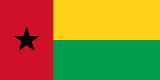 Guinea-Bissau
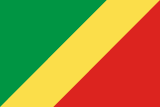 Republic of the Congo
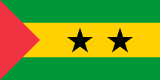 Sao Tome and Principe
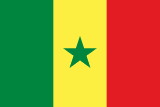 Senegal
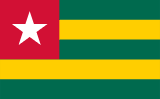 Togo