Red and white flags
Find a flag by its pattern, not just its colors. This gallery covers 15 red-and-white national designs, plus Latvia’s carmine, Qatar’s maroon and Malta’s emblem details—with the distinctions explained rather than hidden in a single count.
Research reviewed 1 October 2026 · Sources & methodology
Find the flag you saw
Start with the largest shape you remember. Each image preserves the asset’s proportions, so Switzerland stays square and Qatar stays long. Open a country’s flag page for its larger image and country context.
18 designs shown.
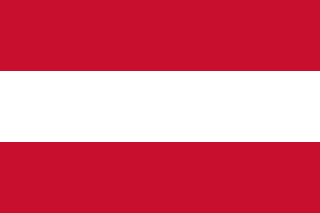
Austria
Three equal horizontal bands: red, white, red. The white band is wider than Latvia’s.
Stripes · Red and white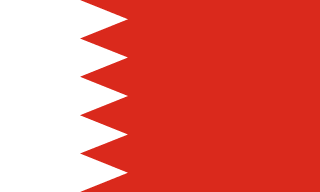
Bahrain
Five white triangular points separate the white hoist from the red field. Count the points to distinguish Qatar.
Serrated · Red and white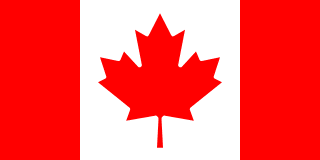
Canada
A red maple leaf in a broad white center, with red vertical bands at the sides. The stylized leaf has 11 points.
Emblem · Red and white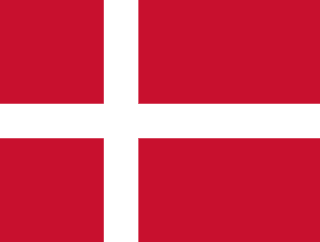
Denmark
A white Nordic cross on red, with the vertical bar closer to the hoist. The cross reaches the flag’s edges.
Cross · Red and white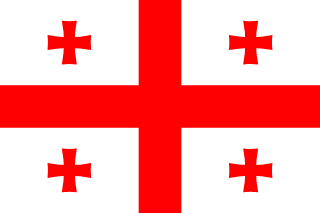
Georgia
A large red cross divides the white field into four quarters, each containing a smaller red cross: five crosses in total.
Cross · Red and white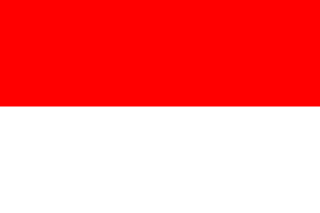
Indonesia
Red above white, without an emblem. This flag has a wider rectangular shape than Monaco’s in their standard proportions.
Stripes · Red and white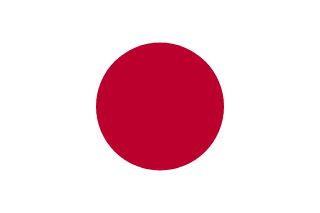
Japan
One red disc centered on a white field. Unlike Tunisia, there is no crescent or star inside the disc.
Circle · Red and white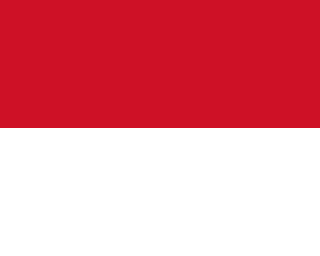
Monaco
Red above white. Monaco’s conventional 4:5 height-to-length format is closer to square than Indonesia’s 2:3.
Stripes · Red and white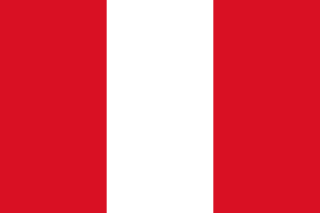
Peru
Vertical red, white, red bands. This is the plain national flag; official variants displaying the coat of arms introduce additional colors.
Stripes · Red and white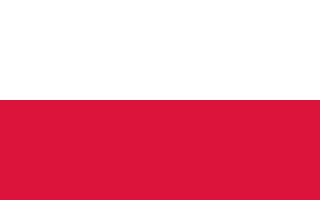
Poland
White above red—the reverse of Indonesia and Monaco. This is the plain flag, without the coat of arms used on certain variants.
Stripes · Red and white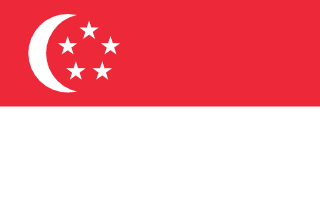
Singapore
Red above white, with a white crescent and five white stars in the upper hoist. Look for the stars rather than relying on the two bands.
Crescent · Red and white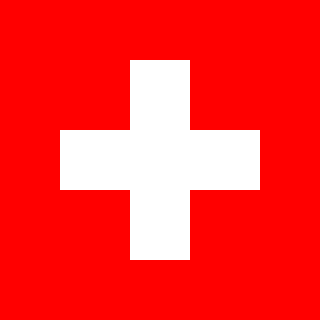
Switzerland
A white upright cross centered on a square red field. Its arms stop short of the edges, unlike Denmark’s cross.
Cross · Red and white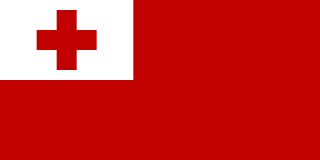
Tonga
A red field with a white upper-hoist rectangle containing a red cross. Most of the flag remains solid red.
Cross · Red and white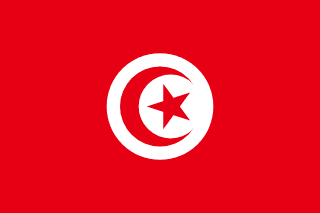
Tunisia
A white disc on red contains a red crescent and star. That enclosing white disc distinguishes it from Türkiye.
Crescent · Red and white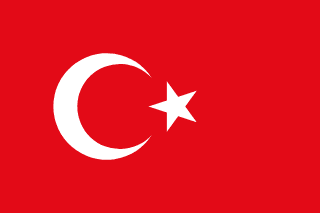
Turkey
A white crescent and white star directly on red. There is no surrounding white disc.
Crescent · Red and white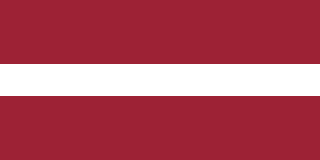
Latvia
Carmine red, white, carmine red. The stripe heights are 2:1:2, so the white band is half the height of either red band.
Stripes · Dark red or maroon
Qatar
Nine white points meet a maroon field. Its long, narrow silhouette provides a second clue after the point count.
Serrated · Dark red or maroon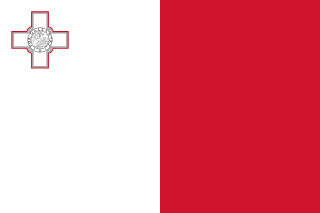
Malta
White at the hoist and red at the fly, with the George Cross in the upper white corner. The cross includes gray and dark details, so the complete design is not strictly two-color.
Emblem · Additional emblem colorsNo flags match this combination. Try another pattern or reset the filters.
The quickest clues to check
Start by separating designs with horizontal stripes, vertical divisions, crosses, central discs and other emblems. Poland’s white-over-red arrangement answers a different structural description from Indonesia’s red-over-white flag, even though the colour set is identical. Japan’s central disc cannot be confused with either once the pattern is included.
Two-colour descriptions also depend on how small details are handled. Malta’s George Cross introduces a grey element; Latvia uses a dark carmine red; Qatar’s maroon is usually distinguished from bright red. The gallery keeps these cases visible in separate groups so the count can be matched to the identification question.
Two horizontal bands
White above red points to Poland. Red above white could be Indonesia or Monaco; their standard proportions help, but a stretched icon may make them indistinguishable. A crescent and stars in the upper red band identify Singapore among these designs.
A cross
Ask whether it reaches the edges. Denmark’s offset white cross does; Switzerland’s centered white cross does not. Georgia has five red crosses on white. Tonga puts one red cross inside a small white rectangle on an otherwise red flag.
A crescent or circle
Japan has a simple red disc on white. Tunisia has a white disc containing a red crescent and star. Türkiye puts its white crescent and star directly on red. Singapore puts a smaller crescent beside five stars above a white lower half.
A zigzag boundary
Count the white tips. Bahrain has five; Qatar has nine. This is often more dependable than deciding whether a photograph’s colored area is bright red or maroon.
Why there is no useful count without a definition
“Red and white flags” can mean flags made only of those colors, flags with red-and-white fields but a multicolored badge, or any flag that contains red and white somewhere. These are different sets. This page is a practical identification gallery, not a claim that all sources must publish the same total.
Our main group contains 15 displayed national designs with red and white alone. Latvia and Qatar appear separately because their dark carmine and maroon shades are important identification clues, not because Latvia’s legally defined red somehow stops being red. Malta is separate because its George Cross includes gray and dark details.
England’s St George’s Cross is a red-and-white flag, but England is a constituent country within the United Kingdom and is outside our 196-profile convention. Greenland and Hong Kong also have familiar red-and-white designs, but they are not included in this country gallery. Nepal is excluded from the two-color set because its blue border is part of the design.
The version of the flag matters
A country can have a plain national flag alongside a state flag, ensign or flag carrying arms for particular uses. Peru’s plain red–white–red tricolor fits this gallery; adding its coat of arms adds colors. Poland’s plain bicolor likewise differs from the variant bearing arms. A count that silently switches between these versions will be inconsistent.
Digital flags introduce another complication: small images soften edges, and white can look gray against a bright background. We classify intentional design colors, not every anti-aliased pixel. The gallery’s gray borders and backgrounds are presentation aids and are not parts of the flags.
For close matches, use the side-by-side identification guide. It explains which clues survive monochrome printing, which depend on orientation and which cannot support a confident answer on their own.
Sources & methodology
Reviewed 1 October 2026. The inclusion rule is applied to the displayed national/civil designs in this gallery, not to every historical, naval or state variant. Country scope follows the site directory. Official references below support the distinctions most easily lost in simplified lists: square proportions, carmine and maroon, point counts, and emblem colors.
- Canada: description of the national flag
Official description, maple-leaf design and proportions.
- Switzerland: the Swiss flag
The national flag’s square shape and white cross.
- Latvia: Law on the National Flag
Carmine red, a 2:1:2 stripe arrangement and a 1:2 height-to-length ratio.
- Qatar: national flag
The maroon field and nine-point serrated division.
- Malta: national flag graphical specifications
The George Cross introduces details beyond the red-and-white field.
- Singapore: national flag
Official description of the crescent, five stars and two horizontal halves.
- Flag artwork
Locally hosted national-flag artwork used across this site. Gallery images retain their intrinsic proportions; the classification is an editorial review of the displayed designs.
Country lists follow our 196-profile directory convention: 193 UN members, Vatican City, Palestine and Taiwan. Dependent territories are identified separately. A missing observation never means zero.