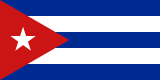
Flag of Cuba
Republic of Cuba
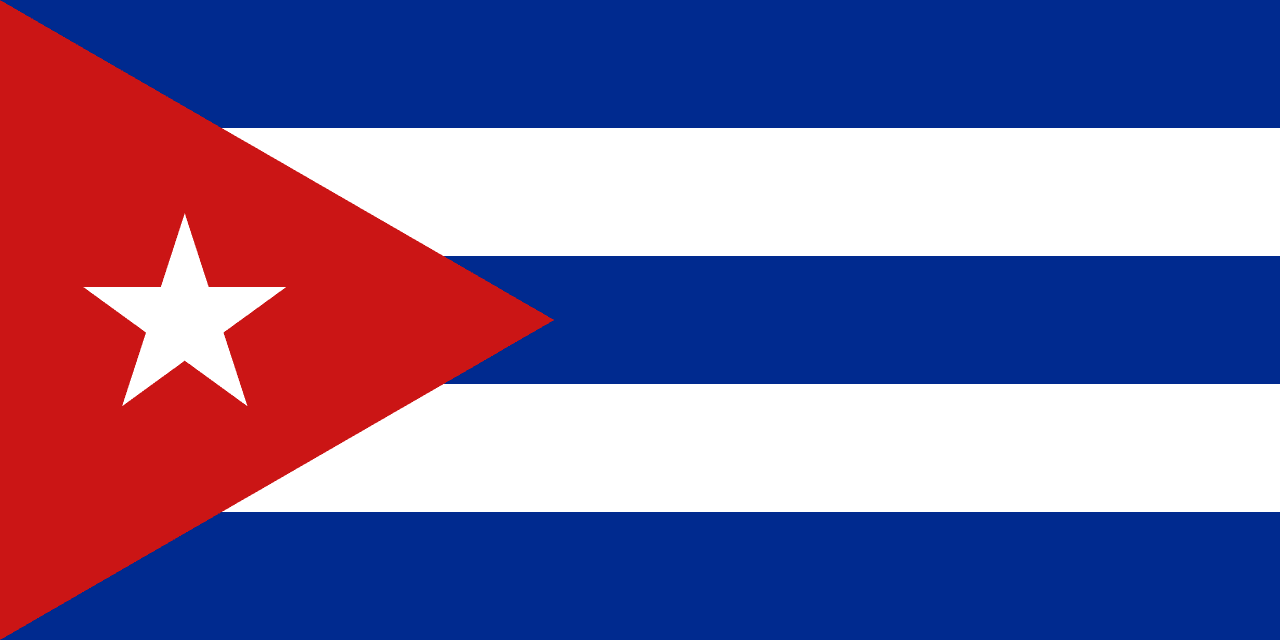
Flag details
- Country
- Cuba
- Official name
- Republic of Cuba
- Capital
- Havana
- ISO code
- CU / CUB
- Region
- Caribbean
Flag colors
- #002a8f48%
- #ffffff31%
- #cb151519%
Share of the flag's surface, measured from the image.
Download the flag
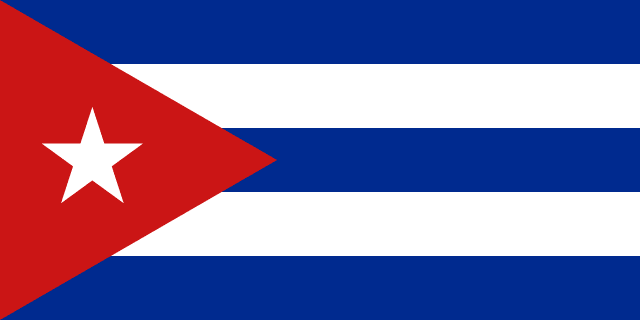
Meaning and history of the flag of Cuba
Cuba's flag, known as La Estrella Solitaria (the Lone Star), was designed in 1849 by the poet and political figure Narciso López and officially adopted on May 20, 1902, with the proclamation of the republic. It shows five alternating horizontal stripes, three blue and two white, along with a red equilateral triangle at the hoist containing a white five-pointed star at its center.
The three blue stripes originally represented the three departments into which Cuba was divided during the colonial era: West, Center, and East. The two white stripes symbolize the purity of the independence ideals. The red triangle evokes the blood shed in the fight for freedom and, through its shape, alludes to equality, fraternity, and liberty, the three ideals of the French Revolution. The white star, called the Lone Star, represents independence. Cuba's flag bears a striking resemblance to that of Puerto Rico, created in 1895 with the same elements but in reversed colors, red stripes and a blue triangle. Both flags emerged from the anti-colonial struggles that swept the Caribbean in the nineteenth century.
You can view the flag of Cuba in high resolution above and download it in several sizes for personal, educational or reference use. To explore more, visit the full Cuba profile, its map, or the current local time in Havana.