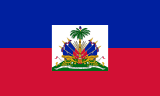
Flag of Haiti
Republic of Haiti
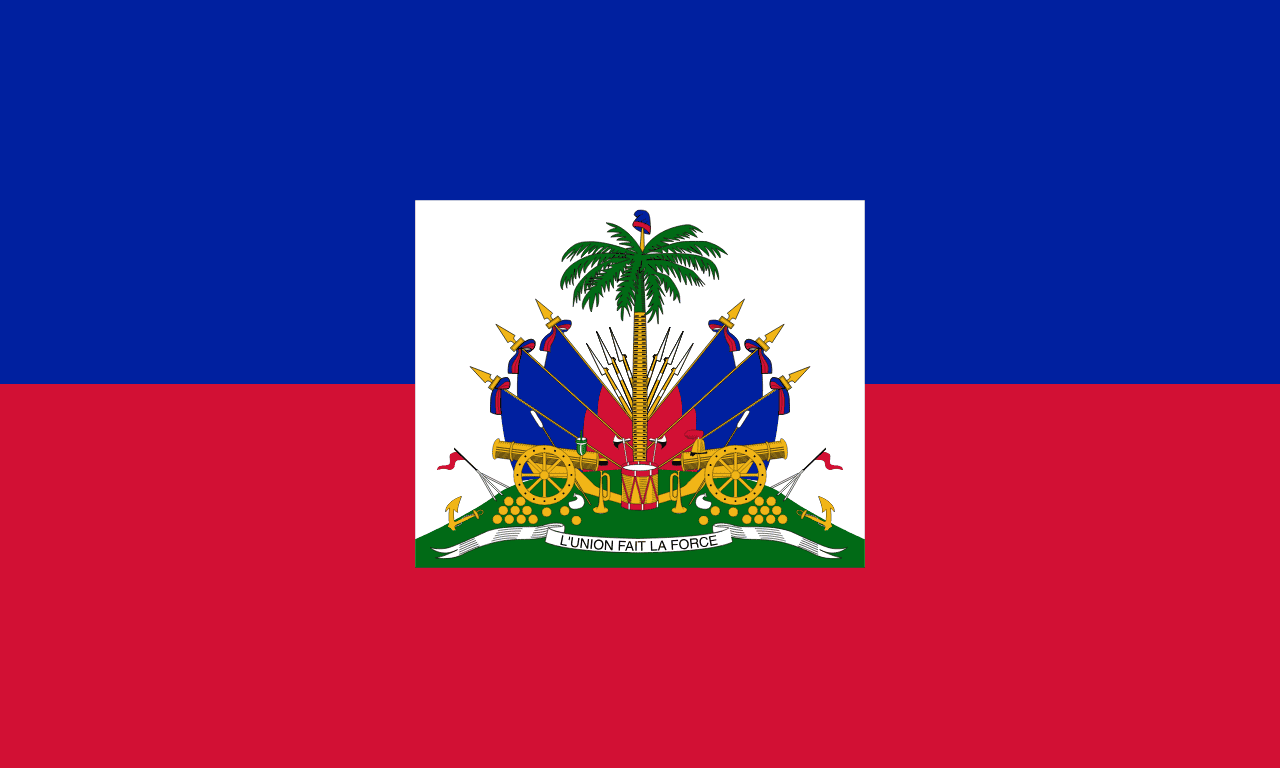
Flag details
- Country
- Haiti
- Official name
- Republic of Haiti
- Capital
- Port-au-Prince
- ISO code
- HT / HTI
- Region
- Caribbean
Flag colors
- #00209f42%
- #d2103442%
- #fefefe8%
Share of the flag's surface, measured from the image.
Download the flag
Meaning and history of the flag of Haiti
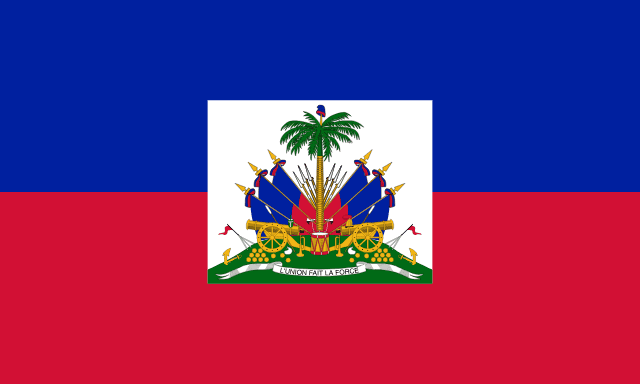
Haiti's flag consists of two equal horizontal stripes, blue on top and red below. At the center sits the national coat of arms on a white rectangle. The emblem features a palm tree crowned with a Phrygian cap, a symbol of liberty, flanked by flags and cannons, along with the national motto, 'L'Union Fait La Force' (Union Makes Strength). The blue and red derive from the French flag, with the white central stripe removed as an act of rejection of colonial rule.
The current design was adopted on February 25, 1986, after the fall of the Duvalier dictatorship, which had altered the flag by changing the stripes to black and red. The horizontal arrangement of stripes distinguishes Haiti's flag from Liechtenstein's, which shares the same colors but arranges them differently. It is one of the few flags in the world whose reverse side differs from its obverse, since the coat of arms on the back shows a slightly different design.
Haiti's flag has deep roots in the revolution that made Haiti the first independent Black republic in the world in 1804. According to tradition, revolutionary leader Jean-Jacques Dessalines created the flag by tearing the white stripe out of the French tricolor and joining the remaining blue and red, symbolizing the union of mulattoes and Black Haitians against French colonial rule.
You can view the flag of Haiti in high resolution above and download it in several sizes for personal, educational or reference use. To explore more, visit the full Haiti profile, its map, or the current local time in Port-au-Prince.