
Flag of Canada
Canada
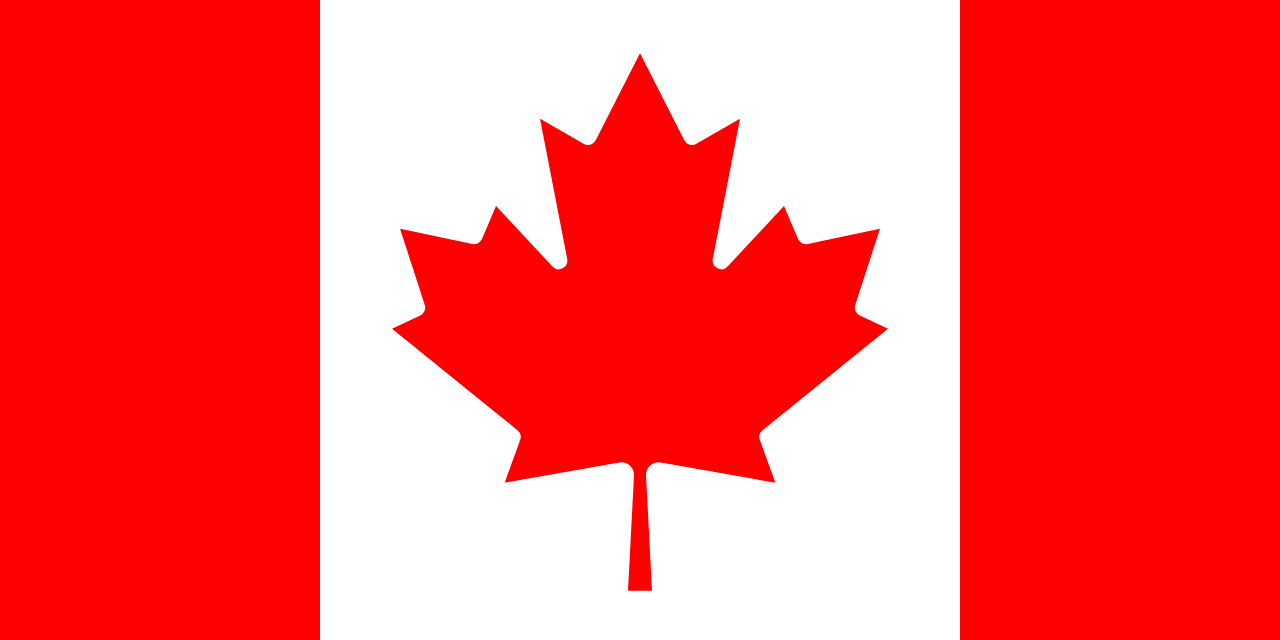
Flag details
- Country
- Canada
- Official name
- Canada
- Capital
- Ottawa
- ISO code
- CA / CAN
- Region
- North America
Flag colors
- #ff000063%
- #ffffff36%
Share of the flag's surface, measured from the image.
Download the flag
Meaning and history of the flag of Canada
Canada's flag, popularly known as the Maple Leaf or l'Unifolié, was officially adopted on February 15, 1965, after intense parliamentary debate. It features two vertical red bands at the edges, each occupying a quarter of the flag's width, flanking a white square that holds a stylized eleven-pointed red maple leaf. The design replaced the earlier Red Ensign, which had carried the British Union Jack.
The maple leaf has been associated with Canada since the eighteenth century and had already appeared on emblems and coins before joining the flag. Red and white were proclaimed Canada's national colors by King George V in 1921. Red evokes the sacrifice of Canadians in wartime, while white stands for peace and neutrality. The maple leaf on the flag does not correspond to any particular species; it was designed specifically to remain recognizable at a distance and in windy conditions. It ranks among the world's most iconic and instantly recognizable flags, and vexillologists have praised its clean, bold design.
You can view the flag of Canada in high resolution above and download it in several sizes for personal, educational or reference use. To explore more, visit the full Canada profile, its map, or the current local time in Ottawa.