Mozambique
Republic of Mozambique
Population: UN WPP 2024, revision 1, projection for 1 July 2026. Sources and methodology.
Geography and territory
Mozambique runs along the southeastern coast of Africa, covering 801,590 square kilometers with a shoreline of roughly 2,500 kilometers washed by the warm waters of the Indian Ocean. The country’s elongated shape stretches from the Rovuma River in the north, which forms the border with Tanzania, down to Maputo Bay in the south, and it shares land borders with six countries across southern and eastern Africa. That coastal position has historically made Mozambique a gateway between the interior of the continent and the maritime trade routes of the Indian Ocean.
The Mozambican landscape divides broadly into two zones: an extensive coastal plain that covers nearly half the country and dominates the southern half of its territory, and a belt of plateaus and mountains that rise progressively toward the west and north. Mount Binga, at 2,436 meters on the border with Zimbabwe, is the country’s highest point. Major rivers crossing the territory, including the Zambezi, the Limpopo, and the Save, carve out broad fertile valleys before emptying into the Indian Ocean through extensive deltas and mangrove systems.
Mozambique’s tropical climate divides into a hot, wet season running from October to March and a cooler, dry season from April to September. The north receives heavier rainfall and supports humid tropical forest, while the south tends toward drier conditions and savanna vegetation. The coast is fringed by exceptionally rich coral reefs, particularly around the Bazaruto and Quirimbas archipelagos, which sustain marine biodiversity of global significance.
History
For centuries, the Mozambican coast served as a crossroads of the Indian Ocean world, visited by Arab, Persian, Indian, and Swahili traders who established ports and trading posts beginning as early as the eighth century. Cities such as Sofala and Mozambique Island became hubs for the trade in gold, ivory, and enslaved people, linking the African interior to markets in Arabia, India, and China. The Great Zimbabwe civilization, centered in the present-day country of the same name, relied on these Mozambican ports to export its gold wealth to the wider world.
The arrival of Vasco da Gama in 1498 marked the beginning of nearly five centuries of Portuguese presence. Portugal built forts and trading posts along the coast to secure its maritime routes to India. Mozambique Island, which gave the entire country its name, served as the colonial capital until 1898 and is today a UNESCO World Heritage Site. Portuguese colonization intensified sharply in its final decades, with forced labor and resource extraction policies that helped fuel a growing independence movement.
The armed struggle for independence, led by FRELIMO under Eduardo Mondlane and later Samora Machel, culminated in the proclamation of independence on June 25, 1975. Peace did not follow immediately, however: a devastating civil war between FRELIMO and RENAMO engulfed the country from 1977 to 1992, killing roughly a million people and displacing millions more. The 1992 Rome General Peace Accords finally ended the conflict and opened an era of reconciliation and reconstruction that has gradually transformed the nation.
Culture and society
Mozambican culture is a striking blend of Bantu traditions and Portuguese, Arab, and Indian influences that together have forged a distinctive national identity within the African continent. Portuguese, the official language inherited from colonial rule, coexists with more than 40 local Bantu languages, among them Makhuwa, Sena, and Changana. This linguistic diversity mirrors the country’s ethnic richness, home to more than sixty distinct ethnic groups.
Mozambican literature has earned international acclaim through writers such as Mia Couto, one of the most translated and celebrated authors writing in Portuguese today, whose poetic prose reinvents the language with neologisms drawn from local tongues. José Craveirinha, the first African writer to receive the prestigious Camões Prize, and Paulina Chiziane, the first Mozambican woman to publish a novel, stand alongside Couto as leading figures of a literary tradition that remains remarkably vital for such a young nation.
Music and dance are central to Mozambican social life. Marrabenta, born in the suburbs of Maputo during the 1940s, fuses traditional rhythms with Portuguese and South African influences and is widely regarded as the country’s national musical style. Traditional dances such as mapiko, performed by the Makonde people in carved wooden masks, and tufo, a dance performed exclusively by women on Mozambique Island, carry deep communal significance. Makonde sculpture, known for its intricate carvings in ebony, ranks among Africa’s most highly regarded art forms.
Economy
Mozambique’s economy has grown significantly in recent decades, buoyed by the political stability achieved after the peace accords and by the discovery of vast natural resources. Agriculture continues to employ the largest share of the population, with subsistence crops such as cassava, maize, and rice complemented by commercial crops including cotton, tobacco, sugar, cashews, and shrimp, which together form important export earners.
The discovery of enormous natural gas reserves in the Rovuma Basin, in the north of the country, has positioned Mozambique as a future major producer of liquefied natural gas on the world stage. These reserves, estimated at well over a hundred trillion cubic feet, have attracted multibillion-dollar investment from international energy companies and promise to reshape the national economy in the decades ahead. Coal mining in Tete Province and the extraction of titanium, rubies, and garnet round out an active extractive sector.
Tourism represents a sector with enormous untapped potential, thanks to Mozambique’s 2,500 kilometers of largely undeveloped coastline, its coral archipelagos, and its rich biodiversity. Development corridors linking Mozambique to South Africa and other neighboring countries facilitate trade and transport. Even so, with a GDP of roughly $22.3 billion and a Human Development Index that remains among the lowest in the world, the country faces considerable challenges, including widespread poverty, vulnerability to tropical cyclones, and an armed insurgency in gas-rich Cabo Delgado province that continues to threaten regional stability.
Food and cuisine
Mozambican cuisine ranks among the most flavorful and distinctive in Africa, born from the fusion of Bantu culinary traditions with Portuguese heritage and Arab and Indian influences carried across the Indian Ocean trade routes. Piri-piri, a fiery sauce made from crushed chili peppers, garlic, lemon, and oil, is the country’s signature condiment, accompanying nearly every dish, most famously grilled piri-piri chicken, which has since become a beloved staple of Luso-African cooking worldwide.
Seafood occupies a central place in the Mozambican kitchen, thanks to the country’s long coastline and richly stocked waters. Mozambican shrimp, prized internationally for their size and flavor, are prepared grilled, in curries, or drenched in piri-piri sauce. Matapa, one of the country’s signature dishes, is made from pounded cassava leaves, ground peanuts, and coconut milk, often enriched with shrimp or crab, resulting in a creamy, aromatic sauce typically served over rice.
Cassava, a dietary staple for much of the population, is eaten in countless forms: boiled, fried, ground into flour for the cornmeal-like dish known as chima, or fermented into traditional beverages. Peanut curry with chicken, seafood soup, and chamussas, samosa-like pastries of Indian origin, round out a rich and varied culinary landscape. Local beer, tropical fruit drinks, and cashew liquor are among the country’s most popular beverages.
Tourism and landmarks
The Bazaruto Archipelago, off the coast of Inhambane Province, is Mozambique’s most exclusive tourist destination and one of the Indian Ocean’s most striking natural paradises. Its five main islands, ringed by pristine coral reefs and crystalline turquoise waters, host exceptional marine biodiversity, including dugongs, sea turtles, dolphins, and more than 2,000 fish species. Diving and snorkeling here rank among the finest such experiences anywhere in the world.
Mozambique Island, a UNESCO World Heritage Site, is a historical and architectural treasure that compresses five centuries of Portuguese colonial history into an island barely three kilometers long. The Fortress of São Sebastião, the Chapel of Nossa Senhora do Baluarte, believed to be the oldest surviving European building in the southern hemisphere, and the coral-and-limestone houses of the old town transport visitors back to the age of maritime exploration. Further north, the Quirimbas Archipelago offers pristine beaches and a model of sustainable tourism built around close contact with local communities.
Gorongosa National Park, in the center of the country, stands as one of Africa’s great conservation success stories. Devastated during the civil war, the park has been restored through an ambitious wildlife reintroduction program and is once again home to lions, elephants, hippopotamuses, crocodiles, and hundreds of bird species. Maputo, the capital, offers a lively atmosphere with its colonial-era architecture, the bustling Central Market, a railway station designed by a collaborator of Gustave Eiffel, and a thriving food and cultural scene shaped by African, Portuguese, and Indian influences alike.
Fun facts about Mozambique
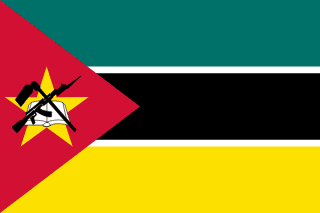
- Mozambique’s flag is the only national flag in the world to feature a modern assault rifle, an AK-47, a symbol of the country’s armed struggle for independence.
- The country takes its name from Mozambique Island, which itself likely derives from Mussa Ben Mbiki, an Arab sultan who ruled the island when the Portuguese first arrived.
- Mozambique is the only Portuguese-speaking country in Africa without an Atlantic coastline; its entire shore faces the Indian Ocean.
- Gorongosa National Park has been called the “Serengeti of the South” for its remarkable recovery of wildlife populations after decades of civil war.
- Mozambican shrimp are so celebrated that in Portugal and Brazil, the phrase is used as a byword for top-quality seafood.
- Despite being a former Portuguese colony rather than a British one, Mozambique is a member of the Commonwealth, a unique status within the organization.
Mozambique in numbers
Latest World Bank and UNDP observations, each with its own year. “World median” is the middle value among the countries that report the same indicator; “#” ranks from the highest value.
Population since 1960
Mozambique had 6.7 million people in 1960 and 35.6 million in 2025 — 5.3 times as many.
People
37.2% of people live in towns and cities (world median 63.4%). 44.2% are under 15 and 2.7% are 65 or older — a very young population. Women have 4.69 children on average, above the replacement level of about 2.1.
Economy
The economy shrank by 0.5% in real terms in 2025. Consumer prices rose by 4.4% in 2025. Services make up the largest share of output (42.0% of GDP); agriculture contributes 25.6%, a large share that points to a farming-based economy.
Development and environment
UNDP rates human development in Mozambique as low, with an index of 0.493 in 2023 (rank 182 of 193). 20.5% of people use the internet and 36.9% have access to electricity. Forest covers 41.3% of the land (world median 32.8%).
Sources: World Bank, World Development Indicators (CC BY 4.0), most recent observation from 2015 onward; UNDP Human Development Report 2025. Retrieved 2026-10-10. Sector shares need not add up to 100% because taxes and subsidies on products are excluded. Missing values are left blank rather than estimated. Sources and methodology.
Climate of Mozambique
Averaged across Mozambique, the warmest month is November (26.9 °C) and the coolest is July (20.3 °C), a seasonal swing of 6.6 °C. The annual mean is 24.4 °C.
About 969 mm of precipitation falls in a typical year. January is the wettest month (233 mm) and August the driest (9 mm). The three wettest consecutive months, December to February, bring 62% of the year's total — a pronounced rainy season.
Show monthly values as a table
| Month | Mean °C | Low °C | High °C | Precipitation, mm |
|---|---|---|---|---|
| January | 26.6 | 22.0 | 31.2 | 233 |
| February | 26.5 | 22.0 | 31.1 | 199 |
| March | 26.1 | 21.5 | 30.8 | 153 |
| April | 24.7 | 19.7 | 29.7 | 65 |
| May | 22.8 | 17.0 | 28.6 | 19 |
| June | 20.9 | 14.9 | 27.0 | 15 |
| July | 20.3 | 14.3 | 26.4 | 13 |
| August | 21.7 | 15.4 | 28.1 | 9 |
| September | 24.0 | 17.7 | 30.4 | 9 |
| October | 25.8 | 19.9 | 31.8 | 18 |
| November | 26.9 | 21.4 | 32.5 | 68 |
| December | 26.8 | 22.0 | 31.6 | 169 |
Figures are 1991–2020 averages across the whole land area of Mozambique, from the World Bank Climate Change Knowledge Portal, CRU TS 4.08 (CC BY 4.0). They are not readings from one weather station: the capital, the coast and high ground can be much warmer, cooler, wetter or drier.
Travel essentials for Mozambique
The practical details visitors ask about first. Traffic in Mozambique drives on the left, one of 54 of the 196 countries profiled here that do — see the full list. Mains electricity is 220 V at 50 Hz, so devices made only for 110–120 V (common in North America) need a converter unless they are dual-voltage — most phone and laptop chargers are.
- Emergency number
- 119Ambulance 117 · Fire 198
- Driving side
- Left
- Plug types
- Type C, Type F, Type MC: two round pins (Europlug); F: two round pins with side earth clips (Schuko); M: three large round pins (South African)
- Voltage
- 220 V50 Hz
- Dialling code
- +258From abroad: your exit code, then 258 and the number
- Currency
- Mozambican Metical (MZN)
- Time zone
- CAT (UTC+2)Current local time in Mozambique
Compiled from IEC plug and voltage standards, national emergency-service listings and the UN road-traffic conventions. Emergency numbers and local coverage can change — confirm them locally on arrival. Mozambique's internet domain is .mz.
Where Mozambique ranks in the world
Each position counts only the countries with data in that ranking guide. First place is the highest value — for price levels, the most expensive. Select a card to see the full table.
- Population44th of 19636.6 millionUN projection, July 2026
- Land area34th of 195786,380 km²World Bank, 2023
- Population density141st of 19443 per km²World Bank, 2023
- GDP (nominal)121st of 187$22.8BWorld Bank, 2024, current US$
- GDP per capita181st of 187$657World Bank, 2024, current US$
- Life expectancy176th of 19463.8 yearsWorld Bank, 2024
- Price level123rd of 16536 (US = 100)ICP 2021, household consumption
Bordering countries of Mozambique


Compare Mozambique with another country
Frequently asked questions about Mozambique
What is the capital of Mozambique?
The capital of Mozambique is Maputo.
What is the population of Mozambique?
The UN World Population Prospects projection for Mozambique is 36,639,851 people (36.6 million) on 1 July 2026. National statistical offices may publish different estimates.
What language is spoken in Mozambique?
The official language of Mozambique is Portuguese.
What currency is used in Mozambique?
The currency of Mozambique is the Mozambican Metical (MZN).
How big is Mozambique?
Mozambique covers an area of 801,590 km².
What type of government does Mozambique have?
Mozambique is a presidential republic.
Which countries border Mozambique?
Mozambique shares land borders with Tanzania, Malawi, Zambia, Zimbabwe, South Africa, Eswatini.
What is the highest point in Mozambique?
The highest point in Mozambique is Mount Binga (2,436 m).


