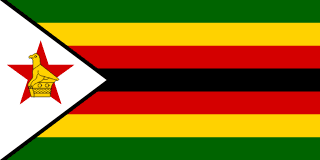
Zimbabwe
Republic of Zimbabwe
Population: UN WPP 2024, revision 1, projection for 1 July 2026. Sources and methodology.
Geography and territory
Zimbabwe is a landlocked country in southern Africa, covering 390,757 square kilometers and stretching between the Zambezi River in the north and the Limpopo River in the south. It shares borders with Zambia to the north, Mozambique to the east, South Africa to the south, and Botswana to the west. Most of the country sits atop an elevated plateau known as the highveld, generally between 1,200 and 1,600 meters above sea level, which forms Zimbabwe’s geographic and economic core and hosts its principal cities and best farmland.
Zimbabwe’s terrain unfolds across three broad elevation zones. The central highveld, a ridge running from southwest to northeast, holds the country’s two largest cities, Harare and Bulawayo. On either side, the middleveld descends to moderate elevations given over to ranching and farming. The lowveld, the hot, dry lowlands of the south and southeast, carries a sparser savanna landscape. To the east, the Eastern Highlands along the border with Mozambique reach their peak at Mount Inyangani, 2,592 meters, a region of forested mountains and waterfalls quite unlike the rest of the country.
Zimbabwe’s climate is subtropical, tempered considerably by elevation, with a warm rainy season running from November to March and a cooler dry season from May to August. Rainfall varies sharply by region: the Eastern Highlands receive more than 2,000 millimeters annually, while the southern lowveld barely reaches 400 millimeters. The country supports remarkable biodiversity, with large populations of elephant, lion, leopard, buffalo, and rhinoceros roaming its national parks. Miombo woodland in the northwest and thornveld scrub in the lowveld create varied habitats that sustain this diverse wildlife.
History
Zimbabwe’s history is inseparable from Great Zimbabwe, the imposing stone city that gave the country its name and once served as the seat of a powerful medieval empire. Built between the eleventh and fifteenth centuries by the ancestors of the Shona people, Great Zimbabwe was the capital of a kingdom that controlled trade in gold, ivory, and copper linking Africa’s interior to Indian Ocean ports. Its dry-stone walls, assembled without mortar yet fitted with extraordinary precision, form the largest stone structures in sub-Saharan Africa and testify to a sophisticated and prosperous civilization.
British colonization began in the 1890s, when Cecil Rhodes’s British South Africa Company occupied the territory and named it Southern Rhodesia after himself. White settlers seized the most productive farmland and established a system of racial segregation that marginalized the Black majority. In 1965, the white-minority government of Ian Smith unilaterally declared independence from Britain in an effort to preserve white rule, an act that touched off a prolonged war of liberation known as the Second Chimurenga.
Independence finally arrived on April 18, 1980, with Robert Mugabe first serving as prime minister and later as president. Early years of independence brought real gains in education and healthcare, but the Gukurahundi massacres in Matabeleland (1983–1987), the forced land reform program of the 2000s, and sustained political repression cast a long shadow over his legacy. The hyperinflation crisis of 2008, which reached astronomical levels, devastated the economy. The military removed Mugabe from power in 2017 after 37 years in office, and Emmerson Mnangagwa succeeded him, inheriting the difficult task of rebuilding the economy and restoring the country’s international standing.
Culture and society
Zimbabwean culture is rooted deeply in the traditions of the Shona people, who make up roughly 70 percent of the population, and the Ndebele, who account for about 20 percent. The Shona are internationally celebrated for their extraordinary tradition of stone sculpture, worked especially in serpentine and soapstone, which has produced art recognized around the world. Sculptors associated with the Tengenenge and Chapungu communities have exhibited in galleries and museums across Europe and the Americas, creating works that blend abstract form with traditional spiritual themes.
Music holds a central place in Zimbabwean identity. The mbira, an instrument of metal keys mounted on a wooden soundboard, is considered sacred among the Shona and is used in ceremonies meant to communicate with ancestral spirits. Thomas Mapfumo, known as “the Lion of Zimbabwe,” transformed the country’s music by pioneering chimurenga, a genre that fuses mbira rhythms with modern instrumentation, and his songs became anthems of the independence struggle. Oliver Mtukudzi, another towering figure, developed “Tuku music,” a distinctive style blending mbira, jazz, and South African influences.
Zimbabwean society places tremendous value on education, and the country has maintained one of Africa’s highest literacy rates for decades, exceeding 90 percent. The education system, inherited from the colonial period but greatly expanded after independence, has produced a highly skilled workforce, much of which has, ironically, emigrated in large numbers amid repeated economic crises. The Zimbabwean diaspora, concentrated particularly in South Africa, the United Kingdom, and Australia, maintains close ties to home. Traditional Shona spiritual practices, including ancestor veneration and consultation of spirit mediums known as svikiro, coexist alongside the Christianity practiced by most of the population.
Economy
Zimbabwe’s economy rests on agriculture, mining, and services, though it has suffered a dramatic decline since the start of the twenty-first century. Agriculture was historically the backbone of the economy, and the country was once known as the “breadbasket of Africa” for its high output of maize, tobacco, cotton, coffee, and flowers. The controversial land reform program of the 2000s, which redistributed white-owned commercial farmland in a violent and disorderly fashion, triggered a sharp drop in agricultural production that undermined food security for years afterward.
Mining represents Zimbabwe’s greatest economic potential, with the country holding substantial reserves of platinum, gold, diamonds, chromium, nickel, and lithium. Zimbabwe is the world’s second-largest producer of platinum and possesses one of Africa’s largest lithium reserves, a mineral critical to electric vehicle batteries that has drawn significant international investment in recent years. The informal sector dominates day-to-day economic life, with street markets and small enterprises providing livelihoods for the majority of the urban population.
Zimbabwe’s recent economic history is marked by the hyperinflation crisis of 2008, one of the worst inflationary episodes in world history, which forced the printing of banknotes denominated in the hundreds of trillions of Zimbabwean dollars that were nonetheless insufficient to buy a loaf of bread. Subsequent dollarization stabilized the economy somewhat, but structural problems persist: the local currency remains unstable, foreign investment falls short of what is needed, and the loss of skilled workers to emigration has deprived the country of essential talent. Even so, Zimbabwe’s abundant natural resources, educated population, and enormous agricultural potential offer a real foundation for recovery under sound policy.
Food and cuisine
Zimbabwean cuisine shares the grain-based foundation common across much of southern Africa, with sadza serving as the centerpiece of the national diet. Sadza is a firm dough of white maize flour cooked in boiling water to a dense consistency, the direct counterpart of Zambia’s nshima or East Africa’s ugali. It is eaten by hand, rolled into a ball and dipped into the stews and sauces that serve as its essential accompaniment.
The relishes served alongside sadza vary widely and reflect the culinary traditions of Zimbabwe’s different peoples. Nyama, a stew of beef or goat cooked with tomato and onion, is the most common pairing. Pumpkin leaves (muboora), cassava leaves, and sweet potato leaves cooked with ground peanuts are popular vegetable relishes. Mopane worms, the caterpillar of the mopane moth harvested from trees of the same name, are a traditional source of protein, typically dried and then stewed or fried, and are especially favored in the northern and western regions.
Traditional sorghum or millet beer, known as doro or hwahwa, carries deep ceremonial significance and is brewed by hand for funerals, weddings, and ancestral rites. Maheu, a sweet, thick fermented maize beverage, is a popular refreshment enjoyed across all age groups. British colonial influence lingers in the custom of afternoon tea served with scones. Biltong, dried and seasoned meat inherited from South African tradition, is a widely consumed snack. The markets of Harare and Bulawayo offer an authentic taste of these dishes alongside fresh tropical fruit.
Tourism and landmarks
Zimbabwe holds some of southern Africa’s most spectacular attractions, led by Victoria Falls, shared with neighboring Zambia. From the Zimbabwean side, visitors get the most complete views of the falls, with 16 viewpoints strung along a rainforest trail kept perpetually lush by the falls’ mist. During peak flood season, from February to May, the sheer volume of water sends spray more than 300 meters into the air, at times so dense it obscures the falls themselves. Victoria Falls holds UNESCO World Heritage status.
The ruins of Great Zimbabwe, also a UNESCO World Heritage Site, form the most important archaeological site in sub-Saharan Africa. The Great Enclosure, built from precisely fitted granite blocks laid without mortar, rises to 11 meters and encircles what was once the seat of power for an empire that traded gold as far as the Indian Ocean coast. Hwange National Park, the country’s largest at 14,650 square kilometers, shelters one of Africa’s largest elephant populations, estimated at more than 40,000 animals, alongside lion, leopard, African wild dog, and hundreds of bird species.
Mana Pools National Park, a UNESCO World Heritage Site on the banks of the Zambezi River, is one of the few national parks in Africa where visitors can undertake unguided walking safaris, an experience of total immersion in the wilderness. The Eastern Highlands, including the Chimanimani and Nyanga mountains, offer green mountain scenery, waterfalls, and forest that contrast sharply with the savanna found across the rest of the country. Matobo Hills, a landscape of granite formations shaped over millions of years, preserves San rock art dating back 13,000 years and serves as the burial site of Cecil Rhodes.
Fun facts about Zimbabwe
- The name Zimbabwe comes from the Shona phrase dzimba dza mabwe, meaning “great houses of stone,” a direct reference to the ruins of Great Zimbabwe.
- Hwange National Park is home to more than 40,000 elephants, one of the largest elephant populations found in any single park on Earth.
- During the 2008 hyperinflation crisis, Zimbabwe issued banknotes worth 100 trillion dollars, which are now collector’s items sold for far more than their original face value.
- Zimbabwe has one of the highest literacy rates in Africa, exceeding 90 percent, a legacy of its strong educational tradition.
- The mbira, a sacred musical instrument of the Shona people, has been inscribed on UNESCO’s list of the Intangible Cultural Heritage of Humanity.
- Mana Pools National Park is one of the very few places in Africa where visitors are permitted to walk freely among wildlife without an armed guide.
Zimbabwe in numbers
Latest World Bank and UNDP observations, each with its own year. “World median” is the middle value among the countries that report the same indicator; “#” ranks from the highest value.
Population since 1960
Zimbabwe had 3.8 million people in 1960 and 17.0 million in 2025 — 4.4 times as many.
People
40.5% of people live in towns and cities (world median 63.4%). 40.3% are under 15 and 3.6% are 65 or older — a very young population. Women have 3.67 children on average, above the replacement level of about 2.1.
Economy
The economy grew by 8.1% in real terms in 2025. Consumer prices rose by 104.7% in 2022 — very high inflation. Services make up the largest share of output (48.2% of GDP); agriculture contributes 9.5%.
Development and environment
UNDP rates human development in Zimbabwe as medium, with an index of 0.598 in 2023 (rank 153 of 193). 41.6% of people use the internet and 62.0% have access to electricity. Forest covers 35.7% of the land (world median 32.8%).
Sources: World Bank, World Development Indicators (CC BY 4.0), most recent observation from 2015 onward; UNDP Human Development Report 2025. Retrieved 2026-10-10. Sector shares need not add up to 100% because taxes and subsidies on products are excluded. Missing values are left blank rather than estimated. Sources and methodology.
Climate of Zimbabwe
Averaged across Zimbabwe, the warmest month is November (25.3 °C) and the coolest is July (16.4 °C), a seasonal swing of 8.9 °C. The annual mean is 21.9 °C.
About 668 mm of precipitation falls in a typical year. January is the wettest month (171 mm) and August the driest (1 mm). The three wettest consecutive months, December to February, bring 66% of the year's total — a pronounced rainy season.
Show monthly values as a table
| Month | Mean °C | Low °C | High °C | Precipitation, mm |
|---|---|---|---|---|
| January | 24.6 | 19.1 | 30.0 | 171 |
| February | 24.4 | 18.9 | 30.0 | 122 |
| March | 23.7 | 17.9 | 29.5 | 84 |
| April | 21.8 | 15.2 | 28.4 | 27 |
| May | 19.2 | 11.6 | 26.9 | 5 |
| June | 16.9 | 9.1 | 24.8 | 4 |
| July | 16.4 | 8.4 | 24.3 | 2 |
| August | 18.8 | 10.6 | 27.2 | 1 |
| September | 22.4 | 14.3 | 30.5 | 5 |
| October | 24.8 | 17.6 | 32.0 | 20 |
| November | 25.3 | 18.9 | 31.7 | 80 |
| December | 24.7 | 19.2 | 30.4 | 147 |
Figures are 1991–2020 averages across the whole land area of Zimbabwe, from the World Bank Climate Change Knowledge Portal, CRU TS 4.08 (CC BY 4.0). They are not readings from one weather station: the capital, the coast and high ground can be much warmer, cooler, wetter or drier.
Travel essentials for Zimbabwe
The practical details visitors ask about first. Traffic in Zimbabwe drives on the left, one of 54 of the 196 countries profiled here that do — see the full list. Mains electricity is 240 V at 50 Hz, so devices made only for 110–120 V (common in North America) need a converter unless they are dual-voltage — most phone and laptop chargers are.
- Emergency number
- 999Police 995 · Ambulance 994 · Fire 993
- Driving side
- Left
- Plug types
- Type D, Type GD: three large round pins in a triangle; G: three rectangular pins (British)
- Voltage
- 240 V50 Hz
- Dialling code
- +263From abroad: your exit code, then 263 and the number
- Currency
- Zimbabwean Dollar (ZWL)
- Time zone
- CAT (UTC+2)Current local time in Zimbabwe
Compiled from IEC plug and voltage standards, national emergency-service listings and the UN road-traffic conventions. Emergency numbers and local coverage can change — confirm them locally on arrival. Zimbabwe's internet domain is .zw.
Where Zimbabwe ranks in the world
Each position counts only the countries with data in that ranking guide. First place is the highest value — for price levels, the most expensive. Select a card to see the full table.
- Population74th of 19617.3 millionUN projection, July 2026
- Land area60th of 195386,850 km²World Bank, 2023
- Population density142nd of 19442 per km²World Bank, 2023
- GDP (nominal)100th of 187$41.5BWorld Bank, 2024, current US$
- GDP per capita145th of 187$2,496World Bank, 2024, current US$
- Life expectancy177th of 19463.1 yearsWorld Bank, 2024
- Price level40th of 16564 (US = 100)ICP 2021, household consumption
Bordering countries of Zimbabwe


Compare Zimbabwe with another country
Frequently asked questions about Zimbabwe
What is the capital of Zimbabwe?
The capital of Zimbabwe is Harare.
What is the population of Zimbabwe?
The UN World Population Prospects projection for Zimbabwe is 17,273,580 people (17.3 million) on 1 July 2026. National statistical offices may publish different estimates.
What language is spoken in Zimbabwe?
The official language of Zimbabwe is English, Shona, Ndebele.
What currency is used in Zimbabwe?
The currency of Zimbabwe is the Zimbabwean Dollar (ZWL).
How big is Zimbabwe?
Zimbabwe covers an area of 390,757 km².
What type of government does Zimbabwe have?
Zimbabwe is a presidential republic.
Which countries border Zimbabwe?
Zimbabwe shares land borders with South Africa, Botswana, Zambia, Mozambique.
What is the highest point in Zimbabwe?
The highest point in Zimbabwe is Mount Inyangani (2,592 m).


