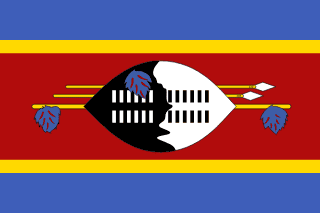
Eswatini
Kingdom of Eswatini
Population: UN WPP 2024, revision 1, projection for 1 July 2026. Sources and methodology.
Geography and territory
Eswatini, known as Swaziland until a 2018 renaming, is a small landlocked kingdom in southeastern Africa, almost entirely enclosed by South Africa except for a short eastern border with Mozambique. Covering just 17,364 square kilometers, it ranks among the smallest countries on the African continent, yet it packs a surprising range of landscapes into that compact territory, from mountainous terrain in the northwest to warm subtropical lowlands in the east. Its lack of coastline is offset by fertile valleys and protected wilderness areas that occupy a notable share of the national territory.
The country’s terrain divides into four distinct regions. The Highveld, in the west, is mountainous, with elevations above 1,800 meters and a temperate climate well suited to cattle grazing and forestry. The Middleveld, at intermediate elevation, is the most densely populated and agriculturally fertile part of the country. The Lowveld to the east is characterized by hot plains and savanna, while the Lubombo Mountains along the eastern edge form an escarpment marking the border with Mozambique.
For its size, Eswatini has a fairly substantial river network, with the Komati, Usutu, and Mbuluzi rivers the most significant, feeding irrigation schemes and hydroelectric projects that support the country’s agricultural economy. Climate varies considerably with elevation, ranging from humid subtropical in the highlands to semi-arid on the eastern plains. This climatic variety supports a surprising degree of biodiversity, with protected areas home to rhinoceroses, elephants, and a rich diversity of bird life. Indigenous forests, grassland, and bushveld together create habitat corridors that link several of the kingdom’s wildlife reserves.
History
Eswatini’s history is closely bound to the Swazi people, a Bantu-speaking group that migrated into the region during the 18th century under the leadership of King Ngwane III. His successor, Sobhuza I, consolidated the kingdom through the 19th century, forging strategic alliances to protect Swazi territory from Zulu expansion and encroaching European colonizers. The country’s former name, Swaziland, traces back to King Mswati II, who significantly expanded the kingdom’s borders in the mid-19th century and negotiated with both British and Boer authorities to secure a degree of autonomy for his people.
During the colonial period, the territory passed successively under the administration of the South African Republic of Transvaal and then the British Empire, which made it a protectorate in 1903. Unlike many African colonies, the Swazi monarchy managed to preserve its traditional structures of authority throughout colonial rule, which helped ease a relatively peaceful transition to independence, achieved on September 6, 1968, under King Sobhuza II, who had reigned for decades and continued to rule the newly independent nation.
In 2018, King Mswati III announced that the country would change its name from Swaziland to Eswatini, meaning “land of the Swazis,” shedding a name rooted in the colonial era and one that was frequently confused with Switzerland on the international stage. Eswatini remains one of the world’s last absolute monarchies, with the king holding sweeping executive, legislative, and judicial authority to this day, appointing the prime minister and much of the cabinet while political parties remain barred from contesting elections.
Culture and society
Eswatini’s culture is deeply rooted in Swazi tradition and in reverence for the monarchy, which serves as the central pillar of national identity. The king, known as Ngwenyama, or “Lion,” and the queen mother, or Ndlovukazi, “Elephant,” occupy a central place in the country’s social and ceremonial life, ruling jointly according to a dual-monarchy tradition unique to the Swazi kingdom. Major national decisions are debated in the libandla, a national assembly that blends elements of participatory consultation with royal authority.
Traditional ceremonies rank among the country’s most important cultural events. The Umhlanga, or Reed Dance, is an annual celebration in which thousands of unmarried young women honor the queen mother through dance and song, carrying reeds they have cut from nearby riverbanks. The Incwala, or first-fruits ceremony, is the most sacred event on the Swazi calendar, a ritual in which the king performs rites symbolizing the renewal of royal power and the fertility of the land.
Swazi craftsmanship enjoys international recognition, particularly basketry, textiles printed with traditional motifs, and woodcarving, much of it produced by cooperatives that sell directly to visitors and export markets. Traditional music, played on instruments such as the makhweyane musical bow and various drums, accompanies ceremonies and community celebrations. Traditional dress, including the emahiya worn by women and the lihiya worn by men, is proudly displayed during national festivities, and extended family networks and age-based social structures still shape daily life in much of rural Eswatini.
Economy
Eswatini’s economy rests on a combination of agriculture, manufacturing, and mining, with heavy trade dependence on neighboring South Africa, which absorbs the bulk of its exports. The country belongs to the Southern African Customs Union and the Common Monetary Area, which pegs its currency, the lilangeni, closely to the South African rand. Agriculture employs a significant share of the workforce and centers on sugarcane, the leading export crop, along with corn, tobacco, citrus, and cotton.
Manufacturing has grown considerably in recent decades, driven by the textile industry and the production of soft-drink concentrate, both major sources of foreign exchange and significant employers in the country’s industrial zones. Mining, though less prominent than in earlier decades, still contributes through the extraction of coal, asbestos, and diamonds. Tourism represents a sector with considerable growth potential, drawing visitors interested in wildlife, cultural traditions, and unspoiled natural landscapes, and the government has worked to promote the kingdom as a compact, easily accessible complement to larger regional safari destinations.
Despite these resources, Eswatini faces serious economic challenges, including high inequality, elevated youth unemployment, and one of the world’s highest rates of HIV prevalence, which has strained public health budgets and household incomes alike. The government has pursued programs aimed at economic diversification and social development, seeking to reduce dependence on South Africa and improve conditions for the rural population, where subsistence farming still supports a large share of families.
Food and cuisine
Eswatini’s cuisine reflects Swazi culinary tradition and the abundance of local agricultural produce. The signature dish is sishwala, a thick corn porridge served as an accompaniment to nearly every main meal. It is typically eaten alongside stews of beef, chicken, or goat, prepared with fresh vegetables and local spices that lend the dishes their distinctive, robust flavor.
Meat plays a central role in Swazi food culture, especially during celebrations and traditional ceremonies, where the slaughter of cattle carries deep cultural and spiritual significance and cattle themselves remain a traditional measure of wealth and social standing. Emasi, a fermented milk similar to yogurt, is a traditional and highly valued food eaten on its own or alongside other dishes. Pumpkins, sweet potatoes, and beans round out the everyday diet, providing essential nutrients to family meals, while leafy greens gathered from the wild add variety during the rainy season.
Among traditional drinks, buganu stands out, a home-brewed beer made from the fruit of the marula tree. Its production is overseen by the royal house, and the harvest gives rise to an annual festival celebrating the abundance of this wild fruit. Tea and coffee are also commonly consumed, a legacy of British colonial influence.
Tourism and landmarks
Eswatini offers an intimate, authentic travel experience, far removed from the crowds found at many other African destinations. Hlane Royal National Park, the country’s largest protected area, is home to white rhinoceroses, elephants, lions, giraffes, and an extraordinary diversity of birdlife. Visitors can take guided walking or vehicle safaris, offering close encounters with wildlife in a well-preserved natural setting.
Mlilwane Wildlife Sanctuary, in the Ezulwini Valley, is the country’s oldest protected area and offers hiking, mountain biking, and horseback riding among zebras, antelope, and crocodiles. The nearby Ezulwini Valley, known as the “Valley of Heaven,” is home to craft markets, cultural centers, and lodgings that let visitors experience everyday Swazi life up close.
Sibebe Rock, considered the second-largest granite dome in the world after Australia’s Uluru, offers hiking routes with sweeping panoramic views, while the nearby Gobholo Caves add a note of underground adventure to any itinerary. For travelers seeking deeper cultural immersion, witnessing the Umhlanga or Incwala ceremonies offers a rare chance to see ancestral traditions still practiced with striking vitality. Smaller reserves and community-run lodges scattered across the Highveld and Lowveld further reward visitors willing to venture beyond the capital region.
Fun facts about Eswatini
- Eswatini is one of the world’s last absolute monarchies, alongside the Vatican, Saudi Arabia, Brunei, and Qatar.
- King Mswati III announced the renaming of Swaziland to Eswatini in 2018, during celebrations marking the 50th anniversary of independence.
- Sibebe Rock, rising some 350 meters, is regarded as the second-largest granite monolith on Earth.
- The annual Buganu Festival celebrates the marula fruit harvest, and only the king can authorize when the harvest may begin.
- Despite its small size, Eswatini supports remarkable biodiversity, with more than 500 recorded bird species.
- The lihiya, a traditional wraparound cloth, changes color and pattern depending on the ceremonial occasion.
Eswatini in numbers
Latest World Bank and UNDP observations, each with its own year. “World median” is the middle value among the countries that report the same indicator; “#” ranks from the highest value.
Population since 1960
Eswatini had 345,337 people in 1960 and 1.3 million in 2025 — 3.6 times as many.
People
26.7% of people live in towns and cities (world median 63.4%). 33.0% are under 15 and 4.3% are 65 or older — a young population. Women have 2.72 children on average, above the replacement level of about 2.1.
Economy
The economy grew by 4.2% in real terms in 2025. Consumer prices rose by 2.6% in 2019. Services make up the largest share of output (52.4% of GDP); agriculture contributes 6.4%.
Development and environment
UNDP rates human development in Eswatini as medium, with an index of 0.695 in 2023 (rank 126 of 193). 63.4% of people use the internet and 89.3% have access to electricity. Forest covers 25.3% of the land (world median 32.8%).
Sources: World Bank, World Development Indicators (CC BY 4.0), most recent observation from 2015 onward; UNDP Human Development Report 2025. Retrieved 2026-10-10. Sector shares need not add up to 100% because taxes and subsidies on products are excluded. Missing values are left blank rather than estimated. Sources and methodology.
Climate of Eswatini
Averaged across Eswatini, the warmest month is February (24.3 °C) and the coolest is July (16.0 °C), a seasonal swing of 8.3 °C. The annual mean is 20.7 °C.
About 807 mm of precipitation falls in a typical year. January is the wettest month (134 mm) and July the driest (9 mm). The wettest stretch is December to February, with 49% of the year's total.
Show monthly values as a table
| Month | Mean °C | Low °C | High °C | Precipitation, mm |
|---|---|---|---|---|
| January | 24.2 | 18.9 | 29.5 | 134 |
| February | 24.3 | 19.0 | 29.6 | 128 |
| March | 23.3 | 17.8 | 28.8 | 87 |
| April | 20.9 | 15.0 | 27.0 | 44 |
| May | 18.7 | 11.7 | 25.7 | 22 |
| June | 16.2 | 8.7 | 23.8 | 9 |
| July | 16.0 | 8.5 | 23.5 | 9 |
| August | 17.8 | 10.4 | 25.3 | 16 |
| September | 20.0 | 13.1 | 26.9 | 36 |
| October | 21.1 | 15.1 | 27.2 | 78 |
| November | 22.2 | 16.6 | 27.8 | 114 |
| December | 23.5 | 18.0 | 29.0 | 131 |
Figures are 1991–2020 averages across the whole land area of Eswatini, from the World Bank Climate Change Knowledge Portal, CRU TS 4.08 (CC BY 4.0). They are not readings from one weather station: the capital, the coast and high ground can be much warmer, cooler, wetter or drier.
Travel essentials for Eswatini
The practical details visitors ask about first. Traffic in Eswatini drives on the left, one of 54 of the 196 countries profiled here that do — see the full list. Mains electricity is 230 V at 50 Hz, so devices made only for 110–120 V (common in North America) need a converter unless they are dual-voltage — most phone and laptop chargers are.
- Emergency number
- 999Ambulance 977 · Fire 933
- Driving side
- Left
- Plug types
- Type MM: three large round pins (South African)
- Voltage
- 230 V50 Hz
- Dialling code
- +268From abroad: your exit code, then 268 and the number
- Currency
- Lilangeni (SZL)
- Time zone
- CAT (UTC+2)Current local time in Eswatini
Compiled from IEC plug and voltage standards, national emergency-service listings and the UN road-traffic conventions. Emergency numbers and local coverage can change — confirm them locally on arrival. Eswatini's internet domain is .sz.
Where Eswatini ranks in the world
Each position counts only the countries with data in that ranking guide. First place is the highest value — for price levels, the most expensive. Select a card to see the full table.
- Population156th of 1961.3 millionUN projection, July 2026
- Land area153rd of 19517,200 km²World Bank, 2023
- Population density117th of 19472 per km²World Bank, 2023
- GDP (nominal)155th of 187$4.9BWorld Bank, 2024, current US$
- GDP per capita129th of 187$3,910World Bank, 2024, current US$
- Life expectancy169th of 19464.3 yearsWorld Bank, 2024
- Price level101st of 16542 (US = 100)ICP 2021, household consumption
Bordering countries of Eswatini


Compare Eswatini with another country
Frequently asked questions about Eswatini
What is the capital of Eswatini?
The capital of Eswatini is Mbabane.
What is the population of Eswatini?
The UN World Population Prospects projection for Eswatini is 1,269,859 people (1.3 million) on 1 July 2026. National statistical offices may publish different estimates.
What language is spoken in Eswatini?
The official language of Eswatini is Swazi and English.
What currency is used in Eswatini?
The currency of Eswatini is the Lilangeni (SZL).
How big is Eswatini?
Eswatini covers an area of 17,364 km².
What type of government does Eswatini have?
Eswatini is a absolute monarchy.
Which countries border Eswatini?
Eswatini shares land borders with South Africa, Mozambique.
What is the highest point in Eswatini?
The highest point in Eswatini is Emlembe (1,862 m).


