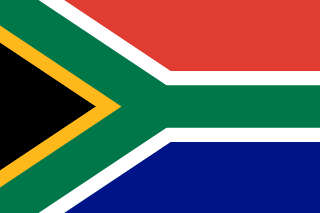
South Africa
Republic of South Africa
Population: UN WPP 2024, revision 1, projection for 1 July 2026. Sources and methodology.
Geography and territory
South Africa occupies the southernmost tip of the African continent, embraced by the Atlantic Ocean to the west and the Indian Ocean to the east, which meet near the iconic Cape of Good Hope. With an area of 1,221,037 square kilometers, it is the twenty-fifth largest country in the world and entirely encloses the independent kingdoms of Lesotho and Eswatini within its borders. Its territory stretches from the Limpopo River in the north to Cape Agulhas, the southernmost point of the African continent.
South Africa’s landscape displays extraordinary geographic diversity. The Great Escarpment divides the country between a narrow coastal strip and a vast interior plateau rising above 1,000 meters. The Drakensberg range, extending more than 1,000 kilometers along the east of the country, reaches its highest point at Mafadi, 3,450 meters. Table Mountain, with its unmistakable flat top overlooking Cape Town, is perhaps the country’s most iconic geological formation and one of the most recognized natural landmarks in the world.
South Africa’s climate is predominantly temperate and dry compared with other countries at the same latitude, thanks to the high elevation of the interior plateau. The country spans everything from the Mediterranean climate of the Western Cape, with wet winters and dry summers, to the subtropical climate of KwaZulu-Natal and the semi-desert conditions of the Karoo in the central-west. South Africa is one of the most biodiverse countries on the planet, home to more than 20,000 plant species, including the Cape Floral Kingdom, the smallest and most diverse of the world’s six floral kingdoms.
History
South Africa’s history stretches back more than 100,000 years, with the San and Khoikhoi peoples as the region’s original inhabitants. Bantu-speaking peoples migrated southward from the third century onward, establishing kingdoms and agrarian societies that coexisted with San hunter-gatherers. European contact began in 1488, when Portuguese navigator Bartolomeu Dias rounded the Cape of Good Hope, but it was the Dutch East India Company that established the first permanent settlement at Cape Town in 1652.
Dutch settlers, known as Boers, pushed inland, displacing indigenous populations and coming into conflict with the Zulu and Xhosa kingdoms. The arrival of the British in the early nineteenth century intensified tensions, culminating in the Anglo-Boer Wars of 1880-1881 and 1899-1902. The discovery of diamonds at Kimberley in 1867 and gold on the Witwatersrand in 1886 radically transformed the economy and drew waves of immigrants, entrenching an economic structure built on mineral extraction and cheap African labor.
In 1948, the National Party imposed apartheid, a system of institutionalized racial segregation that classified the population into racial groups and severely restricted the rights of the Black majority. Resistance to apartheid, led by figures such as Nelson Mandela and the African National Congress, became a global cause. After 27 years in prison, Mandela was released in 1990, and in 1994 the country held its first democratic, multiracial elections, which elected him president. The peaceful transition from apartheid to democracy stands as one of the most remarkable episodes in modern history.
Culture and society
South Africa is known as the Rainbow Nation, a phrase coined by Archbishop Desmond Tutu to describe the country’s cultural diversity after the end of apartheid. With eleven official languages, including isiZulu, isiXhosa, Afrikaans, English, Sesotho, and Setswana, among others, South Africa has an unmatched linguistic richness on the continent. This diversity produces a vibrant cultural landscape where ancestral African traditions, European colonial heritage, and influences brought by Indian and Malay communities all coexist.
South African music has had considerable global impact. Miriam Makeba, known as Mama Africa, and Hugh Masekela carried South African rhythms to international stages during the apartheid era. The isicathamiya choral style of Ladysmith Black Mambazo achieved worldwide fame following their collaboration with Paul Simon. Today, genres such as kwaito and amapiano, born in the townships, dominate dance floors across the country and are gaining fans worldwide. South African visual arts, literature, and film have produced world-class figures, including Nobel laureates J.M. Coetzee and Nadine Gordimer.
South African society continues to grapple with the legacy of apartheid, visible in deep economic and social inequalities. Yet the tradition of ubuntu, a Bantu philosophical concept that can be translated as “I am because we are,” emphasizes human interdependence and has been central to national reconciliation efforts. Townships, peripheral neighborhoods created under apartheid, have become centers of creativity and entrepreneurship, while a growing Black middle class continues to reshape the country’s social dynamics.
Economy
South Africa has the most industrialized and diversified economy on the African continent, and is the only African member of the G20. Mining, historically the engine of economic development, remains crucial: the country is the world’s leading producer of platinum, chromium, and manganese, and a major producer of gold and diamonds. The mining industry generates hundreds of thousands of direct jobs and remains a critical source of foreign currency.
South Africa’s financial sector is sophisticated and comparable to that of developed economies, with the Johannesburg Stock Exchange ranking among the twenty largest in the world by market capitalization. The automotive industry is another economic pillar, with international manufacturers such as BMW, Mercedes-Benz, Toyota, and Volkswagen operating production plants in the country. Commercial agriculture produces wine, citrus, maize, and other goods for both domestic consumption and export, with the Cape region ranking among the most prestigious wine-producing areas in the southern hemisphere.
Despite its relative wealth within the African context, South Africa faces significant economic challenges. Unemployment, which exceeds 30 percent, is among the highest in the world and disproportionately affects young and Black South Africans. Income inequality, as measured by the Gini coefficient, places South Africa among the most unequal countries on Earth. Recurring power cuts, infrastructure shortfalls, and institutional corruption have held back growth, though the country continues to attract significant foreign investment as a gateway to the broader African market.
Food and cuisine
South African cuisine faithfully reflects the country’s cultural diversity, fusing African, Dutch, Malay, Indian, and British culinary traditions into a distinctive and flavorful cooking style. The braai, far more than a simple barbecue, is a South African social institution that brings family and friends together around the grill to cook beef, lamb, chicken, and the famous boerewors, coiled sausages made from beef and spices. Heritage Day, celebrated on September 24, is popularly known as National Braai Day.
Bobotie, considered the national dish, is a legacy of Cape Malay cooking: spiced minced meat with curry, turmeric, and dried fruit, topped with a baked egg-and-milk custard. Biltong, dried, spiced, and vinegar-cured meat, is the country’s most popular snack and an inseparable companion at sporting events. Bunny chow, which originated in Durban’s Indian community, consists of a hollowed-out loaf of bread filled with curry, and has become an icon of South African street food.
The Cape winelands, with the valleys of Stellenbosch, Franschhoek, and Paarl, produce world-class wines that rival the finest from France and California. South African craft beer is experiencing a remarkable boom, though Castle Lager remains the country’s best-selling beer. Desserts include koeksister, a plaited pastry fried and soaked in syrup, and malva pudding, a soft, sweet sponge cake drenched in warm cream sauce that makes the perfect finish to any braai.
Tourism and landmarks
South Africa is one of the most complete travel destinations in the world, capable of offering safaris among the Big Five, dreamlike vineyards, idyllic beaches, and cosmopolitan cities all within a single country. Kruger National Park, spanning nearly two million hectares, is one of the most celebrated wildlife reserves on the planet, where visitors can observe lions, elephants, buffalo, leopards, and rhinos in their natural habitat alongside hundreds of other mammal, reptile, and bird species.
Cape Town regularly competes for the title of the world’s most beautiful city, with Table Mountain as its spectacular backdrop. A cable car ride to its flat summit offers 360-degree views over the city, the ocean, and the Cape Peninsula. Robben Island, where Nelson Mandela was imprisoned for 18 years, is today a museum and UNESCO World Heritage site that draws visitors from around the globe. The Garden Route, a 300-kilometer coastal stretch between Mossel Bay and Storms River, winds through forests, lakes, beaches, and cliffs in one of the country’s most spectacular itineraries.
The Drakensberg offers mountain hiking amid dramatic scenery and thousands-of-years-old San rock paintings. Blyde River Canyon, the third-largest canyon in the world, impresses with its rock formations and lush subtropical vegetation. The Cape Winelands combine tastings at historic estates with world-class dining and vineyard landscapes framed by mountains. For the more adventurous, South Africa offers everything from the world’s highest bungee jump at Bloukrans Bridge to great white shark viewing at Gansbaai.
Fun facts about South Africa
- South Africa is the only country in the world with three official capitals: Pretoria, the executive capital, Cape Town, the legislative capital, and Bloemfontein, the judicial capital
- It is the only African nation to have hosted a FIFA World Cup, in 2010
- The Cape Floral Kingdom, located in South Africa, is the smallest of the world’s six floral kingdoms but contains more than 9,000 plant species, most of them endemic
- Nelson Mandela is the only prisoner in the world whose place of incarceration has become a UNESCO World Heritage site
- South Africa has 11 official languages, more than any other country in the world besides Bolivia and Zimbabwe
- The Sterkfontein site near Johannesburg, known as the Cradle of Humankind, has yielded more hominid fossils than any other place on Earth
South Africa in numbers
Latest World Bank and UNDP observations, each with its own year. “World median” is the middle value among the countries that report the same indicator; “#” ranks from the highest value.
Population since 1960
South Africa had 16.4 million people in 1960 and 64.7 million in 2025 — 3.9 times as many.
People
63.8% of people live in towns and cities (world median 63.4%). 25.7% are under 15 and 6.9% are 65 or older — a middle-aged population. Women have 2.21 children on average, close to the replacement level of about 2.1.
Economy
The economy grew by 1.1% in real terms in 2025. Consumer prices rose by 3.2% in 2025. Services make up the largest share of output (63.1% of GDP); agriculture contributes 2.8%.
Development and environment
UNDP rates human development in South Africa as high, with an index of 0.741 in 2023 (rank 106 of 193). 78.4% of people use the internet and 90.2% have access to electricity. Forest covers 18.8% of the land (world median 32.8%).
Sources: World Bank, World Development Indicators (CC BY 4.0), most recent observation from 2015 onward; UNDP Human Development Report 2025. Retrieved 2026-10-10. Sector shares need not add up to 100% because taxes and subsidies on products are excluded. Missing values are left blank rather than estimated. Sources and methodology.
Climate of South Africa
Averaged across South Africa, the warmest month is January (23.7 °C) and the coolest is July (11.6 °C), a seasonal swing of 12.1 °C. The annual mean is 18.2 °C.
About 464 mm of precipitation falls in a typical year. January is the wettest month (71 mm) and July the driest (12 mm). The wettest stretch is December to February, with 44% of the year's total.
Show monthly values as a table
| Month | Mean °C | Low °C | High °C | Precipitation, mm |
|---|---|---|---|---|
| January | 23.7 | 16.7 | 30.7 | 71 |
| February | 23.4 | 16.6 | 30.3 | 65 |
| March | 21.8 | 14.8 | 28.8 | 57 |
| April | 18.5 | 11.3 | 25.7 | 33 |
| May | 15.0 | 7.3 | 22.8 | 19 |
| June | 11.9 | 4.0 | 19.9 | 14 |
| July | 11.6 | 3.6 | 19.8 | 12 |
| August | 13.5 | 5.3 | 21.8 | 14 |
| September | 16.6 | 8.5 | 24.9 | 19 |
| October | 19.3 | 11.7 | 27.0 | 39 |
| November | 21.0 | 13.6 | 28.4 | 55 |
| December | 22.7 | 15.5 | 29.9 | 67 |
Figures are 1991–2020 averages across the whole land area of South Africa, from the World Bank Climate Change Knowledge Portal, CRU TS 4.08 (CC BY 4.0). They are not readings from one weather station: the capital, the coast and high ground can be much warmer, cooler, wetter or drier.
Travel essentials for South Africa
The practical details visitors ask about first. Traffic in South Africa drives on the left, one of 54 of the 196 countries profiled here that do — see the full list. Mains electricity is 230 V at 50 Hz, so devices made only for 110–120 V (common in North America) need a converter unless they are dual-voltage — most phone and laptop chargers are.
- Emergency number
- 112Police 10111 · Ambulance 10177 · Fire 10177
- Driving side
- Left
- Plug types
- Type C, Type D, Type M, Type NC: two round pins (Europlug); D: three large round pins in a triangle; M: three large round pins (South African); N: three round pins (Brazilian)
- Voltage
- 230 V50 Hz
- Dialling code
- +27From abroad: your exit code, then 27 and the number
- Currency
- South African Rand (ZAR)
- Time zone
- SAST (UTC+2)Current local time in South Africa
Compiled from IEC plug and voltage standards, national emergency-service listings and the UN road-traffic conventions. Emergency numbers and local coverage can change — confirm them locally on arrival. South Africa's internet domain is .za.
Where South Africa ranks in the world
Each position counts only the countries with data in that ranking guide. First place is the highest value — for price levels, the most expensive. Select a card to see the full table.
- Population24th of 19665.5 millionUN projection, July 2026
- Land area24th of 1951,213,090 km²World Bank, 2023
- Population density133rd of 19452 per km²World Bank, 2023
- GDP (nominal)39th of 187$401.1BWorld Bank, 2024, current US$
- GDP per capita103rd of 187$6,267World Bank, 2024, current US$
- Life expectancy160th of 19466.3 yearsWorld Bank, 2024
- Price level69th of 16551 (US = 100)ICP 2021, household consumption
Bordering countries of South Africa


Compare South Africa with another country
Frequently asked questions about South Africa
What is the capital of South Africa?
The capital of South Africa is Pretoria (administrative), Cape Town (legislative), Bloemfontein (judicial).
What is the population of South Africa?
The UN World Population Prospects projection for South Africa is 65,453,084 people (65.5 million) on 1 July 2026. National statistical offices may publish different estimates.
What language is spoken in South Africa?
The official language of South Africa is Afrikaans, English, Zulu, Xhosa, and others (11 official languages).
What currency is used in South Africa?
The currency of South Africa is the South African Rand (ZAR).
How big is South Africa?
South Africa covers an area of 1,221,037 km².
What type of government does South Africa have?
South Africa is a parliamentary republic.
Which countries border South Africa?
South Africa shares land borders with Namibia, Botswana, Zimbabwe, Mozambique, Eswatini, Lesotho.
What is the highest point in South Africa?
The highest point in South Africa is Mafadi (3,450 m).
