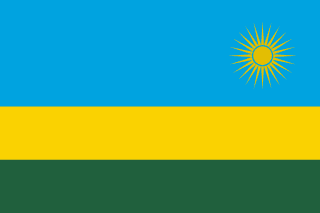
Rwanda
Republic of Rwanda
Population: UN WPP 2024, revision 1, projection for 1 July 2026. Sources and methodology.
Geography and territory
Rwanda is one of Africa’s smallest nations, covering just 26,338 square kilometers of rolling terrain that has earned it the enduring nickname “Land of a Thousand Hills.” Landlocked in the Great Lakes region of East Africa, it shares borders with Uganda to the north, Tanzania to the east, Burundi to the south, and the Democratic Republic of the Congo to the west. Despite its modest footprint, the country packs in remarkable geographic variety, from steep terraced hillsides to volcanic peaks and shimmering lakes.
Most of Rwanda sits on a central plateau at elevations between 1,500 and 2,000 meters, giving it a mild, temperate climate that feels surprisingly cool for a country straddling the equator. In the northwest, the Virunga volcanic range, shared with the DRC and Uganda, contains the country’s highest point, Mount Karisimbi, which rises to 4,507 meters. Cloaked in bamboo forest and montane jungle, these volcanoes form the last stronghold of the mountain gorilla, one of the planet’s most endangered great apes. To the east, the landscape flattens into savanna and wetlands that blend into the plains of Tanzania.
Lake Kivu, one of Africa’s Great Lakes, defines the western border, stretching across roughly 2,700 square kilometers and plunging to depths beyond 480 meters. Its waters hold vast reserves of dissolved methane gas that Rwanda has begun tapping as a domestic energy source. Tempered by altitude, the national climate hovers around 20 degrees Celsius year-round, with two rainy seasons, March through May and October through December, that keep the hillsides lush and green. With a population of about 14.9 million packed into such a compact territory, Rwanda ranks among the most densely populated countries on the continent, a reality that shapes everything from farming practices to urban planning.
History
Rwanda’s history is inseparable from the long, complicated relationship between its Hutu and Tutsi communities, who shared the same language, religion, and territory for centuries under a centralized kingdom ruled by a mwami, or king. European colonization, first under Germany from 1897 to 1916 and then under Belgium until 1962, hardened these social categories into rigid ethnic identities, complete with official identity cards, and systematically favored Tutsi elites within the colonial administration, planting seeds of resentment that would prove catastrophic decades later.
Independence arrived on July 1, 1962, following a 1959 social revolution that toppled the Tutsi monarchy and sent the first wave of refugees fleeing into neighboring countries. The decades that followed were punctuated by recurring ethnic violence, culminating in the genocide of April to July 1994, when in roughly one hundred days between 800,000 and one million people, overwhelmingly Tutsi and moderate Hutu, were murdered in one of the darkest chapters of the twentieth century.
The capture of Kigali by the Rwandan Patriotic Front in July 1994 ended the killing and opened an era of national reconstruction under the leadership of Paul Kagame. In the years since, Rwanda has undergone a transformation that continues to astonish outside observers, evolving from a shattered, traumatized state into one of Africa’s fastest-growing economies, known for its safety, cleanliness, and disciplined governance. Community-based gacaca courts, rooted in traditional dispute resolution, went on to try more than a million genocide suspects, an extraordinary and unprecedented experiment in transitional justice.
Culture and society
Rwandan society is anchored by a deliberately cultivated sense of shared national identity, built as a tool of reconciliation in the years following 1994. The government formally abolished ethnic categorization, promoting a unifying Rwandan identity above old Hutu, Tutsi, and Twa divisions. Kinyarwanda, spoken by virtually the entire population, gives the country a linguistic cohesion that is rare on a continent where dozens of languages often coexist within a single nation. Umuganda, a mandatory monthly day of community labor, reinforces social bonds while keeping streets and public spaces remarkably tidy.
The intore dance, meaning “the chosen ones,” stands as Rwanda’s most iconic cultural expression. Once performed exclusively by royal warriors, it blends athletic leaps, graceful arm movements, and war chants, with dancers donning sisal wigs and ceremonial spears. Rwandan basket weaving, especially the conical-lidded agaseke baskets, represents a craft of extraordinary geometric precision passed from mothers to daughters across generations, and these baskets are now sold internationally as a symbol of the nation’s artistry and resilience.
Rwanda has earned global recognition for its leadership on gender equality, holding the distinction of having the highest proportion of women in parliament of any country in the world, with women occupying well over half the seats. Memory of the genocide remains woven into everyday life through memorials, annual commemoration ceremonies, and an education system built around preventing any repetition of the tragedy. The Kigali Genocide Memorial, the resting place of more than 250,000 victims, draws visitors from around the world for reflection and education.
Economy
Since 1994, Rwanda’s economy has undergone a striking turnaround, with growth rates that have averaged strongly over two decades, lifting large numbers of people out of poverty and improving social indicators across the board. The government has pursued a development model centered on technology, services, and human capital, with an explicit ambition to become “the Singapore of Africa.” Its long-term Vision 2050 plan aims to push the country toward middle- and upper-income status through innovation-driven growth.
Agriculture still employs the largest share of the workforce, with coffee and tea standing out as the leading export crops. Rwandan coffee, particularly the specialty varieties grown on volcanic hillsides, has won international acclaim for its exceptional quality and commands premium prices in specialty markets abroad. Tourism, anchored by mountain gorilla trekking and the country’s blend of natural and cultural heritage, has become the leading source of foreign currency, with gorilla permits priced at a premium that helps fund conservation directly.
Kigali has also emerged as a rising technology hub for East Africa, home to institutions such as the Carnegie Mellon University Africa campus and the African Leadership University, which draw entrepreneurs and tech talent from across the continent. The national carrier, RwandAir, links Kigali to destinations across Africa, Europe, and Asia, while a modern convention center has positioned the capital as an increasingly popular venue for international conferences and business tourism.
Food and cuisine
Rwandan cuisine is simple, hearty, and deeply tied to the fertile land of the thousand hills. The most representative dish is ugali, a thick, stiff porridge made from maize or cassava flour, shaped by hand and eaten alongside bean, vegetable, or meat stews. Red beans, prepared in countless ways, provide the backbone of plant-based protein and appear at nearly every meal. Isombe, made from pounded cassava leaves cooked with palm oil and ground peanuts, is another dish found on tables across the country.
Brochettes, skewers of grilled goat or beef cooked over charcoal, are the most popular street food and restaurant staple, typically served with fried plantain, potatoes, or a simple salad. Fish from Lake Kivu, especially tilapia and the small sardine-like sambaza, is fried or grilled and prized throughout Rwanda. Matoke, boiled and mashed green plantain with roots in neighboring Uganda, has become a familiar side dish woven fully into the national diet.
Banana beer, known as urwagwa, is the traditional drink of choice, brewed by fermenting the juice of ripe bananas, sometimes blended with sorghum. Ikivuguto, a fermented milk similar to yogurt, reflects Rwanda’s long pastoral traditions. Tea grown in the hills of western Rwanda is of notably high quality and consumed widely, while buffet-style meals, where diners help themselves to a spread of dishes, reflect a broader culture of generous hospitality and shared abundance.
Tourism and landmarks
Volcanoes National Park, in Rwanda’s northwest, is the country’s signature destination and one of only three places on Earth where visitors can trek to see mountain gorillas in the wild. The bamboo and montane forests cloaking the Virunga volcanoes shelter roughly a third of the world’s remaining mountain gorilla population, and guided hikes to habituated gorilla families rank among the most intimate and moving wildlife encounters available anywhere.
Nyungwe National Park, in the southwest, protects one of Africa’s oldest and most biodiverse montane rainforests, home to over 300 bird species, thirteen primate species including chimpanzees, and remarkable plant life such as orchids and giant tree ferns. A canopy walkway suspended 50 meters above the forest floor offers dizzying views over the treetops. Akagera National Park, in the east, now hosts Africa’s “Big Five,” lion, elephant, buffalo, leopard, and rhinoceros, thanks to successful reintroduction efforts.
Kigali, widely regarded as one of Africa’s cleanest and safest capitals, offers the sobering Kigali Genocide Memorial, the bustling Caplaki craft market, and an increasingly lively restaurant and nightlife scene. Lake Kivu and the lakeside town of Gisenyi provide a laid-back getaway with beaches, kayaking, and views toward the volcanoes of the Congo. The Royal Palace Museum in Nyanza, with its replica of a traditional royal residence and its long-horned inyambo cattle, opens a window onto Rwanda’s precolonial kingdom.
Fun facts about Rwanda
- Rwanda’s parliament has the highest share of women of any legislature in the world, with women holding well over half of all seats.
- Plastic bags have been completely banned nationwide since 2008, one of the earliest such bans anywhere, helping make Rwanda one of the cleanest countries in Africa.
- Trekking permits to visit mountain gorillas are priced at a steep premium, with proceeds funneled directly into conservation and local community development.
- The community-based gacaca courts tried more than a million genocide suspects, an unprecedented approach to transitional justice inspired by traditional dispute resolution.
- With more than 500 people per square kilometer, Rwanda is among the most densely populated countries in Africa, packed into a territory roughly the size of Belgium.
- On the last Saturday of every month, the entire country pauses for umuganda, a mandatory day of community labor devoted to cleaning, building, and tree planting.
Rwanda in numbers
Latest World Bank and UNDP observations, each with its own year. “World median” is the middle value among the countries that report the same indicator; “#” ranks from the highest value.
Population since 1960
Rwanda had 3.0 million people in 1960 and 14.6 million in 2025 — 4.8 times as many.
People
30.9% of people live in towns and cities (world median 63.4%). 37.0% are under 15 and 4.0% are 65 or older — a young population. Women have 3.65 children on average, above the replacement level of about 2.1.
Economy
The economy grew by 9.4% in real terms in 2025. Consumer prices rose by 5.9% in 2025. Services make up the largest share of output (52.3% of GDP); agriculture contributes 20.3%, a large share that points to a farming-based economy.
Development and environment
UNDP rates human development in Rwanda as medium, with an index of 0.578 in 2023 (rank 159 of 193). 31.7% of people use the internet and 72.0% have access to electricity. Forest covers 26.1% of the land (world median 32.8%).
Sources: World Bank, World Development Indicators (CC BY 4.0), most recent observation from 2015 onward; UNDP Human Development Report 2025. Retrieved 2026-10-10. Sector shares need not add up to 100% because taxes and subsidies on products are excluded. Missing values are left blank rather than estimated. Sources and methodology.
Climate of Rwanda
Averaged across Rwanda, the mean temperature stays between 18.6 °C (July) and 19.7 °C (August) — a swing of only 1.1 °C, so seasons are marked by rainfall rather than by heat.
About 1,186 mm of precipitation falls in a typical year. November is the wettest month (148 mm) and July the driest (14 mm).
Show monthly values as a table
| Month | Mean °C | Low °C | High °C | Precipitation, mm |
|---|---|---|---|---|
| January | 19.1 | 12.9 | 25.3 | 117 |
| February | 19.5 | 13.3 | 25.7 | 95 |
| March | 19.4 | 13.3 | 25.4 | 138 |
| April | 19.2 | 13.6 | 24.9 | 144 |
| May | 19.1 | 13.5 | 24.8 | 118 |
| June | 18.8 | 12.4 | 25.3 | 31 |
| July | 18.6 | 11.6 | 25.7 | 14 |
| August | 19.7 | 12.8 | 26.7 | 37 |
| September | 19.6 | 13.1 | 26.2 | 94 |
| October | 19.5 | 13.1 | 25.8 | 132 |
| November | 19.1 | 13.1 | 25.2 | 148 |
| December | 18.9 | 13.0 | 24.8 | 119 |
Figures are 1991–2020 averages across the whole land area of Rwanda, from the World Bank Climate Change Knowledge Portal, CRU TS 4.08 (CC BY 4.0). They are not readings from one weather station: the capital, the coast and high ground can be much warmer, cooler, wetter or drier.
Travel essentials for Rwanda
The practical details visitors ask about first. Traffic in Rwanda drives on the right, like most of the world. Mains electricity is 230 V at 50 Hz, so devices made only for 110–120 V (common in North America) need a converter unless they are dual-voltage — most phone and laptop chargers are.
- Emergency number
- 112Ambulance 912 · Fire 111
- Driving side
- Right
- Plug types
- Type C, Type JC: two round pins (Europlug); J: three round pins (Swiss)
- Voltage
- 230 V50 Hz
- Dialling code
- +250From abroad: your exit code, then 250 and the number
- Currency
- Rwandan Franc (RWF)
- Time zone
- CAT (UTC+2)Current local time in Rwanda
Compiled from IEC plug and voltage standards, national emergency-service listings and the UN road-traffic conventions. Emergency numbers and local coverage can change — confirm them locally on arrival. Rwanda's internet domain is .rw.
Where Rwanda ranks in the world
Each position counts only the countries with data in that ranking guide. First place is the highest value — for price levels, the most expensive. Select a card to see the full table.
- Population77th of 19614.9 millionUN projection, July 2026
- Land area145th of 19524,670 km²World Bank, 2023
- Population density11th of 194566 per km²World Bank, 2023
- GDP (nominal)139th of 187$15.1BWorld Bank, 2024, current US$
- GDP per capita170th of 187$1,060World Bank, 2024, current US$
- Life expectancy144th of 19468.0 yearsWorld Bank, 2024
- Price level150th of 16529 (US = 100)ICP 2021, household consumption
Bordering countries of Rwanda


Compare Rwanda with another country
Frequently asked questions about Rwanda
What is the capital of Rwanda?
The capital of Rwanda is Kigali.
What is the population of Rwanda?
The UN World Population Prospects projection for Rwanda is 14,889,693 people (14.9 million) on 1 July 2026. National statistical offices may publish different estimates.
What language is spoken in Rwanda?
The official language of Rwanda is Kinyarwanda, French, English, and Swahili.
What currency is used in Rwanda?
The currency of Rwanda is the Rwandan Franc (RWF).
How big is Rwanda?
Rwanda covers an area of 26,338 km².
What type of government does Rwanda have?
Rwanda is a presidential republic.
Which countries border Rwanda?
Rwanda shares land borders with Uganda, Tanzania, Burundi, Democratic Republic of the Congo.
What is the highest point in Rwanda?
The highest point in Rwanda is Mount Karisimbi (4,507 m).


