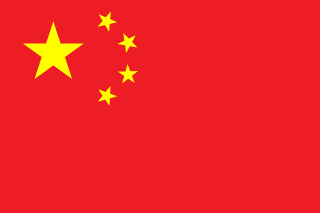
China
People's Republic of China
Population: UN WPP 2024, revision 1, projection for 1 July 2026. Sources and methodology.
Geography and territory
China is the third-largest country on Earth by area, spanning 9,597,000 square kilometers of extraordinary geographic variety. Its territory stretches from the steppes of Inner Mongolia in the north to the tropical forests of Yunnan in the south, and from the Pacific coastline in the east to the peaks of the Himalayas in the west. China shares borders with fourteen countries — Russia, Mongolia, North Korea, Vietnam, Laos, Myanmar, India, Bhutan, Nepal, Pakistan, Afghanistan, Tajikistan, Kyrgyzstan, and Kazakhstan — more neighbors than any other nation in the world.
The country’s terrain descends in a series of great steps from west to east. The Tibetan Plateau, often called the Roof of the World, rises above 4,000 meters and contains the planet’s highest mountain ranges, including Mount Everest, at 8,849 meters, on the border with Nepal. Farther east, basins and plateaus such as the Sichuan Basin and the Loess Plateau form a landscape of intermediate elevation, while the eastern lowlands, irrigated by the Yangtze and Yellow rivers, hold China’s most fertile farmland.
China’s climate ranges from the subarctic conditions of Manchuria to the tropical warmth of Hainan Island. Monsoon patterns govern rainfall across much of the country, producing sharply defined wet and dry seasons. The Gobi Desert in the north and the Taklamakan Desert in Xinjiang stand in stark contrast to the lush bamboo forests of the south-central region, home to the giant panda, a species that has become an internationally recognized symbol of the nation.
History
Chinese civilization is among the oldest in the world, with a documented history stretching back more than five thousand years. Early dynasties such as the Shang and the Zhou laid the foundations of Chinese culture, including its writing system, ancestor veneration, and philosophical traditions that endure today. Confucius and Laozi, founders of Confucianism and Taoism respectively, emerged during the turbulent Warring States period and shaped schools of thought that would go on to influence all of East Asia.
The unification of China under Emperor Qin Shi Huang in the third century BCE marked a historic turning point: writing, weights, and measures were standardized, and construction began on what would become the Great Wall. The dynasties that followed — Han, Tang, Song, Yuan, Ming, and Qing — presided over long periods in which China led the world in technological innovation, trade, and artistic achievement. Inventions such as paper, printing, gunpowder, and the compass reshaped the course of human history.
The nineteenth century brought the Opium Wars and growing foreign intervention, which weakened the Qing dynasty until its collapse in 1912 and the founding of the Republic. After decades of civil war and Japanese invasion, Mao Zedong proclaimed the People’s Republic of China on October 1, 1949. Economic reforms launched by Deng Xiaoping starting in 1978 transformed the country into the world’s second-largest economy, pairing one-party political control with an increasingly market-driven economy.
Culture and society
Chinese culture has shaped East Asia and left a lasting imprint on the entire world. Calligraphy, ink painting, porcelain, silk, and jade represent artistic traditions thousands of years old that remain very much alive in contemporary China. Peking opera, with its elaborate costumes and codified system of gesture, stands as one of the most intricate performing art forms anywhere, while martial arts such as kung fu and tai chi extend well beyond physical practice to become philosophies of living.
Chinese society remains deeply influenced by Confucian values of family respect, education, and social hierarchy. The Chinese New Year, or Spring Festival, is the most important date on the calendar, triggering the largest annual human migration on Earth as millions travel to reunite with family. Other major festivals include the Mid-Autumn Festival, the Dragon Boat Festival, and Qingming, a day set aside for honoring ancestors.
China is home to 57 UNESCO World Heritage sites, more than any other country in Asia. The Great Wall, the Forbidden City, the Terracotta Army of Xi’an, and the classical gardens of Suzhou are just a few highlights of an immense cultural legacy. Chinese literature, running from the Confucian classics to internationally celebrated contemporary writers such as Nobel laureate Mo Yan, reflects an unbroken literary tradition spanning thousands of years.
Economy
China is the world’s second-largest economy by nominal GDP and the largest by purchasing power parity, with output valued at roughly $19.50 trillion. Its extraordinary economic growth over the past four decades ranks among the most remarkable transformations in economic history, lifting hundreds of millions of people out of poverty. The country has become the world’s manufacturing hub, leading global production in sectors ranging from electronics and textiles to machinery, steel, and automobiles.
China’s technology sector has expanded at a striking pace, with companies such as Huawei, Alibaba, Tencent, and ByteDance now competing on a global scale. The country leads the world in the production of solar panels and electric vehicles and is investing heavily in artificial intelligence, quantum computing, and infrastructure. Its Belt and Road Initiative aims to link Asia, Europe, and Africa through massive investment in ports, railways, and highways.
Agriculture continues to employ a significant share of the population, and China remains the world’s top producer of rice, wheat, and tea. It is also the largest trading partner for more than 120 nations and the biggest consumer of raw materials on the planet. Even so, the country faces mounting challenges, including an aging population, a persistent gap in development between the prosperous eastern coast and the less developed interior, and the need to shift toward a more sustainable economic model.
Food and cuisine
Chinese cuisine is among the most diverse and sophisticated in the world, encompassing eight officially recognized regional culinary traditions. Cantonese cooking is prized for the freshness of its ingredients and techniques such as dim sum; Sichuan cuisine is famous for its liberal use of Sichuan peppercorns and chili, which produce the region’s signature numbing-spicy flavor known as mala; Shanghainese cooking favors braised dishes and a touch of sugar; and Beijing cuisine finds its most celebrated expression in Peking duck.
Rice and noodles form the dietary backbone of the south and north respectively, served alongside an enormous range of vegetables, meats, and seafood prepared through stir-frying, steaming, braising, and deep-frying. Soy, in its many forms — soy sauce, tofu, soy milk — appears in nearly every meal. Tea, with a tradition stretching back more than four thousand years, is far more than a drink; it is a ceremonial art form in its own right.
Chinese food culture places great emphasis on balancing flavor, texture, and color in every meal, drawing on principles from traditional medicine that classify ingredients according to their properties. Banquets play a central role in both social and business life, and the round table with its rotating tray symbolizes shared communion and equality among diners. In recent years, Chinese street food has gained international recognition, from Beijing’s jianbing crepes to the skewered meats of Xinjiang.
Tourism and landmarks
The Great Wall of China, winding across mountain ridges for thousands of kilometers, is the country’s most iconic monument and one of the New Seven Wonders of the World. The Mutianyu section, near Beijing, offers one of the most striking visitor experiences, while Jinshanling preserves a less-restored, more rugged stretch of the wall. The Forbidden City in Beijing, with its 980 buildings, served as the imperial palace for five centuries and remains the largest palace complex on Earth.
The Terracotta Army of Xi’an, uncovered in 1974, comprises more than eight thousand life-size figures buried to guard the tomb of China’s first emperor. In the south, the karst landscapes of Guilin and Yangshuo, with dramatic limestone peaks mirrored in the Li River, have inspired poets and painters for centuries. Yunnan province offers extraordinary ethnic and scenic diversity, from the rice terraces of Yuanyang to the dramatic Tiger Leaping Gorge.
Tibet captivates visitors with the Potala Palace in Lhasa, once home to the Dalai Lama, and Buddhist monasteries set against breathtaking mountain scenery. Shanghai pairs the historic colonial-era Bund with the futuristic skyline of Pudong, a city that looks firmly to the future without losing sight of its past. Hong Kong and Macao add their own cosmopolitan character, while the Yellow Mountains, with their mist-shrouded peaks and ancient pines, embody the aesthetic ideals of traditional Chinese landscape painting.
Fun facts about China
- China uses a single time zone, UTC+8, across its entire territory, even though its geography would logically span five different zones.
- The Great Wall is not actually visible from space with the naked eye, despite the popular myth, but its total length exceeds 21,000 kilometers.
- Mandarin has more native speakers than any other language in the world, with several hundred million people speaking it as a first language.
- Chinese innovators developed paper money during the Tang dynasty, roughly in the seventh century, nearly a thousand years before it appeared in Europe.
- The giant panda, China’s best-known symbol and a global icon of conservation, feeds almost exclusively on bamboo and can eat dozens of kilograms of it in a single day.
- China operates the largest high-speed rail network in the world, connecting its major cities across tens of thousands of kilometers of track.
China in numbers
Latest World Bank and UNDP observations, each with its own year. “World median” is the middle value among the countries that report the same indicator; “#” ranks from the highest value.
Population since 1960
China had 667.1 million people in 1960 and 1.41 billion in 2025 — 2.1 times as many.
People
66.3% of people live in towns and cities (world median 63.4%). 15.4% are under 15 and 14.9% are 65 or older — an ageing population. Women have 1.01 children on average, below the replacement level of about 2.1 needed to keep a population stable in the long run without migration.
Economy
The economy grew by 5.0% in real terms in 2025. Consumer prices rose by 0.1% in 2025. Services make up the largest share of output (57.7% of GDP); agriculture contributes 6.7%.
Development and environment
UNDP rates human development in China as high, with an index of 0.797 in 2023 (rank 78 of 193). 91.6% of people use the internet and 100.0% have access to electricity. Forest covers 24.0% of the land (world median 32.8%).
Sources: World Bank, World Development Indicators (CC BY 4.0), most recent observation from 2015 onward; UNDP Human Development Report 2025. Retrieved 2026-10-10. Sector shares need not add up to 100% because taxes and subsidies on products are excluded. Missing values are left blank rather than estimated. Sources and methodology.
Climate of China
Averaged across China, the warmest month is July (20.2 °C) and the coolest is January (−7.1 °C), a seasonal swing of 27.3 °C. The annual mean is 7.6 °C.
3 months have a national mean temperature below freezing.
About 608 mm of precipitation falls in a typical year. July is the wettest month (115 mm) and December the driest (12 mm). The three wettest consecutive months, June to August, bring 52% of the year's total — a pronounced rainy season.
Show monthly values as a table
| Month | Mean °C | Low °C | High °C | Precipitation, mm |
|---|---|---|---|---|
| January | −7.1 | −13.0 | −1.2 | 13 |
| February | −3.6 | −9.8 | 2.6 | 16 |
| March | 2.3 | −3.9 | 8.6 | 29 |
| April | 9.0 | 2.7 | 15.4 | 42 |
| May | 14.0 | 7.8 | 20.2 | 69 |
| June | 18.0 | 12.3 | 23.8 | 100 |
| July | 20.2 | 14.8 | 25.7 | 115 |
| August | 19.2 | 13.7 | 24.8 | 101 |
| September | 14.9 | 9.0 | 20.7 | 60 |
| October | 8.3 | 2.3 | 14.3 | 34 |
| November | 0.8 | −5.1 | 6.8 | 19 |
| December | −5.3 | −11.1 | 0.5 | 12 |
Figures are 1991–2020 averages across the whole land area of China, from the World Bank Climate Change Knowledge Portal, CRU TS 4.08 (CC BY 4.0). They are not readings from one weather station: the capital, the coast and high ground can be much warmer, cooler, wetter or drier.
Travel essentials for China
The practical details visitors ask about first. Traffic in China drives on the right, like most of the world. Mains electricity is 220 V at 50 Hz, so devices made only for 110–120 V (common in North America) need a converter unless they are dual-voltage — most phone and laptop chargers are.
- Emergency number
- 110Ambulance 120 · Fire 119
- Driving side
- Right
- Plug types
- Type A, Type C, Type IA: two flat parallel pins; C: two round pins (Europlug); I: two angled flat pins plus earth
- Voltage
- 220 V50 Hz
- Dialling code
- +86From abroad: your exit code, then 86 and the number
- Currency
- Chinese Yuan (CNY)
- Time zone
- CST (UTC+8)Current local time in China
Compiled from IEC plug and voltage standards, national emergency-service listings and the UN road-traffic conventions. Emergency numbers and local coverage can change — confirm them locally on arrival. China's internet domain is .cn.
Where China ranks in the world
Each position counts only the countries with data in that ranking guide. First place is the highest value — for price levels, the most expensive. Select a card to see the full table.
- Population2nd of 1961.41 billionUN projection, July 2026
- Land area2nd of 1959,388,210 km²World Bank, 2023
- Population density59th of 194150 per km²World Bank, 2023
- GDP (nominal)2nd of 187$18.73TWorld Bank, 2024, current US$
- GDP per capita71st of 187$13,293World Bank, 2024, current US$
- Life expectancy54th of 19478.0 yearsWorld Bank, 2024
- Price level45th of 16562 (US = 100)ICP 2021, household consumption
Bordering countries of China


Compare China with another country
Frequently asked questions about China
What is the capital of China?
The capital of China is Beijing.
What is the population of China?
The UN World Population Prospects projection for China is 1,412,914,089 people (1.41 billion) on 1 July 2026. National statistical offices may publish different estimates.
What language is spoken in China?
The official language of China is Mandarin Chinese.
What currency is used in China?
The currency of China is the Chinese Yuan (CNY).
How big is China?
China covers an area of 9,597,000 km².
What type of government does China have?
China is a one-party socialist republic.
Which countries border China?
China shares land borders with Russia, Mongolia, North Korea, Vietnam, Laos, Myanmar, India, Bhutan, Nepal, Pakistan, Afghanistan, Tajikistan, Kyrgyzstan, Kazakhstan.
What is the highest point in China?
The highest point in China is Mount Everest (8,849 m, shared with Nepal).


