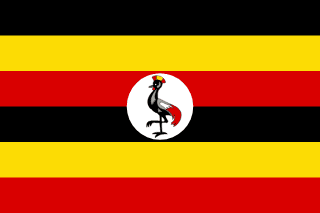
Uganda
Republic of Uganda
Population: UN WPP 2024, revision 1, projection for 1 July 2026. Sources and methodology.
Geography and territory
Uganda is a landlocked nation at the heart of East Africa, covering 241,038 square kilometers within the Great Lakes region. It shares borders with South Sudan to the north, Kenya to the east, Tanzania and Rwanda to the south, and the Democratic Republic of the Congo to the west. Despite having no coastline, Uganda earned the nickname the Pearl of Africa from Winston Churchill, who marveled at its lush scenery during a 1907 visit, and the label has stuck ever since as a fitting summary of the country’s natural richness.
Water shapes nearly every aspect of Uganda’s geography. Lake Victoria, the largest tropical lake on Earth and shared with Kenya and Tanzania, occupies a substantial portion of the southeast, while Lakes Albert, Edward, George, and Kyoga add to a network of freshwater bodies that together cover close to a fifth of the national territory. The Nile River begins its long northward journey here, near the town of Jinja, where the outflow from Lake Victoria tumbles over Murchison Falls before continuing toward the Mediterranean.
Most of the country sits on an elevated plateau between 1,000 and 1,300 meters, which tempers what would otherwise be an intense equatorial climate into something far more temperate and comfortable. Along the western border, the Rwenzori Mountains, once described by the ancient geographer Ptolemy as the Mountains of the Moon, rise to 5,109 meters at Margherita Peak, the country’s highest point, and remain capped by some of the last equatorial glaciers left on the planet. Mount Elgon, an extinct volcano straddling the border with Kenya, tops out at 4,321 meters and contains one of the largest volcanic calderas in the world.
History
Human presence in what is now Uganda stretches back hundreds of thousands of years. From roughly the fourteenth century onward, a succession of Bantu kingdoms took shape across the region, the most powerful being the Kingdom of Buganda on the shores of Lake Victoria. Buganda built an elaborate system of governance around a king, or kabaka, supported by a parliament known as the lukiiko, a level of political sophistication that struck the first European travelers who reached the interior in the nineteenth century.
British explorers John Hanning Speke and James Grant arrived in 1862 searching for the source of the Nile, opening the door to sustained European contact. Anglican and Catholic missionaries who followed competed fiercely for influence at the Buganda court, a rivalry that spilled into a series of religious conflicts. In 1894 Britain formally established the Uganda Protectorate, folding Buganda and the region’s other kingdoms into a single colonial administration that favored Buganda and the southern peoples, sowing regional imbalances that would echo for generations.
Uganda gained independence on October 9, 1962, with Milton Obote as prime minister and the Buganda kabaka serving as ceremonial president. The 1966 abolition of the traditional kingdoms ushered in a turbulent era that reached its darkest point under the dictatorship of Idi Amin from 1971 to 1979, a regime of terror blamed for hundreds of thousands of deaths. After further coups and conflict, Yoweri Museveni seized power in 1986 and has governed ever since, presiding over a long stretch of relative stability and economic growth alongside persistent criticism over shrinking democratic space.
Culture and society
Uganda is home to more than fifty distinct ethnic groups, each carrying its own language, customs, and social structures. The Baganda people of the former Buganda kingdom form the largest and most culturally influential group, and their language, Luganda, is spoken alongside English as one of the country’s most common tongues. The Banyankole in the southwest, the Basoga in the east, and the Acholi and Langi in the north round out the country’s major communities. The traditional kingdoms were restored in 1993 as cultural institutions, and the Buganda kabaka continues to command deep respect as a symbolic figure.
Music and dance sit at the center of Ugandan cultural life. Drumming holds a near-sacred status within Bantu royal tradition, and the ceremonial engalabi drums of the Buganda court carry profound spiritual weight. Each ethnic group maintains its own distinctive dances, from the bwola of the Acholi to the ekitaguriro of the Banyankole and the bakisimba of the Baganda, all built around rhythm and movement that celebrate communal identity. Uganda’s contemporary music scene is equally lively, producing artists such as Bobi Wine, who has blended pop stardom with political activism.
Christianity, in both its Anglican and Catholic forms, is the majority faith, followed by Islam, which is especially prominent in northern and eastern communities. Religious coexistence is generally peaceful, and older African spiritual traditions persist alongside the imported faiths. Ugandan society skews remarkably young, with more than half the population under the age of eighteen, a demographic reality that fuels tremendous social energy while straining schools and the job market. The extended family remains the fundamental social unit, and community bonds run deep.
Economy
Uganda’s economy has grown steadily over the past three decades, ranking among the more dynamic in East Africa. Agriculture remains the dominant sector, employing more than seventy percent of the workforce and generating a large share of export earnings. Uganda is one of Africa’s leading coffee exporters, and coffee has long formed the backbone of the country’s trade, complemented by tea, tobacco, cotton, cut flowers, and fish harvested from Lake Victoria.
The discovery of oil reserves around Lake Albert has raised significant economic expectations, with estimated reserves in the billions of barrels now moving toward commercial production via a pipeline running to the Tanzanian coast. This resource holds the promise of transforming the national economy, though it also raises familiar concerns about environmental impact and the resource curse that has troubled other oil-producing African nations.
Services, particularly telecommunications, financial services, and tourism, have expanded considerably. Uganda welcomes hundreds of thousands of visitors annually, drawn above all by mountain gorillas, safaris, and the country’s exceptional natural beauty. Economic challenges persist, however, including stubborn rural poverty in the north, inadequate infrastructure, rapid urban growth in Kampala, and pressure from one of the world’s fastest-growing populations, with the reported population now standing at about 52.8 million.
Food and cuisine
Ugandan cuisine centers on generous, nourishing dishes built from the country’s abundant harvests. Matoke, green bananas steamed and mashed into a smooth, savory paste, serves as the staple food across the central and western regions and is so deeply woven into daily life that the word is often used simply to mean a meal. It is typically served alongside stews of beef, chicken, or groundnut sauce.
Regional variety runs deep across Uganda’s food culture. In the east, millet and sorghum pounded into a firm dough anchor the diet; in the north, millet bread and legumes are staples; and along the shores of Lake Victoria, fresh fish, especially tilapia and Nile perch, takes center stage. The rolex, a beloved street breakfast, has nothing to do with timepieces: it is an egg omelet rolled inside a chapati flatbread, its name a playful corruption of “rolled eggs.”
Luwombo holds pride of place as Uganda’s royal dish, traditionally prepared for banquets at the kabaka’s court. Chicken, beef, or fish is slow-cooked with ground groundnuts, tomato, and spices inside bundled banana leaves, which impart a distinctive aroma and flavor. Milky, sweetened tea is the everyday drink of choice, while banana beer, brewed locally in rural areas, carries deep social significance. Ugandan coffee is also of excellent quality, and a homegrown coffee culture is now flourishing in the cities.
Tourism and landmarks
Uganda ranks among Africa’s most extraordinary nature destinations, with a concentration of biodiversity that fully justifies its reputation as the Pearl of Africa. Bwindi Impenetrable National Park, a UNESCO World Heritage Site, is the world’s premier destination for mountain gorilla trekking. It shelters roughly half of the world’s remaining population of this critically endangered species, and encountering a gorilla family in its natural habitat ranks among the most moving wildlife experiences anywhere on the planet.
Murchison Falls National Park, Uganda’s largest, delivers an awe-inspiring spectacle where the Nile River is squeezed through a gorge barely seven meters wide before plunging forty-three meters in a burst of spray and mist. Boat safaris along the river offer close encounters with hippos, crocodiles, elephants, and an extraordinary variety of birdlife. Queen Elizabeth National Park in the southwest is famous for the tree-climbing lions of its Ishasha sector, an unusual behavior rarely seen in other lion populations.
The Rwenzori Mountains provide a singular high-altitude trekking experience, with landscapes that shift from dense tropical forest to alpine moorland and equatorial glaciers in a setting that feels almost otherworldly. Jinja, on the shores of Lake Victoria where the Nile begins, has become East Africa’s adventure sports capital, offering white-water rafting, kayaking, and bungee jumping. The Ssese Islands on Lake Victoria offer white sand beaches and a relaxed pace that contrasts nicely with the intensity of safari life.
Fun facts about Uganda
- Uganda shelters roughly half of the world’s remaining mountain gorillas, concentrated in Bwindi Impenetrable National Park.
- The Rwenzori Mountains are the legendary Mountains of the Moon described by the ancient geographer Ptolemy, and they hold some of the world’s last equatorial glaciers.
- Uganda ranks among Africa’s leading coffee producers, even though tea has traditionally been the more popular drink domestically.
- Lake Victoria, shared with Kenya and Tanzania, is the largest tropical lake on Earth and one of the largest freshwater lakes by surface area.
- Uganda has one of the youngest populations in the world, a reflection of its rapid population growth.
- At Murchison Falls, the Nile, Africa’s longest river, is squeezed into a channel just seven meters wide before crashing into a dramatic waterfall.
Uganda in numbers
Latest World Bank and UNDP observations, each with its own year. “World median” is the middle value among the countries that report the same indicator; “#” ranks from the highest value.
Population since 1960
Uganda had 7.6 million people in 1960 and 51.4 million in 2025 — 6.7 times as many.
People
31.9% of people live in towns and cities (world median 63.4%). 43.1% are under 15 and 2.2% are 65 or older — a very young population. Women have 4.17 children on average, above the replacement level of about 2.1.
Economy
The economy grew by 6.3% in real terms in 2025. Consumer prices rose by 3.6% in 2025. Services make up the largest share of output (42.1% of GDP); agriculture contributes 26.1%, a large share that points to a farming-based economy.
Development and environment
UNDP rates human development in Uganda as medium, with an index of 0.582 in 2023 (rank 157 of 193). 8.9% of people use the internet and 55.3% have access to electricity. Forest covers 11.9% of the land (world median 32.8%).
Sources: World Bank, World Development Indicators (CC BY 4.0), most recent observation from 2015 onward; UNDP Human Development Report 2025. Retrieved 2026-10-10. Sector shares need not add up to 100% because taxes and subsidies on products are excluded. Missing values are left blank rather than estimated. Sources and methodology.
Climate of Uganda
Averaged across Uganda, the mean temperature stays between 22.3 °C (July) and 24.2 °C (February) — a swing of only 1.9 °C, so seasons are marked by rainfall rather than by heat.
About 1,281 mm of precipitation falls in a typical year. April is the wettest month (156 mm) and February the driest (49 mm).
Show monthly values as a table
| Month | Mean °C | Low °C | High °C | Precipitation, mm |
|---|---|---|---|---|
| January | 23.7 | 16.7 | 30.7 | 51 |
| February | 24.2 | 17.3 | 31.2 | 49 |
| March | 24.2 | 17.8 | 30.7 | 109 |
| April | 23.7 | 18.0 | 29.4 | 156 |
| May | 23.2 | 17.7 | 28.7 | 148 |
| June | 22.6 | 16.9 | 28.4 | 93 |
| July | 22.3 | 16.6 | 28.0 | 91 |
| August | 22.7 | 16.9 | 28.5 | 119 |
| September | 22.8 | 17.0 | 28.8 | 121 |
| October | 23.1 | 17.2 | 29.1 | 154 |
| November | 23.2 | 17.1 | 29.4 | 117 |
| December | 23.0 | 16.4 | 29.5 | 74 |
Figures are 1991–2020 averages across the whole land area of Uganda, from the World Bank Climate Change Knowledge Portal, CRU TS 4.08 (CC BY 4.0). They are not readings from one weather station: the capital, the coast and high ground can be much warmer, cooler, wetter or drier.
Travel essentials for Uganda
The practical details visitors ask about first. Traffic in Uganda drives on the left, one of 54 of the 196 countries profiled here that do — see the full list. Mains electricity is 240 V at 50 Hz, so devices made only for 110–120 V (common in North America) need a converter unless they are dual-voltage — most phone and laptop chargers are.
- Emergency number
- 999
- Driving side
- Left
- Plug types
- Type GG: three rectangular pins (British)
- Voltage
- 240 V50 Hz
- Dialling code
- +256From abroad: your exit code, then 256 and the number
- Currency
- Ugandan Shilling (UGX)
- Time zone
- EAT (UTC+3)Current local time in Uganda
Compiled from IEC plug and voltage standards, national emergency-service listings and the UN road-traffic conventions. Emergency numbers and local coverage can change — confirm them locally on arrival. Uganda's internet domain is .ug.
Where Uganda ranks in the world
Each position counts only the countries with data in that ranking guide. First place is the highest value — for price levels, the most expensive. Select a card to see the full table.
- Population30th of 19652.8 millionUN projection, July 2026
- Land area84th of 195200,520 km²World Bank, 2023
- Population density41st of 194243 per km²World Bank, 2023
- GDP (nominal)88th of 187$53.9BWorld Bank, 2024, current US$
- GDP per capita169th of 187$1,078World Bank, 2024, current US$
- Life expectancy143rd of 19468.5 yearsWorld Bank, 2024
- Price level120th of 16537 (US = 100)ICP 2021, household consumption
Bordering countries of Uganda


Compare Uganda with another country
Frequently asked questions about Uganda
What is the capital of Uganda?
The capital of Uganda is Kampala.
What is the population of Uganda?
The UN World Population Prospects projection for Uganda is 52,761,469 people (52.8 million) on 1 July 2026. National statistical offices may publish different estimates.
What language is spoken in Uganda?
The official language of Uganda is English, Luganda.
What currency is used in Uganda?
The currency of Uganda is the Ugandan Shilling (UGX).
How big is Uganda?
Uganda covers an area of 241,038 km².
What type of government does Uganda have?
Uganda is a presidential republic.
Which countries border Uganda?
Uganda shares land borders with South Sudan, Kenya, Tanzania, Rwanda, Democratic Republic of the Congo.
What is the highest point in Uganda?
The highest point in Uganda is Margherita Peak, Rwenzori Mountains (5,109 m).


