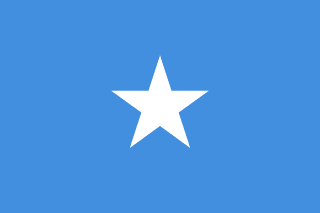
Somalia
Federal Republic of Somalia
Population: UN WPP 2024, revision 1, projection for 1 July 2026. Sources and methodology.
Geography and territory
Somalia occupies the easternmost point of the African continent, in the region known as the Horn of Africa. Its strategic position between the Gulf of Aden to the north and the Indian Ocean to the east gives it more than 3,300 kilometers of coastline, the longest of any country on mainland Africa. The country borders Djibouti to the northwest, Ethiopia to the west, and Kenya to the southwest, covering a total area of 637,657 square kilometers.
Somalia’s terrain is characterized by a broad central plateau rising from the Indian Ocean coastal plains toward the highlands of the north. The Cal Madow range in the northern region contains Mount Shimbiris, the country’s highest peak at 2,460 meters. The Jubba and Shabelle rivers, Somalia’s only permanent rivers, rise in the Ethiopian highlands and cross the south of the country, creating fertile river valleys that form the main agricultural zones.
Somalia’s climate is predominantly arid and semi-arid, with high temperatures year-round ranging from 25 to 45 degrees Celsius. Rainfall is scarce and irregular, concentrated in two seasons known as the Gu, from April to June, and the Deyr, from October to December. Drought is a recurring phenomenon that hits the population and livestock hard. Vegetation ranges from scrub and savanna in semi-desert areas to acacia woodland along the river valleys and mangroves along stretches of the coast.
History
Somalia holds one of the oldest histories on the African continent. The rock art at Laas Geel, near Hargeisa, dates back between 9,000 and 3,000 years and represents some of the best-preserved examples of rock art anywhere in Africa. Ancient Egyptians referred to this region as the Land of Punt, a legendary place rich in frankincense, myrrh, and spices with which they traded actively. For centuries, Somali coastal cities such as Mogadishu, Merca, and Barawa were thriving trade centers connecting Africa with Arabia, India, and China.
In the nineteenth century, European colonial powers carved up Somali territory: Britain established the British Somaliland Protectorate in the north, Italy colonized Italian Somaliland in the center and south, and France controlled present-day Djibouti. Somali resistance was embodied by the legendary Muhammad Abdullah Hassan, known to the British as the Mad Mullah, who led a two-decade rebellion against colonialism between 1899 and 1920. On July 1, 1960, the union of the British and Italian territories gave birth to the independent Republic of Somalia.
The 1969 coup brought General Siad Barre to power, and he governed the country under a socialist regime until 1991. His fall triggered a devastating civil war that fragmented the country into territories controlled by rival clans and militias. United Nations intervention in the 1990s failed to stabilize the situation. Since 2012, an internationally recognized federal government has worked to rebuild state institutions, though the threat posed by the insurgent group al-Shabaab and ongoing clan tensions remain enormous obstacles to peace and development.
Culture and society
Somali culture is deeply rooted in nomadic pastoral tradition and in Sunni Islam, practiced by the vast majority of the population. Unlike many African countries, Somalia is notably homogeneous in language and religion: virtually the entire population speaks Somali, a Cushitic language that gained an official script in 1972 with the adoption of the Latin alphabet. This linguistic homogeneity coexists, however, with a complex clan structure that shapes social and political relationships.
Oral poetry is the most revered art form in Somali culture, so central that Somalia has been called a nation of poets. Poetry serves functions well beyond the artistic: it has historically served as a vehicle for political communication, conflict mediation, courtship, and the preservation of collective memory. Poets enjoy elevated social status, and poetry competitions are events of great communal significance. Somali music, with its distinctive heeso songs, blends pentatonic melodies with poetic lyrics and is inseparable from celebrations and daily life.
Somali society is organized around a clan system that provides identity, protection, and networks of solidarity for its members. The main clans are the Hawiye, Darod, Isaaq, and Dir, each with numerous sub-clans. Hospitality is a sacred value in Somali culture: offering tea, camel milk, or food to any visitor is a deeply ingrained social obligation. The Somali diaspora, spread across the world as a result of decades of conflict, maintains strong ties to the homeland and contributes significantly to the economy through remittances.
Economy
The Somali economy traditionally rests on livestock herding, which forms the backbone of subsistence for a large share of the population. Somalia is one of the world’s largest exporters of livestock, particularly camels, goats, and sheep, sold mainly to markets on the Arabian Peninsula. The livestock sector accounts for roughly 40 percent of GDP and 50 percent of export earnings, making camels and livestock the true currency of Somalia’s rural economy.
Agriculture is concentrated in the fertile valleys of the Jubba and Shabelle rivers, where banana, sorghum, maize, and sesame are grown. Fishing offers enormous untapped potential given the extraordinary length of the Somali coast and the richness of its waters. Illegal fishing by foreign fleets, however, has been a persistent problem that helped fuel piracy in the Gulf of Aden during the first decade of the twenty-first century.
One of the most striking aspects of the Somali economy is the dynamism of its telecommunications sector. In the absence of a centralized state for years, private companies built one of the cheapest and most efficient mobile phone networks in Africa. The hawala money transfer system, based on trust and clan networks, allows remittances to be sent and received from anywhere in the world with remarkable speed and efficiency. Diaspora remittances represent a vital source of income, estimated at several billion dollars annually, often exceeding the international aid the country receives.
Food and cuisine
Somali cuisine reflects the country’s nomadic traditions along with influences from centuries of trade contact with Arabia, India, and the Swahili coast. Bariis iskukaris, an aromatic rice dish spiced with cumin, cardamom, cinnamon, and cloves and served with goat or camel meat, is considered the most representative Somali dish. It is prepared especially for festive occasions and family gatherings, and getting the spice balance right varies by region and family.
Meat, especially goat, camel, and lamb, sits at the center of the Somali diet. Suqaar, meat cut into cubes and sautéed with peppers and spices, is commonly served for breakfast or dinner. The Somali sambusa, a triangular pastry filled with spiced meat or vegetables and fried until crisp, is a ubiquitous snack eaten especially during Ramadan. Canjeero, a spongy flatbread similar to Ethiopian injera but lighter, is the basic accompaniment to many meals.
Tea is the quintessential national drink, brewed with generous amounts of sugar, milk, cardamom, and sometimes cinnamon or clove. The Somali tea ceremony is a social ritual marking moments of gathering and hospitality. Camel milk, rich in nutrients and vitamin C, has for centuries been the staple food of the interior’s nomads and remains highly valued across the country. Coffee, though less omnipresent than tea, is also part of the culinary tradition, brewed in the Arab style with spices and served in small cups.
Tourism and landmarks
Despite security challenges, Somalia holds heritage and natural treasures of extraordinary value. The rock art at Laas Geel, discovered in 2002 near Hargeisa in the Somaliland region, forms one of the best-preserved collections of rock art anywhere in Africa. These polychrome paintings, depicting decorated cattle, human figures, and wild animals, date back thousands of years and offer a unique window into the prehistoric pastoral civilizations of the Horn of Africa.
The coastal cities of the south preserve vestiges of their past as centers of Indian Ocean maritime trade. Mogadishu, founded by Arab traders in the tenth century, retains the remains of mosques and historic buildings that testify to its splendor as one of the great ports of the medieval world. The town of Barawa, on the southern coast, preserves a unique architecture fusing Arab, Persian, and Swahili styles. Berbera, on the Gulf of Aden, was an important trading port since antiquity and boasts nearly untouched white-sand beaches.
Somalia’s Indian Ocean coast holds extraordinary potential for marine ecotourism, with unexplored coral reefs and marine wildlife including sea turtles, dolphins, whale sharks, and manta rays. Kismayo National Park and the Lag Badana-Bushbush reserve in the far south protect coastal and terrestrial ecosystems of great biological value. The mountains of the north, with their juniper forests and dramatic rocky outcrops, offer striking landscapes that contrast with the aridity found across much of the territory.
Fun facts about Somalia
- Somalia has the longest coastline of any country on mainland Africa, stretching more than 3,300 kilometers
- The country is known as the nation of poets, reflecting the central importance of oral poetry in its culture
- The rock art at Laas Geel is considered among the best preserved in all of Africa
- Somalia has one of the cheapest and most efficient mobile phone networks in Africa, built without state involvement
- The camel is so central to Somali culture that dozens of distinct words exist to describe it by age, color, and function
- The hawala money transfer system, of Somali origin, allows remittances to reach any corner of the country without banking infrastructure
Somalia in numbers
Latest World Bank and UNDP observations, each with its own year. “World median” is the middle value among the countries that report the same indicator; “#” ranks from the highest value.
Population since 1960
Somalia had 2.9 million people in 1960 and 19.7 million in 2025 — 6.8 times as many.
People
55.1% of people live in towns and cities (world median 63.4%). 46.6% are under 15 and 2.6% are 65 or older — a very young population. Women have 6.01 children on average, above the replacement level of about 2.1.
Economy
The economy grew by 3.0% in real terms in 2025.
Development and environment
UNDP rates human development in Somalia as low, with an index of 0.404 in 2023 (rank 192 of 193). 27.9% of people use the internet and 54.4% have access to electricity. Forest covers 7.8% of the land (world median 32.8%).
Sources: World Bank, World Development Indicators (CC BY 4.0), most recent observation from 2015 onward; UNDP Human Development Report 2025. Retrieved 2026-10-10. Sector shares need not add up to 100% because taxes and subsidies on products are excluded. Missing values are left blank rather than estimated. Sources and methodology.
Climate of Somalia
Averaged across Somalia, the mean temperature stays between 25.2 °C (December) and 28.3 °C (April) — a swing of only 3.1 °C, so seasons are marked by rainfall rather than by heat.
About 277 mm of precipitation falls in a typical year. April is the wettest month (56 mm) and February the driest (3 mm). There are two rainy seasons: April to June brings 46% of the year's total and September to November another 34%.
Show monthly values as a table
| Month | Mean °C | Low °C | High °C | Precipitation, mm |
|---|---|---|---|---|
| January | 25.4 | 19.5 | 31.3 | 3 |
| February | 26.3 | 20.3 | 32.3 | 3 |
| March | 27.5 | 21.7 | 33.4 | 13 |
| April | 28.3 | 22.9 | 33.7 | 56 |
| May | 28.2 | 23.1 | 33.3 | 56 |
| June | 27.7 | 22.8 | 32.6 | 18 |
| July | 27.1 | 22.5 | 31.7 | 14 |
| August | 27.0 | 22.1 | 32.0 | 11 |
| September | 27.7 | 22.5 | 33.0 | 12 |
| October | 26.8 | 21.5 | 32.2 | 45 |
| November | 25.9 | 20.2 | 31.6 | 38 |
| December | 25.2 | 19.4 | 31.0 | 11 |
Figures are 1991–2020 averages across the whole land area of Somalia, from the World Bank Climate Change Knowledge Portal, CRU TS 4.08 (CC BY 4.0). They are not readings from one weather station: the capital, the coast and high ground can be much warmer, cooler, wetter or drier.
Travel essentials for Somalia
The practical details visitors ask about first. Traffic in Somalia drives on the right, like most of the world. Mains electricity is 220 V at 50 Hz, so devices made only for 110–120 V (common in North America) need a converter unless they are dual-voltage — most phone and laptop chargers are.
- Emergency number
- 888
- Driving side
- Right
- Plug types
- Type CC: two round pins (Europlug)
- Voltage
- 220 V50 Hz
- Dialling code
- +252From abroad: your exit code, then 252 and the number
- Currency
- Somali Shilling (SOS)
- Time zone
- EAT (UTC+3)Current local time in Somalia
Compiled from IEC plug and voltage standards, national emergency-service listings and the UN road-traffic conventions. Emergency numbers and local coverage can change — confirm them locally on arrival. Somalia's internet domain is .so.
Where Somalia ranks in the world
Each position counts only the countries with data in that ranking guide. First place is the highest value — for price levels, the most expensive. Select a card to see the full table.
- Population66th of 19620.3 millionUN projection, July 2026
- Land area42nd of 195627,340 km²World Bank, 2023
- Population density152nd of 19429 per km²World Bank, 2023
- GDP (nominal)144th of 187$12.0BWorld Bank, 2024, current US$
- GDP per capita182nd of 187$630World Bank, 2024, current US$
- Life expectancy189th of 19459.0 yearsWorld Bank, 2024
- Price level106th of 16540 (US = 100)ICP 2021, household consumption
Bordering countries of Somalia


Compare Somalia with another country
Frequently asked questions about Somalia
What is the capital of Somalia?
The capital of Somalia is Mogadishu.
What is the population of Somalia?
The UN World Population Prospects projection for Somalia is 20,305,907 people (20.3 million) on 1 July 2026. National statistical offices may publish different estimates.
What language is spoken in Somalia?
The official language of Somalia is Somali, Arabic.
What currency is used in Somalia?
The currency of Somalia is the Somali Shilling (SOS).
How big is Somalia?
Somalia covers an area of 637,657 km².
What type of government does Somalia have?
Somalia is a federal parliamentary republic.
Which countries border Somalia?
Somalia shares land borders with Ethiopia, Kenya, Djibouti.
What is the highest point in Somalia?
The highest point in Somalia is Mount Shimbiris (2,460 m).


