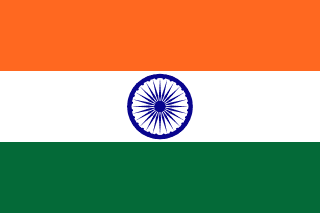
India
Republic of India
Population: UN WPP 2024, revision 1, projection for 1 July 2026. Sources and methodology.
Geography and territory
Covering 3,287,263 square kilometers, India is the seventh-largest country on Earth and a land of extraordinary geographic diversity. Occupying the bulk of the South Asian subcontinent, it is bordered by the Arabian Sea to the west, the Bay of Bengal to the east, and the Indian Ocean to the south. In the north, the Himalayas form a towering natural wall separating India from the rest of Asia and containing some of the highest peaks on the planet, including Kangchenjunga, India’s tallest mountain at 8,586 meters.
The country’s terrain divides into three broad zones: the northern mountains, dominated by the Himalayas and the Karakoram range; the vast Indo-Gangetic Plain, one of the most fertile alluvial regions in the world, watered by the Ganges, Yamuna, and Indus rivers; and the Deccan Plateau, which covers most of the southern peninsula and is flanked by the Western and Eastern Ghats. The Thar Desert in Rajasthan and the mangrove wetlands of the Sundarbans round out a landscape of striking contrasts. India shares land borders with Pakistan, China, Nepal, Bhutan, Bangladesh, and Myanmar.
India’s climate is governed by the monsoon system, which drives the seasonal rains essential to agriculture across the subcontinent. The summer monsoon, from June to September, brings heavy rainfall to most of the country, while winters tend to be dry. Cherrapunji, in the state of Meghalaya, holds world rainfall records. This climatic range supports ecosystems from tropical mangroves to alpine meadows, sustaining wildlife such as Bengal tigers, Asian elephants, one-horned rhinoceroses, and snow leopards.
History
The Indus Valley Civilization, which flourished between roughly 3300 and 1300 BCE in cities such as Mohenjo-daro and Harappa, ranks among the cradles of human civilization. The Vedic period that followed gave rise to Hinduism, one of the world’s oldest religions, while the sixth century BCE saw the emergence of Buddhism and Jainism, both of which would later spread across Asia. The great Mauryan and Gupta empires, spanning roughly the fourth century BCE to the sixth century CE, unified much of the subcontinent and presided over a golden age of science, mathematics, and art.
The arrival of Islam in the eighth century, followed by the founding of the Delhi Sultanate and the Mughal Empire, reshaped Indian culture and architecture. The Mughals, particularly Akbar the Great and Shah Jahan, left behind an extraordinary legacy that includes the Taj Mahal, the Red Fort, and Humayun’s Tomb. Meanwhile, the Hindu kingdoms of the south, such as the Vijayanagara Empire, developed equally magnificent architectural and cultural traditions.
British colonial rule, consolidated after the Battle of Plassey in 1757, ushered in a period of profound transformation. The independence movement, led by Mahatma Gandhi through nonviolent resistance and civil disobedience, culminated in independence on August 15, 1947, though it was accompanied by the traumatic partition that created Pakistan. Jawaharlal Nehru became the first prime minister of what would become the world’s largest democracy, a system that has endured for more than seven decades through regular elections and peaceful transfers of power.
Culture and society
India is a cultural mosaic of unmatched complexity, home to more than 1,600 spoken languages, six major religions, and traditions that shift dramatically from one state to the next. Hindi and English serve as official languages alongside 21 other constitutionally recognized tongues. Hinduism, practiced by the great majority of the population, shapes daily life in countless ways, from diet to festivals. Diwali, the festival of lights, and Holi, the festival of colors, are celebrations that cross religious lines and have won global popularity.
India’s classical arts are extraordinarily rich. Classical dance forms include Bharatanatyam from Tamil Nadu, Kathak from the north, Kathakali from Kerala, and Odissi from Odisha, each carrying centuries of codified tradition. Classical music divides into the Hindustani tradition of the north and the Carnatic tradition of the south, both built on intricate systems of ragas and talas. Mumbai’s Bollywood film industry churns out more movies annually than Hollywood and wields enormous cultural influence across Asia and Africa.
Indian literature spans the sacred epics of the Mahabharata and the Ramayana, among the longest poems ever composed, through to contemporary English-language writers such as Salman Rushdie, Arundhati Roy, and Amitav Ghosh. Rabindranath Tagore became the first non-European to win the Nobel Prize in Literature, in 1913. Cricket, meanwhile, is more than a sport in India — it is a unifying national passion, and the Indian national cricket team ranks among the most successful in the world.
Economy
India stands among the world’s five largest economies by nominal GDP, with an output of roughly $3.96 trillion, and remains one of the fastest-growing major economies on the planet. Its economic transformation, accelerated by the liberalizing reforms of 1991, has produced a world-class technology sector, with Bangalore established as one of the planet’s leading software development hubs. Firms such as Tata, Infosys, Wipro, and Reliance compete globally across technology, steel, automobiles, and telecommunications.
The services sector accounts for more than half of GDP and employs a growing workforce in information technology, financial services, and business process outsourcing. Agriculture nonetheless remains essential, employing roughly 40 percent of the working population. India leads the world in milk production, ranks second globally in both rice and wheat output, and is a major exporter of spices, tea, and generic pharmaceuticals.
Despite its economic dynamism, India faces substantial development challenges. Disparities between urban and rural areas, infrastructure gaps, uneven access to education and healthcare, and demographic pressure on natural resources remain persistent obstacles. Still, a young and growing population, an expanding middle class, and rapid digitalization all point toward significant growth potential in the decades ahead.
Food and cuisine
Indian cuisine is among the world’s most varied and aromatic, built on the masterful use of spices such as turmeric, cumin, coriander, cardamom, cinnamon, chili, and garam masala. Each region carries its own culinary identity: the north is known for creamy curries, tandoori cooking, and naan baked in clay ovens; the south favors dosas, idlis, sambar, and coconut-based dishes; the east is celebrated for its sweets and fish preparations; and the west offers Gujarati vegetarian fare alongside the distinct flavors of Goa.
Vegetarianism has a centuries-old tradition in India, rooted in the religious principles of Hinduism, Buddhism, and Jainism, and a substantial share of the population eats no meat at all — a practice that has given rise to a remarkably inventive plant-based cuisine. Dishes such as paneer tikka, dal makhani, palak paneer, and chana masala prove that meatless cooking can be every bit as hearty and flavorful as its meat-based counterparts. The thali, a platter offering an array of small dishes and accompaniments, delivers a complete culinary experience in a single meal.
Chai, milky tea infused with spices, is the nation’s beverage of choice, consumed at all hours in every corner of the country. Sweets such as gulab jamun, jalebi, rasgulla, and barfi are staples of every celebration. Indian street food is legendary: samosas, pakoras, chaat, pani puri, and Mumbai’s vada pav deliver bursts of flavor at accessible prices. Indian cuisine’s influence has spread worldwide, with dishes like chicken tikka masala becoming among the most popular foods on the planet.
Tourism and landmarks
The Taj Mahal in Agra, a white marble mausoleum built by Emperor Shah Jahan in memory of his wife Mumtaz Mahal, is considered one of the wonders of the world and draws millions of visitors each year. Its architectural perfection, blending Persian, Islamic, and Indian elements, is especially breathtaking at dawn, when the marble takes on rosy hues. Together with Agra Fort and Fatehpur Sikri, it forms a triangle of Mughal heritage of incalculable value.
Rajasthan, the land of the maharajas, dazzles with fortresses and palaces built of sandstone and marble. Jaipur, the Pink City, offers the Palace of the Winds and Amber Fort; Udaipur charms with its lakeside palaces; and Jodhpur, the Blue City, is anchored by the imposing Mehrangarh Fort. Varanasi, on the banks of the Ganges, is among the oldest continuously inhabited cities in the world and the spiritual heart of Hinduism, where cremation rituals and evening aarti ceremonies offer a deeply moving experience.
Southern India reveals Dravidian temples of astonishing architectural complexity in Madurai, Hampi, and Mahabalipuram. Kerala, with its tranquil backwaters, tea plantations, and Ayurvedic traditions, offers a more serene style of travel. The beaches of Goa blend Portuguese heritage with a cosmopolitan atmosphere, while the Indian Himalayas provide everything from trekking in Ladakh to the spiritual retreats of Rishikesh and Dharamsala. The national parks of Ranthambore and Jim Corbett give visitors the chance to spot Bengal tigers in their natural habitat.
Fun facts about India
- India’s rail network is the largest in Asia and one of the biggest in the world, carrying tens of millions of passengers every day.
- The concept of zero as a number was developed in India, a mathematical breakthrough credited to the seventh-century scholar Brahmagupta.
- The Kumbh Mela, a Hindu pilgrimage held periodically, is considered the largest gathering of human beings on the planet.
- India produces more films each year than any other country, with Mumbai’s Bollywood industry releasing movies in more than 20 languages.
- Yoga, which originated in India thousands of years ago, is now practiced by hundreds of millions of people worldwide.
- The Sundarbans, shared with Bangladesh, form the largest mangrove forest on Earth and are home to the Bengal tiger.
India in numbers
Latest World Bank and UNDP observations, each with its own year. “World median” is the middle value among the countries that report the same indicator; “#” ranks from the highest value.
Population since 1960
India had 436.0 million people in 1960 and 1.46 billion in 2025 — 3.4 times as many.
People
35.7% of people live in towns and cities (world median 63.4%). 24.2% are under 15 and 7.4% are 65 or older — a middle-aged population. Women have 1.96 children on average, below the replacement level of about 2.1 needed to keep a population stable in the long run without migration.
Economy
The economy grew by 7.6% in real terms in 2025. Consumer prices rose by 2.4% in 2025. Services make up the largest share of output (49.3% of GDP); agriculture contributes 16.2%.
Development and environment
UNDP rates human development in India as medium, with an index of 0.685 in 2023 (rank 130 of 193). 70.0% of people use the internet and 99.9% have access to electricity. Forest covers 24.4% of the land (world median 32.8%).
Sources: World Bank, World Development Indicators (CC BY 4.0), most recent observation from 2015 onward; UNDP Human Development Report 2025. Retrieved 2026-10-10. Sector shares need not add up to 100% because taxes and subsidies on products are excluded. Missing values are left blank rather than estimated. Sources and methodology.
Climate of India
Averaged across India, the warmest month is May (30.6 °C) and the coolest is January (17.8 °C), a seasonal swing of 12.8 °C. The annual mean is 24.9 °C.
About 1,111 mm of precipitation falls in a typical year. July is the wettest month (284 mm) and December the driest (10 mm). The three wettest consecutive months, July to September, bring 65% of the year's total — a pronounced rainy season.
Show monthly values as a table
| Month | Mean °C | Low °C | High °C | Precipitation, mm |
|---|---|---|---|---|
| January | 17.8 | 10.8 | 24.7 | 12 |
| February | 20.5 | 13.3 | 27.7 | 13 |
| March | 24.7 | 17.4 | 32.1 | 17 |
| April | 28.5 | 21.5 | 35.6 | 31 |
| May | 30.6 | 24.1 | 37.1 | 54 |
| June | 29.7 | 24.5 | 34.9 | 152 |
| July | 27.6 | 23.7 | 31.5 | 284 |
| August | 26.9 | 23.2 | 30.6 | 256 |
| September | 26.8 | 22.4 | 31.2 | 177 |
| October | 25.4 | 19.6 | 31.2 | 80 |
| November | 21.9 | 15.3 | 28.6 | 26 |
| December | 18.6 | 11.7 | 25.6 | 10 |
Figures are 1991–2020 averages across the whole land area of India, from the World Bank Climate Change Knowledge Portal, CRU TS 4.08 (CC BY 4.0). They are not readings from one weather station: the capital, the coast and high ground can be much warmer, cooler, wetter or drier.
Travel essentials for India
The practical details visitors ask about first. Traffic in India drives on the left, one of 54 of the 196 countries profiled here that do — see the full list. Mains electricity is 230 V at 50 Hz, so devices made only for 110–120 V (common in North America) need a converter unless they are dual-voltage — most phone and laptop chargers are.
- Emergency number
- 112Police 100 · Ambulance 102 · Fire 101
- Driving side
- Left
- Plug types
- Type C, Type D, Type MC: two round pins (Europlug); D: three large round pins in a triangle; M: three large round pins (South African)
- Voltage
- 230 V50 Hz
- Dialling code
- +91From abroad: your exit code, then 91 and the number
- Currency
- Indian Rupee (INR)
- Time zone
- IST (UTC+5:30)Current local time in India
Compiled from IEC plug and voltage standards, national emergency-service listings and the UN road-traffic conventions. Emergency numbers and local coverage can change — confirm them locally on arrival. India's internet domain is .in.
Where India ranks in the world
Each position counts only the countries with data in that ranking guide. First place is the highest value — for price levels, the most expensive. Select a card to see the full table.
- Population1st of 1961.48 billionUN projection, July 2026
- Land area7th of 1952,973,190 km²World Bank, 2023
- Population density17th of 194484 per km²World Bank, 2023
- GDP (nominal)5th of 187$3.76TWorld Bank, 2024, current US$
- GDP per capita142nd of 187$2,592World Bank, 2024, current US$
- Life expectancy115th of 19472.2 yearsWorld Bank, 2024
- Price level162nd of 16526 (US = 100)ICP 2021, household consumption
Bordering countries of India


Compare India with another country
Frequently asked questions about India
What is the capital of India?
The capital of India is New Delhi.
What is the population of India?
The UN World Population Prospects projection for India is 1,476,625,576 people (1.48 billion) on 1 July 2026. National statistical offices may publish different estimates.
What language is spoken in India?
The official language of India is Hindi and English (official), plus 21 recognized languages.
What currency is used in India?
The currency of India is the Indian Rupee (INR).
How big is India?
India covers an area of 3,287,263 km².
What type of government does India have?
India is a federal parliamentary republic.
Which countries border India?
India shares land borders with Pakistan, China, Nepal, Bhutan, Bangladesh, Myanmar.
What is the highest point in India?
The highest point in India is Kangchenjunga (8,586 m).


