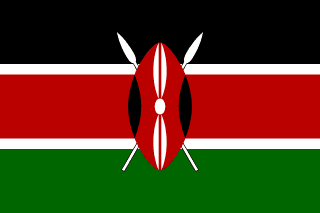
Kenya
Republic of Kenya
Population: UN WPP 2024, revision 1, projection for 1 July 2026. Sources and methodology.
Geography and territory
Kenya sits astride the equator in East Africa, its 580,367 square kilometers holding extraordinary geographic diversity. The country borders Ethiopia and South Sudan to the north, Somalia to the east, the Indian Ocean to the southeast, Tanzania to the south, and Uganda to the west. From the permanent snows of Mount Kenya, Africa’s second-highest peak at 5,199 meters, to the coral beaches of the Indian Ocean coast, Kenya offers one breathtaking landscape after another.
The Great Rift Valley cuts through Kenya from north to south, forming a spectacular geological fault flanked by escarpments, extinct volcanoes, and a chain of lakes that includes Naivasha, Nakuru, Baringo, Bogoria, and Turkana. The last, often called the Jade Sea for the color of its waters, is the world’s largest permanent desert lake and a paleontological site of major importance for the study of human evolution.
The country’s western regions, fed by Lake Victoria, the largest tropical lake in the world, receive abundant rainfall that supports productive agriculture. By contrast, the semi-arid lands of the north and northeast, covering more than half the national territory, are marked by thorny savanna and desert-like landscapes inhabited by nomadic pastoral communities. Kenya’s coast, with its coral reefs, white-sand beaches, and coastal forests, adds a maritime dimension to this remarkable geographic range.
History
Kenya occupies a privileged place in human history, since its stretch of the Rift Valley is considered one of the cradles of our species. Paleontological discoveries by the Leakey family along the shores of Lake Turkana have unearthed hominid fossils more than four million years old, providing fundamental evidence for the story of human evolution. Hunter-gatherer communities that once inhabited the region gave way to Cushitic, Nilotic, and Bantu peoples who shaped today’s ethnic mosaic.
The Kenyan coast was a major hub of Indian Ocean trade for centuries, with Swahili city-states such as Mombasa, Malindi, and Lamu prospering through the exchange of gold, ivory, and spices with Arabia, Persia, India, and China. The Portuguese arrived in 1498 with Vasco da Gama, but it was Omani Arabs who controlled the coast until the British arrived in the 19th century. Construction of the Uganda Railway in the late 1800s opened the interior to colonization and agricultural exploitation by European settlers.
The struggle for independence was marked by the Mau Mau uprising (1952-1960), an armed rebellion led largely by the Kikuyu against British land seizures. Jomo Kenyatta, leader of the independence movement, became Kenya’s first president after independence on December 12, 1963. His successor, Daniel arap Moi, ruled for 24 years before the democratic transition that brought Mwai Kibaki to power in 2002. Kenya has established itself as one of East Africa’s regional powers, though it continues to grapple with inequality, corruption, and ethnic tensions.
Culture and society
Kenya is a country of extraordinary cultural diversity, home to more than 42 ethnic groups speaking languages from the Bantu, Nilotic, and Cushitic families. The Kikuyu, Luhya, Kalenjin, Luo, and Kamba are the largest groups, but it is the Maasai, with their bright red shukas, elaborate beaded jewelry, and pastoral way of life, who have become Kenya’s most recognized cultural symbol worldwide.
Swahili, a Bantu language enriched with borrowings from Arabic, Portuguese, and English, functions as the national lingua franca and is one of the most widely spoken African languages. The Swahili coastal culture, with its coral-stone architecture, carved doors, poetry, and Arab- and Indian-influenced cuisine, earned UNESCO World Heritage status in the old town of Lamu, one of the best-preserved Swahili settlements on the continent.
Kenyan literature in English has produced world-class figures such as Ngũgĩ wa Thiong’o, long considered among the leading contenders for the Nobel Prize in Literature, whose novels and essays explore cultural decolonization and resistance to neocolonialism. Kenya’s music scene pulses with genres like benga, genge, and kapuka, while Nairobi has become an East African creative hub for film, contemporary art, and the technology industry.
Economy
Kenya has the largest and most diversified economy in East Africa, with a productive base spanning agriculture, industry, services, and technology. Tea and coffee are the leading agricultural exports, with Kenya the world’s top exporter of black tea. Flower farming has grown spectacularly, making the country the leading supplier of cut flowers to the European Union, with Kenyan roses reaching markets across the globe.
The services sector accounts for more than half of GDP, driven by tourism, telecommunications, financial services, and transport. Kenya is a pioneer in mobile financial innovation thanks to M-Pesa, a mobile payment system developed domestically that has revolutionized financial inclusion across Africa and been exported to dozens of countries. Nairobi is home to the “Silicon Savannah,” a vibrant tech ecosystem of incubators, startups, and innovation hubs that positions Kenya as a digital leader on the continent.
Tourism is the country’s second-largest source of foreign currency, drawing millions of visitors annually to its national parks, beaches, and cultural heritage. Even so, Kenya’s economy faces challenges including income inequality, youth unemployment, rising public debt, and vulnerability to the droughts that periodically strike the arid north. Economic diversification, infrastructure investment, and a push toward the digital economy are the government’s key strategies for the future.
Food and cuisine
Kenyan cuisine reflects the country’s ethnic diversity and the variety of ecosystems that supply fresh, varied ingredients. Ugali, a firm dough made from maize flour cooked in water, is the definitive staple food, present on nearly every Kenyan table. It is eaten by hand, with small portions molded between the fingers to scoop up accompanying stews and sauces.
Nyama choma, meat grilled over charcoal, is Kenya’s great social dish. Goat is the most prized meat, though beef, chicken, and tilapia from Lake Victoria are also common. It is typically served with ugali, kachumbari salad of tomato and onion, and a Tusker beer, the national brand. Sukuma wiki, sautéed collard greens with tomato and onion, is the most popular and affordable side dish; its Swahili name literally means “stretch the week,” a nod to its role as an economical, nutritious filler.
Kenya’s coast contributes a distinct culinary dimension, shaped by Arab, Indian, and Portuguese influences. Swahili biryani, rice spiced with cardamom, cinnamon, and cloves and served with meat or fish, is a classic festive dish. Pilau, samosas, and mandazi, a light fried sweet bread, reflect centuries of exchange across the Indian Ocean. Kenyan chai, black tea boiled with milk, sugar, ginger, and spices, is the national drink, consumed at all hours and offered instantly to any visitor as a gesture of welcome.
Tourism and landmarks
Kenya is one of the world’s most celebrated travel destinations, synonymous with the African safari and encounters with wildlife. The Maasai Mara National Reserve is the flagship of Kenyan tourism, stage for the Great Migration, an awe-inspiring natural spectacle in which more than two million wildebeest, zebra, and gazelle cross the Mara River between July and October in pursuit of rain and fresh pasture, facing crocodiles and predators in an unmatched drama of survival.
Amboseli National Park offers one of Africa’s most iconic sights: herds of elephants moving majestically with the snows of Kilimanjaro as a backdrop. Lake Nakuru National Park is famous for its enormous flocks of pink flamingos lining the shores of its alkaline lake. Mount Kenya, a UNESCO World Heritage Site, draws climbers from around the world with its glaciated peaks and Afro-alpine moorland ecosystems. The Lamu archipelago, with its car-free lanes, dhows sailing at sunset, and centuries-old Swahili architecture, offers a singular coastal experience.
Nairobi, the capital, is one of Africa’s most dynamic cities, home to Nairobi National Park, where giraffes and rhinos roam against a backdrop of skyscrapers, the David Sheldrick Elephant Orphanage, and the Giraffe Centre in Langata. The beaches of Diani, Watamu, and Malindi, protected by coral reefs, offer diving, snorkeling, and tropical relaxation. Tsavo National Park, split into East and West sections, is Kenya’s largest protected area and home to the famous “red elephants” that bathe in its reddish dust.
Fun facts about Kenya
- The Maasai Mara’s Great Migration is considered one of the greatest natural wonders on Earth, involving more than two million animals on the move.
- Kenya has produced some of history’s greatest distance runners, including Eliud Kipchoge, the first person to run a marathon in under two hours.
- M-Pesa, the mobile payment system born in Kenya, has transformed Africa’s digital economy and counts more users than many traditional banks.
- Lake Turkana in northern Kenya has yielded some of the oldest hominid fossils ever discovered.
- Nairobi National Park is the only wildlife park in the world located within the boundaries of a capital city.
- The island of Lamu on the Kenyan coast bans motor vehicles; travel there is by donkey, on foot, or by boat.
Kenya in numbers
Latest World Bank and UNDP observations, each with its own year. “World median” is the middle value among the countries that report the same indicator; “#” ranks from the highest value.
Population since 1960
Kenya had 7.7 million people in 1960 and 57.5 million in 2025 — 7.5 times as many.
People
32.2% of people live in towns and cities (world median 63.4%). 36.3% are under 15 and 3.0% are 65 or older — a young population. Women have 3.17 children on average, above the replacement level of about 2.1.
Economy
The economy grew by 4.6% in real terms in 2025. Consumer prices rose by 4.1% in 2025. Services make up the largest share of output (55.1% of GDP); agriculture contributes 23.2%, a large share that points to a farming-based economy.
Development and environment
UNDP rates human development in Kenya as medium, with an index of 0.628 in 2023 (rank 143 of 193). 35.0% of people use the internet and 77.0% have access to electricity. Forest covers 6.6% of the land (world median 32.8%).
Sources: World Bank, World Development Indicators (CC BY 4.0), most recent observation from 2015 onward; UNDP Human Development Report 2025. Retrieved 2026-10-10. Sector shares need not add up to 100% because taxes and subsidies on products are excluded. Missing values are left blank rather than estimated. Sources and methodology.
Climate of Kenya
Averaged across Kenya, the mean temperature stays between 23.3 °C (July) and 26.7 °C (March) — a swing of only 3.4 °C, so seasons are marked by rainfall rather than by heat.
About 724 mm of precipitation falls in a typical year. April is the wettest month (135 mm) and February the driest (25 mm). There are two rainy seasons: March to May brings 40% of the year's total and October to December another 34%.
Show monthly values as a table
| Month | Mean °C | Low °C | High °C | Precipitation, mm |
|---|---|---|---|---|
| January | 25.5 | 18.9 | 32.1 | 32 |
| February | 26.2 | 19.4 | 33.1 | 25 |
| March | 26.7 | 20.3 | 33.1 | 63 |
| April | 26.1 | 20.6 | 31.6 | 135 |
| May | 25.0 | 19.8 | 30.3 | 92 |
| June | 24.0 | 18.6 | 29.4 | 35 |
| July | 23.3 | 18.0 | 28.7 | 31 |
| August | 23.8 | 18.3 | 29.3 | 35 |
| September | 24.5 | 18.5 | 30.5 | 28 |
| October | 25.2 | 19.4 | 31.1 | 77 |
| November | 25.1 | 19.5 | 30.6 | 111 |
| December | 24.9 | 18.9 | 30.9 | 60 |
Figures are 1991–2020 averages across the whole land area of Kenya, from the World Bank Climate Change Knowledge Portal, CRU TS 4.08 (CC BY 4.0). They are not readings from one weather station: the capital, the coast and high ground can be much warmer, cooler, wetter or drier.
Travel essentials for Kenya
The practical details visitors ask about first. Traffic in Kenya drives on the left, one of 54 of the 196 countries profiled here that do — see the full list. Mains electricity is 240 V at 50 Hz, so devices made only for 110–120 V (common in North America) need a converter unless they are dual-voltage — most phone and laptop chargers are.
- Emergency number
- 999
- Driving side
- Left
- Plug types
- Type GG: three rectangular pins (British)
- Voltage
- 240 V50 Hz
- Dialling code
- +254From abroad: your exit code, then 254 and the number
- Currency
- Kenyan Shilling (KES)
- Time zone
- EAT (UTC+3)Current local time in Kenya
Compiled from IEC plug and voltage standards, national emergency-service listings and the UN road-traffic conventions. Emergency numbers and local coverage can change — confirm them locally on arrival. Kenya's internet domain is .ke.
Where Kenya ranks in the world
Each position counts only the countries with data in that ranking guide. First place is the highest value — for price levels, the most expensive. Select a card to see the full table.
- Population26th of 19658.6 millionUN projection, July 2026
- Land area45th of 195580,876 km²World Bank, 2023
- Population density92nd of 19495 per km²World Bank, 2023
- GDP (nominal)65th of 187$120.4BWorld Bank, 2024, current US$
- GDP per capita148th of 187$2,133World Bank, 2024, current US$
- Life expectancy174th of 19463.8 yearsWorld Bank, 2024
- Price level115th of 16539 (US = 100)ICP 2021, household consumption
Bordering countries of Kenya


Compare Kenya with another country
Frequently asked questions about Kenya
What is the capital of Kenya?
The capital of Kenya is Nairobi.
What is the population of Kenya?
The UN World Population Prospects projection for Kenya is 58,636,412 people (58.6 million) on 1 July 2026. National statistical offices may publish different estimates.
What language is spoken in Kenya?
The official language of Kenya is Swahili and English.
What currency is used in Kenya?
The currency of Kenya is the Kenyan Shilling (KES).
How big is Kenya?
Kenya covers an area of 580,367 km².
What type of government does Kenya have?
Kenya is a presidential republic.
Which countries border Kenya?
Kenya shares land borders with Ethiopia, Somalia, Tanzania, Uganda, South Sudan.
What is the highest point in Kenya?
The highest point in Kenya is Mount Kenya (5,199 m).


