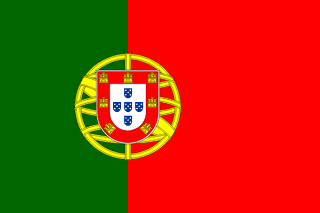
Portugal
Portuguese Republic
Population: UN WPP 2024, revision 1, projection for 1 July 2026. Sources and methodology.
Geography and territory
Portugal occupies the southwestern edge of the Iberian Peninsula, with a total area of 92,090 square kilometers that includes the Atlantic archipelagos of the Azores and Madeira. The mainland borders only Spain, to the north and east, while the vast Atlantic Ocean stretches away to the west and south, a presence that has shaped the character and destiny of the Portuguese nation for centuries. With roughly 1,100 miles of mainland coastline, Portugal is a deeply Atlantic country in outlook as well as geography.
The terrain differs sharply between a mountainous north and a flatter south. North of the Tagus River, the landscape rises into sierras and plateaus, while the Alentejo region in the south spreads into broad, rolling plains, and the Algarve coast is lined with cliffs, coves, and golden beaches. The highest point in Portuguese territory, however, is not on the mainland at all: Mount Pico, a dramatic volcanic peak in the Azores, reaches 2,351 meters above the surrounding Atlantic.
The Tagus, Douro, Minho, Guadiana, and Mondego rivers thread through the country, with the Tagus and Douro carrying particular economic and historical weight. The climate is largely Mediterranean, with a pronounced Atlantic influence in the north that brings abundant rainfall, while the south enjoys drier, warmer conditions, and the Algarve sees sunshine on the great majority of days each year. The Azores and Madeira, farther out in the Atlantic, have their own mild, subtropical oceanic climates.
History
Portugal is one of Europe’s oldest nations, with borders that have remained largely unchanged since the 13th century. Its story as an independent entity begins with the County of Portugal, established under Henry of Burgundy, and its evolution into an independent kingdom proclaimed by Afonso Henriques in 1139, recognized by the pope in 1179 and by neighboring Castile through the Treaty of Zamora in 1143. The reconquest of Portuguese territory from Muslim rule was completed in 1249 with the capture of the Algarve.
The Age of Discoveries, spanning the 15th and 16th centuries, ranks among the most extraordinary chapters in world history. Under the patronage of Prince Henry the Navigator, Portuguese explorers including Bartolomeu Dias, Vasco da Gama, Pedro Álvares Cabral, and Ferdinand Magellan opened new sea routes to Africa, Asia, and the Americas, building an empire that eventually spanned four continents. Lisbon became the capital of the global spice trade and one of the wealthiest cities on Earth.
The great earthquake of 1755 devastated Lisbon and marked a turning point in national life. In the 19th century, the Napoleonic Wars forced the royal court to flee to Brazil. A republic was proclaimed in 1910, but political instability eventually gave way to the long Estado Novo dictatorship under António de Oliveira Salazar, which held power until the Carnation Revolution of April 25, 1974, a largely peaceful and symbolic transition to democracy. Portugal joined the European Economic Community in 1986, ushering in a period of sustained modernization and development.
Culture and society
Portuguese culture carries a distinctive sensibility summed up in the word saudade, a feeling of longing and nostalgia with no exact equivalent in other languages, which colors the country’s literature, music, and national character. Fado, a musical genre born in the working-class neighborhoods of Lisbon and recognized by UNESCO as Intangible Cultural Heritage in 2011, is the fullest expression of that feeling. Amália Rodrigues, and more recently Mariza, carried fado to audiences around the world.
Portuguese literature has produced writers of world stature. Luís de Camões, author of the epic poem Os Lusíadas, is regarded as the national poet and one of the great voices of Renaissance literature. Fernando Pessoa, writing under multiple literary personas, transformed 20th-century poetry. José Saramago, awarded the Nobel Prize in Literature in 1998, remains Portugal’s most internationally celebrated author. The country’s tradition of azulejo tilework, hand-painted ceramic panels adorning churches, palaces, and train stations, is a genuinely Portuguese art form found nowhere else in quite the same way.
Portuguese society is known for its warmth, unhurried pace of life, and the importance placed on family and personal relationships. The Popular Saints festivals in June, especially the celebrations of Saint Anthony in Lisbon and Saint John in Porto, fill the streets with music, grilled sardines, and communal celebration. Soccer is a national passion, with Cristiano Ronaldo standing as its global icon. The daily ritual of coffee, sipped from small cups in the countless pastelarias found in every town, remains a cornerstone of everyday social life.
Economy
Portugal’s economy has undergone a remarkable transformation over recent decades, shifting away from a base of agriculture and textiles toward a diversified economy centered on services and innovation, with gross domestic product now standing at roughly $346.6 billion. The services sector accounts for the large majority of output, with tourism as one of its principal engines; Portugal welcomes tens of millions of international visitors every year.
Portuguese industry is notable in automotive manufacturing, footwear, cork, ceramics, and industrial molds. Portugal is the world’s leading producer of cork, supplying about half of global output. The agrifood sector is also significant, with Port wine, olive oil, canned fish, and the wines of the Douro and Alentejo regions ranking among the country’s signature exports.
In recent years, Portugal has positioned itself as a rising European technology hub. Lisbon hosts the Web Summit, one of the largest technology conferences in the world, and has drawn a growing number of startups and digital companies. Renewable energy is another expanding sector, with Portugal at times generating the entirety of its electricity from clean sources over sustained periods. Telecommunications and e-commerce round out an economy that continues to modernize rapidly.
Food and cuisine
Portuguese cuisine is among the richest and most varied in Europe, deeply tied to the sea and to long culinary tradition. Salt cod, affectionately called the faithful friend, is the undisputed star of the Portuguese table; it is often said there are 365 ways to prepare it, one for every day of the year. From bacalhau à brás to bacalhau com natas to bacalhau à Gomes de Sá, this cured fish is inseparable from Portuguese culinary identity.
Fresh seafood holds a place of honor as well. Grilled sardines, especially popular during the June festivals, the seafood cataplana of the Algarve, seafood rice, and clams cooked bulhão pato style are all emblematic dishes. Meat has its own strong tradition too, with Bairrada-style roast suckling pig, Porto’s hearty francesinha (a layered, sauce-drenched sandwich), and cozido à portuguesa, a mixed boiled dinner, among the enduring regional classics.
Portuguese pastry making is extraordinary, rooted in centuries of convent tradition kept alive by monks and nuns. Pastéis de nata, custard tarts that originated at the Jerónimos Monastery in Belém, are the country’s most famous sweet and have become a global culinary phenomenon. Ovos moles from Aveiro, the pastel de Tentúgal, and the travesseiros of Sintra reflect a distinctive and enduring dessert tradition. Portuguese wines, from Port to vinho verde to the reds of the Douro and Alentejo and the moscatel of Setúbal, are recognized as world class.
Tourism and landmarks
Portugal ranks among the fastest-growing tourist destinations in Europe. Lisbon, the capital, captivates visitors with its seven hills, the historic Alfama district, the Belém Tower, the Jerónimos Monastery (a UNESCO World Heritage Site), the iconic Tram 28, and the Santa Luzia viewpoint. The nightlife of Bairro Alto and the dining scene of Chiado round out an unmatched urban experience.
Porto, the country’s second city, charms with its UNESCO-listed historic center, the Port wine cellars across the river in Vila Nova de Gaia, the ornate Livraria Lello bookshop, the azulejo-covered São Bento train station, and the Dom Luís I Bridge spanning the Douro. The Douro Valley, with its terraced vineyards rising above the river, is one of the most beautiful wine regions in the world and is itself a UNESCO World Heritage Site.
The Algarve offers some of the most spectacular beaches in Europe, backed by golden cliffs and clear waters. Sintra, just outside Lisbon, is home to the fantastical Pena Palace and the mysterious Initiation Well at Quinta da Regaleira. Coimbra, with its medieval university, Évora with its Roman temple, and Óbidos with its walled medieval town add further texture to an exceptional heritage landscape. The Azores and Madeira offer volcanic scenery, laurel forests, and landscapes of extraordinary natural beauty.
Fun facts about Portugal
- The Anglo-Portuguese Alliance, sealed by the Treaty of Windsor in 1373, is the oldest diplomatic alliance in the world still in force today.
- Livraria Bertrand in Lisbon, open continuously since 1732, is certified by Guinness World Records as the oldest operating bookshop on Earth.
- Portugal was the first colonial power to abolish slavery, in 1761, and the first country to decriminalize the possession of all drugs, in 2001.
- The Vasco da Gama Bridge in Lisbon, at 12.3 kilometers, was for years the longest bridge in Europe.
- Portuguese is spoken by more than 260 million people worldwide and is the official language of nine countries across four continents.
- Mount Pico in the Azores, the country’s highest point, is a dormant volcano rising directly from the Atlantic seabed.
Portugal in numbers
Latest World Bank and UNDP observations, each with its own year. “World median” is the middle value among the countries that report the same indicator; “#” ranks from the highest value.
Population since 1960
Portugal had 8.9 million people in 1960 and 10.8 million in 2025 — 22% more.
People
61.5% of people live in towns and cities (world median 63.4%). 12.7% are under 15 and 24.9% are 65 or older — one of the oldest age structures in the world. Women have 1.41 children on average, below the replacement level of about 2.1 needed to keep a population stable in the long run without migration.
Economy
The economy grew by 1.9% in real terms in 2025. Consumer prices rose by 2.3% in 2025. Services make up the largest share of output (66.6% of GDP); agriculture contributes 2.0%.
Development and environment
UNDP rates human development in Portugal as very high, with an index of 0.890 in 2023 (rank 40 of 193). 88.5% of people use the internet and 100.0% have access to electricity. Forest covers 36.6% of the land (world median 32.8%).
Sources: World Bank, World Development Indicators (CC BY 4.0), most recent observation from 2015 onward; UNDP Human Development Report 2025. Retrieved 2026-10-10. Sector shares need not add up to 100% because taxes and subsidies on products are excluded. Missing values are left blank rather than estimated. Sources and methodology.
Climate of Portugal
Averaged across Portugal, the warmest month is August (23.2 °C) and the coolest is January (9.5 °C), a seasonal swing of 13.7 °C. The annual mean is 15.9 °C.
About 864 mm of precipitation falls in a typical year. October is the wettest month (123 mm) and July the driest (8 mm). The wettest stretch is October to December, with 41% of the year's total.
Show monthly values as a table
| Month | Mean °C | Low °C | High °C | Precipitation, mm |
|---|---|---|---|---|
| January | 9.5 | 5.6 | 13.4 | 107 |
| February | 10.2 | 5.8 | 14.6 | 86 |
| March | 12.4 | 7.6 | 17.3 | 82 |
| April | 14.0 | 9.1 | 19.0 | 78 |
| May | 16.9 | 11.7 | 22.2 | 66 |
| June | 20.6 | 14.7 | 26.5 | 25 |
| July | 22.9 | 16.6 | 29.2 | 8 |
| August | 23.2 | 16.8 | 29.6 | 11 |
| September | 20.8 | 15.2 | 26.4 | 45 |
| October | 17.1 | 12.6 | 21.7 | 123 |
| November | 12.7 | 8.8 | 16.7 | 114 |
| December | 10.3 | 6.7 | 14.0 | 120 |
Figures are 1991–2020 averages across the whole land area of Portugal, from the World Bank Climate Change Knowledge Portal, CRU TS 4.08 (CC BY 4.0). They are not readings from one weather station: the capital, the coast and high ground can be much warmer, cooler, wetter or drier.
Travel essentials for Portugal
The practical details visitors ask about first. Traffic in Portugal drives on the right, like most of the world. Mains electricity is 230 V at 50 Hz, so devices made only for 110–120 V (common in North America) need a converter unless they are dual-voltage — most phone and laptop chargers are.
- Emergency number
- 112
- Driving side
- Right
- Plug types
- Type C, Type FC: two round pins (Europlug); F: two round pins with side earth clips (Schuko)
- Voltage
- 230 V50 Hz
- Dialling code
- +351From abroad: your exit code, then 351 and the number
- Currency
- Euro (EUR)
- Time zone
- WET (UTC+0)Current local time in Portugal
Compiled from IEC plug and voltage standards, national emergency-service listings and the UN road-traffic conventions. Emergency numbers and local coverage can change — confirm them locally on arrival. Portugal's internet domain is .pt.
Where Portugal ranks in the world
Each position counts only the countries with data in that ranking guide. First place is the highest value — for price levels, the most expensive. Select a card to see the full table.
- Population94th of 19610.4 millionUN projection, July 2026
- Land area108th of 19591,606 km²World Bank, 2023
- Population density76th of 194115 per km²World Bank, 2023
- GDP (nominal)45th of 187$313.7BWorld Bank, 2024, current US$
- GDP per capita42nd of 187$29,328World Bank, 2024, current US$
- Life expectancy23rd of 19482.4 yearsWorld Bank, 2024
- Price level32nd of 16572 (US = 100)ICP 2021, household consumption
Bordering countries of Portugal

Compare Portugal with another country
Frequently asked questions about Portugal
What is the capital of Portugal?
The capital of Portugal is Lisbon.
What is the population of Portugal?
The UN World Population Prospects projection for Portugal is 10,395,362 people (10.4 million) on 1 July 2026. National statistical offices may publish different estimates.
What language is spoken in Portugal?
The official language of Portugal is Portuguese.
What currency is used in Portugal?
The currency of Portugal is the Euro (EUR).
How big is Portugal?
Portugal covers an area of 92,090 km².
What type of government does Portugal have?
Portugal is a semi-presidential republic.
Which countries border Portugal?
Portugal shares land borders with Spain.
What is the highest point in Portugal?
The highest point in Portugal is Mount Pico (2,351 m, in the Azores).


