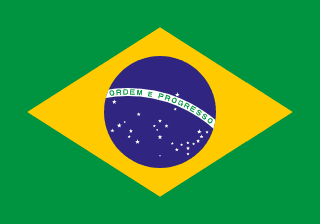
Brazil
Federative Republic of Brazil
Population: UN WPP 2024, revision 1, projection for 1 July 2026. Sources and methodology.
Geography and territory
Brazil is the fifth-largest country in the world and the largest in Latin America, covering 8,515,767 square kilometers, nearly half of the entire South American continent. Its territory borders every South American country except Chile and Ecuador, sharing frontiers with Venezuela, Guyana, Suriname, French Guiana, Colombia, Peru, Bolivia, Paraguay, Argentina, and Uruguay, ten neighbors in total, more than any other country in the Americas. The Atlantic coastline stretches for more than 7,400 kilometers, lined with some of the most celebrated beaches on the planet.
The Brazilian Amazon forms the largest tropical rainforest on Earth, covering roughly 60 percent of the national territory. This immense ecosystem contains the Amazon River, the most voluminous river in the world, and a matchless biodiversity that includes tens of thousands of plant species along with vast numbers of birds and freshwater fish. Beyond the Amazon, Brazil encompasses a striking range of biomes, including the Cerrado tropical savanna, the Atlantic Forest, the Pantanal (the largest wetland on Earth), the semi-arid Caatinga of the northeast, and the grasslands of the southern Pampas.
Brazil’s terrain is dominated by plateaus, plains, and low mountain ranges rather than the towering peaks found in the Andean countries. Pico da Neblina, near the border with Venezuela, is the country’s highest point at 2,994 meters. The prevailing climate is tropical, though conditions vary widely, from the equatorial heat and humidity of the Amazon to the subtropical climate of the south, where winter temperatures can drop sharply. Iguazu Falls, on the border with Argentina, ranks among the most breathtaking natural spectacles anywhere in the world.
History
Brazilian history begins with the arrival of the Portuguese in 1500, when navigator Pedro Álvares Cabral landed on the coast of what is now Bahia. For more than three centuries the Portuguese colony thrived on successive economic cycles built around brazilwood, sugar, gold, and coffee, all sustained to a large degree by the forced labor of millions of enslaved Africans. This tragic history left a profound and lasting imprint on the country’s ethnic and cultural makeup.
Unlike the Spanish colonies of the Americas, Brazil’s independence came about relatively peacefully in 1822, when Prince Pedro, son of the king of Portugal, declared separation from the mother country and crowned himself emperor. The Empire of Brazil lasted until 1889, when a military coup established the republic. Brazil abolished slavery in 1888 with the Lei Áurea signed by Princess Isabel, making it the last country in the Americas to do so.
Twentieth-century Brazil moved through a series of democratic and authoritarian periods: the Vargas era from 1930 to 1945, the construction of Brasília as the new capital in 1960, a military dictatorship from 1964 to 1985, and a return to democracy formalized by the 1988 constitution. Brazil, whose independence from Portugal was proclaimed on 7 September 1822, has since consolidated its position as a rising global power, a founding member of the BRICS group of major emerging economies, and an aspirant to a permanent seat on the United Nations Security Council.
Culture and society
Brazilian culture ranks among the most vibrant and infectious in the world, a fusion of Indigenous, African, and Portuguese traditions further enriched by Italian, German, Japanese, and Arab immigration. Brazilian Carnival, especially the samba school parades of Rio de Janeiro and the street blocos of Salvador de Bahia, is the largest popular festival on Earth, a spectacle of music, dance, color, and boundless creativity.
Brazilian music has left an indelible mark on the world stage. Bossa nova, created by João Gilberto, Antônio Carlos Jobim, and Vinícius de Moraes, revolutionized popular music in the 1960s. Samba, forró, the Tropicália movement of Caetano Veloso and Gilberto Gil, MPB (Brazilian popular music), and more recently funk carioca and sertanejo together form a sonic universe of inexhaustible richness. In literature, writers such as Jorge Amado, Clarice Lispector, Machado de Assis, and Paulo Coelho are read and admired worldwide.
Football is far more than a sport in Brazil; it functions as something close to a secular religion uniting more than 200 million people. The Brazilian national team, five-time world champion, has produced legends such as Pelé, Garrincha, Ronaldo, Ronaldinho, and Neymar, and the Maracanã stadium in Rio de Janeiro remains one of the great temples of world football. Brazilian society is known for its warmth, hospitality, and gift for celebration, though the country continues to grapple with significant social inequality.
Economy
Brazil possesses the largest economy in Latin America and ranks among the ten largest in the world, with a gross domestic product of roughly $2.28 trillion. Its economy is remarkably diversified, with strengths spanning agriculture, mining, manufacturing, energy, and services. The country is the world’s leading producer of coffee, sugar, orange juice, and soybeans, and one of the top exporters of beef, poultry, corn, and cotton.
Brazil’s industrial sector is the most developed in Latin America, with a strong presence in automobiles, aerospace (Embraer ranks as the world’s third-largest aircraft manufacturer), petrochemicals, steel, and technology. The state-controlled oil company Petrobras is among the largest energy firms in the world, with major operations extracting oil from the ultra-deep pre-salt fields off the Atlantic coast. Brazil is also a global leader in renewable energy, with hydroelectric power supplying more than 60 percent of its electricity mix.
Despite its considerable economic potential, Brazil faces structural challenges, including uneven income distribution, a notoriously complex tax system, infrastructure gaps, and macroeconomic volatility. São Paulo, the largest city in the Southern Hemisphere, serves as the country’s financial and industrial hub, hosting the headquarters of major Brazilian corporations as well as the regional operations of many international companies.
Food and cuisine
Brazilian cuisine faithfully mirrors the country’s cultural diversity, with every region contributing its own flavors and culinary traditions. Feijoada, widely considered the national dish, is a hearty stew of black beans and various cuts of pork, served with rice, collard greens, toasted cassava flour known as farofa, and orange slices. Its origins trace back to the resourceful cooking of enslaved Africans, who made use of cuts of meat otherwise discarded.
Brazilian churrasco, or barbecue, is a culinary institution, with churrascaria restaurants offering an endless procession of meats grilled on skewers, including picanha, ribs, rump cap, and flank steak. The northeast contributes dishes of African heritage such as acarajé, moqueca baiana (a fish stew simmered in coconut milk and palm oil), and tapioca. Amazonian cuisine surprises with exotic ingredients such as açaí, tucupi (a sauce made from wild cassava juice), and pirarucu, one of the largest freshwater fish in the world.
Brazilian beverages are equally celebrated. Cachaça, a spirit distilled from sugarcane, forms the base of the caipirinha, the country’s signature cocktail. Brazilian coffee, the most produced in the world, is savored throughout the day in small cups known as cafezinho. Tropical fruit juices made from guava, passion fruit, acerola, cashew fruit, and açaí are a daily staple of the Brazilian diet.
Tourism and landmarks
Rio de Janeiro, crowned by the Christ the Redeemer statue atop Corcovado mountain and framed by Sugarloaf Mountain rising from Guanabara Bay, offers one of the most iconic urban vistas in the world. The beaches of Copacabana and Ipanema, the bohemian neighborhood of Santa Teresa, and the colorful Selarón Steps round out a city of extraordinary beauty. Iguazu Falls, with its 275 individual cascades plunging through subtropical rainforest, is a UNESCO World Heritage Site and one of the New Seven Wonders of Nature.
The Brazilian Amazon offers unmatched ecotourism experiences, from cruising the Amazon River and its tributaries to staying in jungle lodges and meeting Indigenous communities. The Pantanal, spanning the states of Mato Grosso and Mato Grosso do Sul, is the best place on the continent to observe wildlife, including jaguars, caimans, capybaras, and hundreds of bird species.
Brazil’s coastline shelters paradisiacal destinations such as the Fernando de Noronha archipelago, the beaches of Jericoacoara, the Coral Coast of Alagoas, and the Lençóis Maranhenses, a striking landscape of white sand dunes dotted with turquoise lagoons. The historic towns of Ouro Preto and Olinda and the city of Salvador de Bahia preserve an exceptional heritage of colonial Baroque architecture. Brasília, the capital designed by architect Oscar Niemeyer and urban planner Lúcio Costa, is a UNESCO World Heritage Site celebrated for its visionary modernist architecture.
Fun facts about Brazil
- Brazil is the only Portuguese-speaking country in the Americas and is home to roughly 80 percent of all Portuguese speakers in the world.
- The Amazon River discharges an immense volume of fresh water into the Atlantic every second, enough to supply an entire major city for years from a single day’s flow.
- Queimada Grande Island, off the coast of São Paulo state, holds one of the densest concentrations of venomous snakes on Earth, and public access is banned for safety reasons.
- São Paulo has the largest Japanese community outside of Japan, with well over a million residents of Japanese descent.
- Brazil borders ten countries, more than any other nation in the Western Hemisphere.
- Brasília was built from scratch in under four years and inaugurated as the new capital in 1960, replacing Rio de Janeiro.
Brazil in numbers
Latest World Bank and UNDP observations, each with its own year. “World median” is the middle value among the countries that report the same indicator; “#” ranks from the highest value.
Population since 1960
Brazil had 72.4 million people in 1960 and 212.8 million in 2025 — 2.9 times as many.
People
88.2% of people live in towns and cities (world median 63.4%). 19.4% are under 15 and 11.5% are 65 or older — a middle-aged population. Women have 1.61 children on average, below the replacement level of about 2.1 needed to keep a population stable in the long run without migration.
Economy
The economy grew by 2.3% in real terms in 2025. Consumer prices rose by 5.0% in 2025. Services make up the largest share of output (59.7% of GDP); agriculture contributes 6.1%.
Development and environment
UNDP rates human development in Brazil as high, with an index of 0.786 in 2023 (rank 84 of 193). 84.5% of people use the internet and 99.8% have access to electricity. Forest covers 58.5% of the land (world median 32.8%).
Sources: World Bank, World Development Indicators (CC BY 4.0), most recent observation from 2015 onward; UNDP Human Development Report 2025. Retrieved 2026-10-10. Sector shares need not add up to 100% because taxes and subsidies on products are excluded. Missing values are left blank rather than estimated. Sources and methodology.
Climate of Brazil
Averaged across Brazil, the mean temperature stays between 23.9 °C (July) and 26.5 °C (October) — a swing of only 2.6 °C, so seasons are marked by rainfall rather than by heat.
About 1,777 mm of precipitation falls in a typical year. March is the wettest month (240 mm) and August the driest (53 mm). The wettest stretch is January to March, with 39% of the year's total.
Show monthly values as a table
| Month | Mean °C | Low °C | High °C | Precipitation, mm |
|---|---|---|---|---|
| January | 26.1 | 21.3 | 30.9 | 235 |
| February | 26.0 | 21.2 | 30.8 | 225 |
| March | 25.9 | 21.2 | 30.6 | 240 |
| April | 25.6 | 20.7 | 30.4 | 188 |
| May | 24.7 | 19.6 | 29.7 | 135 |
| June | 24.0 | 18.4 | 29.6 | 84 |
| July | 23.9 | 17.8 | 30.0 | 66 |
| August | 24.9 | 18.6 | 31.2 | 53 |
| September | 25.9 | 19.9 | 31.9 | 73 |
| October | 26.5 | 20.9 | 32.2 | 117 |
| November | 26.2 | 21.1 | 31.4 | 160 |
| December | 26.2 | 21.3 | 31.2 | 199 |
Figures are 1991–2020 averages across the whole land area of Brazil, from the World Bank Climate Change Knowledge Portal, CRU TS 4.08 (CC BY 4.0). They are not readings from one weather station: the capital, the coast and high ground can be much warmer, cooler, wetter or drier.
Travel essentials for Brazil
The practical details visitors ask about first. Traffic in Brazil drives on the right, like most of the world.
- Emergency number
- 190Ambulance 192 · Fire 193
- Driving side
- Right
- Plug types
- Type C, Type NC: two round pins (Europlug); N: three round pins (Brazilian)
- Dialling code
- +55From abroad: your exit code, then 55 and the number
- Currency
- Brazilian Real (BRL)
- Time zone
- UTC-2 to UTC-5Current local time in Brazil
Compiled from IEC plug and voltage standards, national emergency-service listings and the UN road-traffic conventions. Emergency numbers and local coverage can change — confirm them locally on arrival. Brazil's internet domain is .br.
Where Brazil ranks in the world
Each position counts only the countries with data in that ranking guide. First place is the highest value — for price levels, the most expensive. Select a card to see the full table.
- Population7th of 196213.6 millionUN projection, July 2026
- Land area5th of 1958,358,140 km²World Bank, 2023
- Population density161st of 19425 per km²World Bank, 2023
- GDP (nominal)11th of 187$2.19TWorld Bank, 2024, current US$
- GDP per capita80th of 187$10,311World Bank, 2024, current US$
- Life expectancy78th of 19476.0 yearsWorld Bank, 2024
- Price level88th of 16545 (US = 100)ICP 2021, household consumption
Bordering countries of Brazil


Compare Brazil with another country
Frequently asked questions about Brazil
What is the capital of Brazil?
The capital of Brazil is Brasília.
What is the population of Brazil?
The UN World Population Prospects projection for Brazil is 213,562,666 people (213.6 million) on 1 July 2026. National statistical offices may publish different estimates.
What language is spoken in Brazil?
The official language of Brazil is Portuguese.
What currency is used in Brazil?
The currency of Brazil is the Brazilian Real (BRL).
How big is Brazil?
Brazil covers an area of 8,515,767 km².
What type of government does Brazil have?
Brazil is a federal presidential republic.
Which countries border Brazil?
Brazil shares land borders with Venezuela, Guyana, Suriname, France (French Guiana), Colombia, Peru, Bolivia, Paraguay, Argentina, Uruguay.
What is the highest point in Brazil?
The highest point in Brazil is Pico da Neblina (2,994 m).

