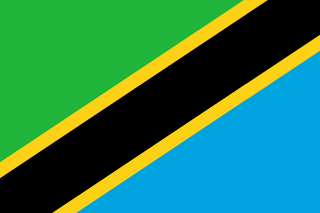
Tanzania
United Republic of Tanzania
Population: UN WPP 2024, revision 1, projection for 1 July 2026. Sources and methodology.
Geography and territory
Tanzania stretches across East Africa, covering 945,087 square kilometers of territory that ranges from the shores of the Indian Ocean to the edge of Lake Victoria, the largest tropical lake on Earth, which it shares with Kenya and Uganda. The country borders eight nations, including Kenya, Uganda, Rwanda, Burundi, the Democratic Republic of the Congo, Zambia, Malawi, and Mozambique, giving it more neighbors than almost any other African state. Within this vast footprint sit some of the continent’s most dramatic natural features.
Mount Kilimanjaro, rising 5,895 meters above sea level, is both the highest point in Africa and the tallest freestanding mountain in the world. Its dormant volcanic cone, still capped by shrinking glaciers, looms over the northern plains and is visible from great distances on a clear day. The Great Rift Valley cuts through the country from north to south, carving out a chain of lakes that includes Lake Tanganyika, the second-deepest lake on the planet, and Lake Natron, whose caustic, mineral-rich waters form the only breeding ground for lesser flamingos in East Africa.
Climate varies sharply with elevation and distance from the coast. The shoreline and the islands of Zanzibar enjoy a warm, humid tropical climate, while the central and northern highlands stay noticeably cooler. The Serengeti plains follow a classic savanna pattern of distinct wet and dry seasons that dictate the seasonal movements of the region’s wildlife. Roughly 30 percent of Tanzanian territory falls under some form of protection as national parks, reserves, or conservation areas, making it one of the most biodiverse countries on the continent.
History
Few places on Earth hold a longer record of human presence than northern Tanzania. Olduvai Gorge, excavated by paleontologists Louis and Mary Leakey, yielded hominid remains nearly two million years old and earned the site its reputation as one of the cradles of humankind. Nearby, the Laetoli footprints, a trail of hominid tracks preserved in volcanic ash roughly 3.6 million years ago, rank among the oldest direct evidence of upright walking anywhere in the world.
For centuries, the Tanzanian coast functioned as a hub of Indian Ocean trade. Arab, Persian, and Indian merchants built ports and trading towns that gave rise to Swahili culture, a distinctive blend of African, Arab, and South Asian traditions. Zanzibar grew into East Africa’s principal market for spices and enslaved people, so central to regional trade that the Sultanate of Oman relocated its capital there in 1840. European colonization arrived with Germany, which administered German East Africa from 1885 until the First World War, after which the territory passed to British control under a League of Nations mandate.
Tanganyika’s independence in 1961, achieved under the leadership of Julius Nyerere, marked the birth of a new nation. Nyerere pursued ujamaa, a distinctly African form of socialism built around collective rural life; the economic program largely failed, but it left behind a strong sense of national unity and cemented Swahili as a shared language across ethnic lines. Union with Zanzibar in 1964 created the United Republic of Tanzania. Since the 1990s the country has shifted toward a market economy and multiparty politics, maintaining a level of political stability that has proven rare in a region often shaken by conflict.
Culture and society
Tanzania’s cultural landscape is among the richest in Africa, shaped by more than 120 ethnic groups united by a shared national language. Swahili, a Bantu language layered with Arabic influence, is understood by nearly the entire population and functions as East Africa’s lingua franca, spoken by well over 100 million people across the wider region. That linguistic unity, actively cultivated by Nyerere after independence, has done more than almost anything else to hold together a nation of such ethnic diversity without significant interethnic conflict.
Music runs through nearly every aspect of Tanzanian life. Taarab, a Zanzibari genre that weaves together Arab, Indian, and African melodies with Swahili poetry, has earned recognition as a cultural treasure in its own right. Bongo flava, a contemporary style blending hip-hop, R&B, and traditional rhythms, dominates the current music scene and has produced continentally famous artists such as Diamond Platnumz. Traditional dance forms, broadly known as ngoma and performed with drums and call-and-response singing, mark ceremonies of every kind and differ markedly from one ethnic group to the next.
The Maasai, perhaps the most internationally recognized of Tanzania’s peoples, continue a semi-nomadic, pastoralist way of life on the northern plains, instantly recognizable by their red shukas, intricate beaded jewelry, and rhythmic jumping dances. Yet Tanzania’s cultural range extends well beyond them: the Hadza of Lake Eyasi remain one of Africa’s last hunter-gatherer societies, the Chagga farm the fertile slopes of Kilimanjaro, and Swahili coastal communities preserve centuries-old maritime traditions.
Economy
Tanzania’s economy has been among the fastest-growing in East Africa, with GDP expansion consistently topping 6 percent annually over recent decades. Services, led by tourism, contribute the largest share of output, followed by agriculture and industry. The country has diversified its economic base more successfully than many of its neighbors, gradually reducing its reliance on foreign aid.
Agriculture employs more than 65 percent of the workforce and generates coffee, tea, cashews, tobacco, cotton, cloves, and sisal for export, alongside maize, rice, and cassava grown for domestic consumption. Zanzibar remains the world’s leading producer of cloves, a spice that has shaped the island’s economy and identity for centuries. Mining contributes growing revenue as well; Tanzania ranks among Africa’s top gold producers and is the only place on Earth where tanzanite is mined, a deep violet-blue gemstone first discovered near Kilimanjaro in 1967.
Tourism stands as the country’s economic showcase, generating well over $2 billion a year and serving as a critical source of jobs and foreign currency. National parks and game reserves draw hundreds of thousands of visitors annually, while Zanzibar has established itself as a top-tier beach destination. Persistent rural poverty, inadequate infrastructure, and the need to create jobs for a young, fast-growing population remain significant challenges. The government has pushed ahead with ambitious infrastructure projects, including a high-speed rail line and an expanded national power grid.
Food and cuisine
Tanzanian cuisine mirrors the country’s geographic and cultural diversity, ranging from the spice-laden Swahili cooking of the coast to the heartier fare of the interior highlands. Ugali, a firm dough made from maize flour cooked in water, is the national staple, served at nearly every main meal. Eaten by hand, it is used to scoop up stews of meat, fish, or vegetables. Nyama choma, grilled goat or beef, is arguably the country’s most beloved dish and the centerpiece of virtually any social gathering.
Zanzibari cooking deserves separate mention for its sophistication and aromatic depth. Centuries of spice trade show up in dishes like pilau, a fragrant rice preparation seasoned with cardamom, cloves, cinnamon, and cumin, and Zanzibari biryani, which reflects strong Indian influence. Urojo, a tangy street soup found throughout Stone Town, combines potato, green mango, coconut, and chutney into a burst of contrasting flavors. Fresh seafood, including lobster, crab, octopus, and shrimp, is prepared in coconut curries or simply grilled with local spices.
Tropical fruit is abundant across Tanzania: mangoes, papayas, passion fruit, jackfruit, coconuts, and bananas appear fresh, juiced, or folded into main dishes. Chai, black tea brewed with milk, sugar, ginger, and sometimes cardamom, is the everyday social drink, consumed at all hours. Local beer brands such as Kilimanjaro, Safari, and Serengeti are widely popular, while mbege, a traditional banana-and-millet beer brewed by the Chagga people of Kilimanjaro, represents a unique and ancient brewing tradition found nowhere else in the world.
Tourism and landmarks
Tanzania ranks among the most extraordinary travel destinations on Earth, offering natural spectacles unmatched anywhere else. Serengeti National Park, spanning nearly 14,750 square kilometers of savanna, hosts the Great Migration, widely considered the greatest wildlife spectacle on the planet: more than two million wildebeest, zebra, and gazelle travel an 800-kilometer circuit each year in pursuit of seasonal rains, crossing crocodile-infested rivers in scenes of raw natural drama.
Mount Kilimanjaro draws tens of thousands of climbers annually, offering the rare chance to reach Africa’s highest point without technical climbing gear. The Ngorongoro Crater, a volcanic caldera roughly 20 kilometers across, functions as a natural ark where more than 25,000 large mammals live in close proximity, including the highest density of lions in Africa and one of the continent’s most accessible populations of black rhinoceros. The Ngorongoro Conservation Area holds UNESCO World Heritage status.
Zanzibar, the Spice Islands, enchants visitors with white-sand beaches, a storied past, and a culture unlike anywhere else in the region. Stone Town, the historic quarter of Zanzibar City, is itself a UNESCO World Heritage Site, a maze of narrow lanes, palaces, mosques, and carved wooden doors bearing witness to centuries of exchange among African, Arab, Indian, and European traders. Other highlights include Tarangire National Park, famed for its ancient baobabs and large elephant herds, and Selous, one of Africa’s most expansive wildlife reserves.
Fun facts about Tanzania
- Mount Kilimanjaro is the tallest freestanding mountain on Earth and the only place near the equator where glaciers can still be seen.
- Tanzanite, a gemstone said to be a thousand times rarer than diamond, is found in only one small area near Kilimanjaro.
- Olduvai Gorge has produced some of the oldest hominid fossils ever discovered, dating back nearly two million years.
- The Serengeti’s Great Migration involves more than two million animals and is large enough to be visible from space.
- Zanzibar was once East Africa’s largest slave market and a leading hub of Indian Ocean spice trade.
- Despite more than 120 ethnic groups, Tanzania has largely avoided interethnic conflict, a legacy credited to its unifying national language policy.
Tanzania in numbers
Latest World Bank and UNDP observations, each with its own year. “World median” is the middle value among the countries that report the same indicator; “#” ranks from the highest value.
Population since 1960
Tanzania had 9.9 million people in 1960 and 70.5 million in 2025 — 7.1 times as many.
People
36.9% of people live in towns and cities (world median 63.4%). 42.3% are under 15 and 3.0% are 65 or older — a very young population. Women have 4.54 children on average, above the replacement level of about 2.1.
Economy
The economy grew by 5.9% in real terms in 2025. Consumer prices rose by 3.3% in 2025. Industry makes up the largest share of output (29.8% of GDP); agriculture contributes 22.9%, a large share that points to a farming-based economy.
Development and environment
UNDP rates human development in Tanzania as medium, with an index of 0.555 in 2023 (rank 165 of 193). 31.2% of people use the internet and 52.4% have access to electricity. Forest covers 49.6% of the land (world median 32.8%).
Sources: World Bank, World Development Indicators (CC BY 4.0), most recent observation from 2015 onward; UNDP Human Development Report 2025. Retrieved 2026-10-10. Sector shares need not add up to 100% because taxes and subsidies on products are excluded. Missing values are left blank rather than estimated. Sources and methodology.
Climate of Tanzania
Averaged across Tanzania, the mean temperature stays between 20.5 °C (July) and 24.2 °C (November) — a swing of only 3.7 °C, so seasons are marked by rainfall rather than by heat.
About 964 mm of precipitation falls in a typical year. March is the wettest month (167 mm) and July the driest (5 mm). The wettest stretch is January to March, with 48% of the year's total.
Show monthly values as a table
| Month | Mean °C | Low °C | High °C | Precipitation, mm |
|---|---|---|---|---|
| January | 23.7 | 18.7 | 28.7 | 154 |
| February | 23.8 | 18.5 | 29.0 | 142 |
| March | 23.8 | 18.6 | 29.0 | 167 |
| April | 23.1 | 18.2 | 28.0 | 142 |
| May | 22.3 | 17.1 | 27.6 | 57 |
| June | 21.0 | 15.1 | 27.0 | 11 |
| July | 20.5 | 14.3 | 26.8 | 5 |
| August | 21.6 | 15.3 | 27.9 | 8 |
| September | 22.8 | 16.4 | 29.2 | 15 |
| October | 24.0 | 17.8 | 30.2 | 33 |
| November | 24.2 | 18.5 | 29.9 | 86 |
| December | 23.8 | 18.7 | 28.9 | 145 |
Figures are 1991–2020 averages across the whole land area of Tanzania, from the World Bank Climate Change Knowledge Portal, CRU TS 4.08 (CC BY 4.0). They are not readings from one weather station: the capital, the coast and high ground can be much warmer, cooler, wetter or drier.
Travel essentials for Tanzania
The practical details visitors ask about first. Traffic in Tanzania drives on the left, one of 54 of the 196 countries profiled here that do — see the full list. Mains electricity is 230 V at 50 Hz, so devices made only for 110–120 V (common in North America) need a converter unless they are dual-voltage — most phone and laptop chargers are.
- Emergency number
- 112Ambulance 114 · Fire 114
- Driving side
- Left
- Plug types
- Type D, Type GD: three large round pins in a triangle; G: three rectangular pins (British)
- Voltage
- 230 V50 Hz
- Dialling code
- +255From abroad: your exit code, then 255 and the number
- Currency
- Tanzanian Shilling (TZS)
- Time zone
- EAT (UTC+3)Current local time in Tanzania
Compiled from IEC plug and voltage standards, national emergency-service listings and the UN road-traffic conventions. Emergency numbers and local coverage can change — confirm them locally on arrival. Tanzania's internet domain is .tz.
Where Tanzania ranks in the world
Each position counts only the countries with data in that ranking guide. First place is the highest value — for price levels, the most expensive. Select a card to see the full table.
- Population20th of 19672.6 millionUN projection, July 2026
- Land area31st of 195885,800 km²World Bank, 2023
- Population density111th of 19475 per km²World Bank, 2023
- GDP (nominal)80th of 187$79.2BWorld Bank, 2024, current US$
- GDP per capita164th of 187$1,193World Bank, 2024, current US$
- Life expectancy153rd of 19467.2 yearsWorld Bank, 2024
- Price level148th of 16530 (US = 100)ICP 2021, household consumption
Bordering countries of Tanzania


Compare Tanzania with another country
Frequently asked questions about Tanzania
What is the capital of Tanzania?
The capital of Tanzania is Dodoma.
What is the population of Tanzania?
The UN World Population Prospects projection for Tanzania is 72,563,780 people (72.6 million) on 1 July 2026. National statistical offices may publish different estimates.
What language is spoken in Tanzania?
The official language of Tanzania is Swahili, English.
What currency is used in Tanzania?
The currency of Tanzania is the Tanzanian Shilling (TZS).
How big is Tanzania?
Tanzania covers an area of 945,087 km².
What type of government does Tanzania have?
Tanzania is a presidential republic.
Which countries border Tanzania?
Tanzania shares land borders with Kenya, Uganda, Rwanda, Burundi, Democratic Republic of the Congo, Zambia, Malawi, Mozambique.
What is the highest point in Tanzania?
The highest point in Tanzania is Mount Kilimanjaro (5,895 m).


