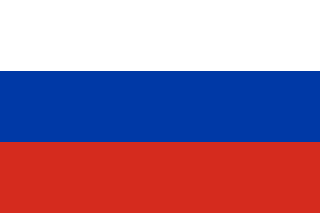
Russia
Russian Federation
Population: UN WPP 2024, revision 1, projection for 1 July 2026. Sources and methodology.
Geography and territory
Russia is the largest country on Earth, its territory sprawling across more than 17,098,250 square kilometers and eleven time zones, from the Kaliningrad exclave on the Baltic Sea to the Pacific coastline of the Russian Far East. Home to about 143.4 million people, the country straddles two continents, Europe and Asia, and covers roughly an eighth of the planet’s habitable land surface. The European portion, though far smaller in area, holds the bulk of the population and its major cities, including the capital, Moscow. Russia also shares land borders with more countries than almost any other nation, from Norway and Finland in the northwest to North Korea in the Far East, a reflection of the sheer sweep of its frontiers.
Russia’s terrain is extraordinarily varied. The broad plains of European Russia, dominated by the East European Plain, give way to the Ural Mountains, the natural dividing line between Europe and Asia. East of the Urals stretches the vast West Siberian Plain, one of the flattest regions on the planet, followed by the Central Siberian Plateau and the mountain ranges of the Russian Far East. The country’s highest point, and Europe’s as well, is Mount Elbrus in the Caucasus, rising to 5,642 meters.
Climate shifts drastically from region to region, ranging from extreme Arctic cold in northern Siberia, where temperatures can plunge below minus 50 degrees Celsius, to humid subtropical conditions along the Black Sea coast. Russia contains Lake Baikal, the world’s deepest and oldest lake, holding roughly 20 percent of the planet’s unfrozen fresh water. The Volga, Ob, Yenisei, and Lena rivers rank among the longest and most powerful waterways on Earth.
History
Russia’s history traces back to the East Slavic peoples who settled the plains between the sixth and eighth centuries. In the ninth century, Kievan Rus emerged under the influence of Scandinavian Varangians, giving rise to what is considered the shared cradle of Russian, Ukrainian, and Belarusian civilization. Prince Vladimir’s adoption of Orthodox Christianity in 988 marked a cultural turning point that shaped Russian identity for centuries to follow.
After Mongol domination from the thirteenth to the fifteenth centuries, the Grand Duchy of Moscow rose as the nucleus of the future Russian state. Ivan III threw off Mongol rule in 1480, and Ivan IV, known as Ivan the Terrible, proclaimed himself the first tsar in 1547. The Romanov dynasty, which ruled from 1613 to 1917, transformed Russia into a continental empire. Peter the Great founded St. Petersburg in 1703 and modernized the country along European lines, while Catherine the Great pushed the empire’s borders to the Black Sea and cemented Russia’s status as a major European power.
The Revolution of 1917 toppled the tsarist system and led to the founding of the Soviet Union in 1922, the world’s first socialist state. Under Stalin, the USSR industrialized at a breakneck pace, though at an immense human cost, while also enduring devastating losses on the Eastern Front, which bore the brunt of Nazi Germany’s invasion during World War II. Victory over Nazi Germany turned the Soviet Union into a superpower and a central player in the Cold War, a decades-long rivalry with the United States that shaped global politics, the arms race, and the space race alike. The USSR’s dissolution in 1991 gave rise to today’s Russian Federation, which inherited the bulk of Soviet territory, its nuclear arsenal, and its permanent seat on the United Nations Security Council.
Culture and society
Russian culture has left an immense mark on world civilization. In literature, figures such as Pushkin, Tolstoy, Dostoevsky, Chekhov, and Bulgakov produced masterworks that remain touchstones of world literature. Its classical music tradition, carried by composers including Tchaikovsky, Rachmaninoff, Stravinsky, and Shostakovich, ranks among the richest in the world, while Russian ballet, performed by legendary companies such as the Bolshoi and the Mariinsky, elevated the art form to its highest expression.
Russian painting spans a huge range, from Byzantine-inspired religious icons to twentieth-century avant-garde artists such as Kandinsky, Malevich, and Chagall. Its architecture pairs the onion domes long associated with Orthodox churches with the grand imperial style of St. Petersburg and the monumental scale of Soviet-era construction. Russian cinema, from Eisenstein’s early innovations to Tarkovsky’s later art-house films, has shaped the development of film as a medium worldwide.
Russian society carries a deep tradition of hospitality, where welcoming guests into one’s home is treated as a near-sacred ritual accompanied by generous food and toasts. The Russian Orthodox Church holds a central place in national identity, and festivals such as Maslenitsa, a pre-Lenten celebration akin to carnival, along with New Year’s festivities, anchor the country’s social calendar. Chess, literature, and classical music enjoy a popularity in Russia that cuts across all social classes, and family gatherings around a well-laid table remain a cornerstone of everyday social life across the country’s many regions and ethnic communities.
Economy
Russia possesses one of the largest economies in the world, built on extraordinary natural resource wealth. It ranks among the leading global producers and exporters of oil and natural gas, commodities that generate a substantial share of state revenue. The country is likewise rich in minerals such as diamonds, nickel, platinum, gold, and iron ore, making it a global mining power in its own right.
Russian industry spans strategic sectors including defense and armaments, nuclear energy, aerospace, and metallurgy. The country maintains one of the world’s most advanced space programs, a legacy of Soviet-era achievements that included the launch of Sputnik and Yuri Gagarin’s pioneering crewed spaceflight. Agriculture has grown substantially in recent decades, turning Russia into one of the world’s largest wheat exporters.
Russia’s technology sector has produced globally recognized companies such as Yandex and Kaspersky, and its education system maintains high standards, particularly in mathematics, physics, and engineering, producing a steady stream of engineers and scientists. Even so, the economy faces real challenges, including heavy reliance on hydrocarbons, an unfinished push toward diversification, regional disparities in living standards between Moscow and more remote areas, and international sanctions that have restricted access to Western markets and technology.
Food and cuisine
Russian cuisine is hearty and warming, shaped by the demands of a harsh continental winter. Borscht, a beet soup served hot or cold with a dollop of smetana, or sour cream, is perhaps the most iconic dish, though its origins are shared with Ukraine. Pelmeni, dumplings filled with meat and boiled in broth, embody home cooking at its most essential, while blini, thin buckwheat crepes, are served with caviar, smoked salmon, or preserves.
Soups hold a place of honor at the Russian table: shchi, built around cabbage, is a winter staple, while solyanka combines meats and pickles in a rich, tangy broth. Pirozhki, small hand pies filled with meat, cabbage, or potato, are an essential street snack. Russian caviar, especially beluga and osetra harvested from the Caspian Sea, is regarded as one of the world’s most prized delicacies.
Traditional drinks include kvass, a mildly alcoholic beverage fermented from rye bread, and tea, traditionally brewed and served from a samovar as part of a deeply rooted social ritual. Vodka, distilled in Russia since at least the fourteenth century, accompanies toasts and celebrations, almost always paired with a salty or pickled snack known as zakuski.
Tourism and landmarks
Moscow and St. Petersburg form the country’s two great tourism hubs. In Moscow, Red Square is home to St. Basil’s Cathedral with its unmistakable colorful domes, Lenin’s Mausoleum, and the Kremlin, the fortress that has served as the seat of Russian political power for centuries. St. Petersburg, often called the Venice of the North, dazzles visitors with the Hermitage Museum, one of the largest art museums in the world, the Winter Palace, St. Isaac’s Cathedral, and its famous summer White Nights.
The Trans-Siberian Railway, the longest rail line on Earth at more than 9,000 kilometers, carries travelers on an epic journey from Moscow to Vladivostok through landscapes of staggering scale. Lake Baikal, in Siberia, captivates visitors with its crystalline waters and singular ecosystem, home to endemic species such as the Baikal seal. The Golden Ring, a circuit of historic towns northeast of Moscow including Suzdal, Vladimir, and Yaroslavl, showcases an extraordinary concentration of medieval religious architecture.
The Kamchatka Peninsula, in the Far East, is a volcanic wonderland of geysers, hot springs, and wildlife that includes brown bears and eagles, drawing intrepid travelers willing to make the long journey across the country. The Russian Caucasus offers ski resorts and dramatic mountain scenery, while Kizhi Island, in Karelia, holds a remarkable collection of wooden architecture, including a 22-domed church built without a single nail. Further south, the ancient city of Kazan blends Orthodox and Islamic heritage within a single UNESCO-listed kremlin, reflecting the country’s vast ethnic and religious diversity.
Fun facts about Russia
- The Moscow Metro is considered one of the most beautiful subway systems in the world, with stations decorated like palaces using marble, mosaics, and chandeliers.
- Russia has more than 100,000 rivers and roughly 2 million freshwater lakes.
- Lake Baikal holds more water than all of North America’s Great Lakes combined.
- The Hermitage Museum in St. Petersburg employs official cats to protect its collections from rodents, a tradition dating back to the eighteenth century.
- Russia became the first country to send a human into space when Yuri Gagarin orbited the Earth on April 12, 1961.
- The Trans-Siberian Railway passes through 87 cities and crosses 16 rivers along its route of more than 9,000 kilometers.
Russia in numbers
Latest World Bank and UNDP observations, each with its own year. “World median” is the middle value among the countries that report the same indicator; “#” ranks from the highest value.
Population since 1960
Russia had 119.9 million people in 1960 and 143.5 million in 2025 — 20% more.
The population peaked at 148.5 million in 1992 and has since declined.
People
75.3% of people live in towns and cities (world median 63.4%). 17.0% are under 15 and 17.8% are 65 or older — an ageing population. Women have 1.42 children on average, below the replacement level of about 2.1 needed to keep a population stable in the long run without migration.
Economy
The economy grew by 1.0% in real terms in 2025. Consumer prices rose by 8.7% in 2025. Services make up the largest share of output (58.9% of GDP); agriculture contributes 3.1%.
Development and environment
UNDP rates human development in Russia as very high, with an index of 0.832 in 2023 (rank 64 of 193). 94.4% of people use the internet and 100.0% have access to electricity. Forest covers 50.8% of the land (world median 32.8%).
Sources: World Bank, World Development Indicators (CC BY 4.0), most recent observation from 2015 onward; UNDP Human Development Report 2025. Retrieved 2026-10-10. Sector shares need not add up to 100% because taxes and subsidies on products are excluded. Missing values are left blank rather than estimated. Sources and methodology.
Climate of Russia
Averaged across Russia, the warmest month is July (15.7 °C) and the coolest is January (−23.5 °C), a seasonal swing of 39.2 °C. The annual mean is −3.9 °C.
7 months have a national mean temperature below freezing.
About 475 mm of precipitation falls in a typical year. July is the wettest month (68 mm) and February the driest (19 mm). The wettest stretch is June to August, with 41% of the year's total.
Show monthly values as a table
| Month | Mean °C | Low °C | High °C | Precipitation, mm |
|---|---|---|---|---|
| January | −23.5 | −27.8 | −19.3 | 23 |
| February | −21.1 | −26.1 | −16.2 | 19 |
| March | −13.3 | −19.2 | −7.5 | 22 |
| April | −3.6 | −9.4 | 2.1 | 26 |
| May | 5.2 | −0.4 | 10.8 | 40 |
| June | 12.6 | 6.9 | 18.4 | 57 |
| July | 15.7 | 10.1 | 21.4 | 68 |
| August | 13.3 | 8.0 | 18.6 | 68 |
| September | 6.8 | 2.2 | 11.5 | 51 |
| October | −2.6 | −6.5 | 1.2 | 42 |
| November | −14.5 | −18.3 | −10.7 | 33 |
| December | −21.6 | −25.5 | −17.7 | 27 |
Figures are 1991–2020 averages across the whole land area of Russia, from the World Bank Climate Change Knowledge Portal, CRU TS 4.08 (CC BY 4.0). They are not readings from one weather station: the capital, the coast and high ground can be much warmer, cooler, wetter or drier.
Travel essentials for Russia
The practical details visitors ask about first. Traffic in Russia drives on the right, like most of the world. Mains electricity is 230 V at 50 Hz, so devices made only for 110–120 V (common in North America) need a converter unless they are dual-voltage — most phone and laptop chargers are.
- Emergency number
- 112Police 102 · Ambulance 103 · Fire 101
- Driving side
- Right
- Plug types
- Type C, Type FC: two round pins (Europlug); F: two round pins with side earth clips (Schuko)
- Voltage
- 230 V50 Hz
- Dialling code
- +7From abroad: your exit code, then 7 and the number
- Currency
- Russian Ruble (RUB)
- Time zone
- UTC+2 to UTC+12Current local time in Russia
Compiled from IEC plug and voltage standards, national emergency-service listings and the UN road-traffic conventions. Emergency numbers and local coverage can change — confirm them locally on arrival. Russia's internet domain is .ru.
Where Russia ranks in the world
Each position counts only the countries with data in that ranking guide. First place is the highest value — for price levels, the most expensive. Select a card to see the full table.
- Population9th of 196143.4 millionUN projection, July 2026
- Land area1st of 19516,376,870 km²World Bank, 2023
- Population density182nd of 1948.8 per km²World Bank, 2023
- GDP (nominal)10th of 187$2.19TWorld Bank, 2024, current US$
- GDP per capita63rd of 187$14,962World Bank, 2024, current US$
- Life expectancy101st of 19473.4 yearsWorld Bank, 2024
Bordering countries of Russia


Compare Russia with another country
Frequently asked questions about Russia
What is the capital of Russia?
The capital of Russia is Moscow.
What is the population of Russia?
The UN World Population Prospects projection for Russia is 143,394,458 people (143.4 million) on 1 July 2026. National statistical offices may publish different estimates.
What language is spoken in Russia?
The official language of Russia is Russian.
What currency is used in Russia?
The currency of Russia is the Russian Ruble (RUB).
How big is Russia?
Russia covers an area of 17,098,250 km².
What type of government does Russia have?
Russia is a federal semi-presidential republic.
Which countries border Russia?
Russia shares land borders with Norway, Finland, Estonia, Latvia, Lithuania, Poland, Belarus, Ukraine, Georgia, Azerbaijan, Kazakhstan, China, Mongolia, North Korea.
What is the highest point in Russia?
The highest point in Russia is Mount Elbrus (5,642 m).
