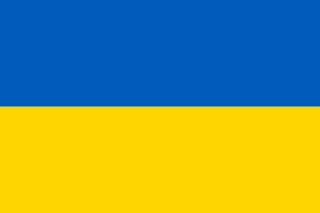
Ukraine
Ukraine
Population: UN WPP 2024, revision 1, projection for 1 July 2026. Sources and methodology.
Geography and territory
Ukraine is the largest country lying entirely within Europe, spanning 603,500 square kilometers between the Carpathian Mountains in the west and the steppes of the Donbas in the east. Its territory stretches from the marshlands of Polesia in the north down to the coastlines of the Black Sea and the Sea of Azov in the south. The Crimean Peninsula juts into the Black Sea, forming a natural bridge between Europe and Asia and holding deep strategic and historical significance for the country.
Vast, fertile plains dominate the Ukrainian landscape, forming one of the richest agricultural reserves on Earth. The steppe is famous for its chernozem, or black soil, among the most fertile in the world and a resource that has shaped the nation’s economy and identity for centuries. To the west, the Ukrainian Carpathians reach their highest point at Mount Hoverla, standing 2,061 meters tall. The Dnipro River, one of Europe’s longest, runs the length of the country from north to south, splitting it roughly in half before emptying into the Black Sea.
Ukraine’s climate is largely continental, with cold winters and hot summers, while the southern regions enjoy milder conditions, with the Crimean coast taking on a near-Mediterranean character. The country’s ecosystems are notably rich, encompassing the beech forests of the Carpathians, recognized as a UNESCO World Heritage Site, and the Danube Delta Biosphere Reserve, shared with neighboring Romania. Wetlands, mixed forests, and river valleys support a wide range of wildlife, from wolves and lynx in the Carpathian highlands to the migratory birds that gather each year along the Danube Delta’s channels and lagoons.
History
Ukraine’s history traces directly back to Kyivan Rus, the powerful medieval state that flourished between the ninth and thirteenth centuries and is regarded as the common ancestral root of Ukrainian, Russian, and Belarusian civilization. Under Yaroslav the Wise, Kyiv grew into one of the largest and most prosperous cities in Europe, with Saint Sophia Cathedral standing as a lasting symbol of its cultural and religious achievement.
Following the Mongol invasion of the thirteenth century, the region became a contested borderland fought over by Lithuania, Poland, and Tatar powers. The sixteenth century saw the rise of the Zaporozhian Cossacks, free warriors settled along the Dnipro steppe who became enduring symbols of Ukrainian identity. In the seventeenth century, the Cossack Hetmanate under Bohdan Khmelnytsky established a semi-autonomous state, though the territory gradually fell under the control of the Russian Empire in the centuries that followed.
The twentieth century brought particular tragedy to Ukraine. The Holodomor of 1932-1933, a famine caused by Stalin’s forced collectivization policies, killed millions of Ukrainians and is regarded by many historians as an act of genocide. Ukraine suffered enormous devastation during the Second World War, and the 1986 Chernobyl nuclear disaster left a lasting scar on the country. Independence came in 1991 with the collapse of the Soviet Union, opening a new chapter defined by the pursuit of national identity and closer ties with Europe. That trajectory has been profoundly tested since Russia’s full-scale invasion began in February 2022, an ongoing war that has caused widespread destruction, mass displacement, and significant loss of life, following Russia’s earlier annexation of Crimea and the conflict in the eastern Donbas region that began in 2014.
Culture and society
Ukraine possesses a rich and vibrant cultural tradition shaped by its position as a crossroads between East and West. Taras Shevchenko stands as the country’s most revered literary figure, a poet whose work was instrumental in establishing Ukrainian as a mature literary language. Writers such as Nikolai Gogol, born on Ukrainian soil, and Ivan Franko made lasting contributions to European letters more broadly.
Ukrainian folk arts are extraordinarily rich. The pysanka, the decorative art of hand-painted Easter eggs adorned with intricate geometric patterns, is recognized around the world. Embroidered clothing known as vyshyvanka serves as a proud marker of national identity, worn at festivals and celebrations. The vigorous, athletic hopak dance reflects the spirit of the Cossacks, while traditional music built around the bandura, a distinctive stringed instrument, accompanies ceremonies and celebrations throughout the year.
Ukrainian society is marked by a strong sense of community and hospitality. Orthodox Christmas celebrations, with traditional carols known as koliadky, and the midsummer festival of Ivan Kupala, with its rituals of fire and water, keep centuries-old customs alive. The Orthodox Church of Ukraine plays a central role in the country’s spiritual life, and religious tradition remains deeply woven into everyday social rhythms even amid the pressures of recent years. Ukrainian diaspora communities across North America and Europe have also long served as custodians of language and folk tradition, and in recent years they have played an active role in supporting communities back home.
Economy
Ukraine has long been known as the breadbasket of Europe thanks to its extraordinary chernozem soils, among the most fertile anywhere in the world. Agriculture forms a fundamental pillar of the economy, and the country ranks among the world’s leading exporters of wheat, corn, sunflower oil, and barley. The agricultural sector generates a significant share of national export earnings and sustains millions of rural families.
Ukrainian industry, built on a substantial manufacturing base inherited from the Soviet era, is particularly strong in metallurgy, especially steel production, along with aerospace manufacturing, heavy machinery, and chemicals. The Donbas region was traditionally the country’s industrial heartland, home to major coal deposits and a dense network of steel plants, though this region has been severely affected by the ongoing conflict.
Ukraine’s information technology sector had grown remarkably in the years before the war, establishing the country as a major hub for software development and digital services in Eastern Europe, with Kyiv and Kharkiv emerging as centers of highly skilled tech talent. The economy, with a gross domestic product of roughly $214.2 billion, has faced enormous challenges stemming from the war that began in 2022, including widespread infrastructure damage, the displacement of millions of people, and a profound economic reconfiguration as the country works to sustain output under wartime conditions.
Food and cuisine
Ukrainian cuisine is hearty, varied, and deeply rooted in rural tradition. Ukrainian borscht, a beet soup made with cabbage, potatoes, meat, and aromatic herbs and typically served with a spoonful of sour cream and garlic, is the country’s signature dish. Ukrainians take great pride in the dish’s origins, and UNESCO has inscribed the culture of Ukrainian borscht on its list of intangible cultural heritage in need of urgent safeguarding.
Varenyky, boiled dumplings filled with potato, cheese, cherries, or cabbage, form another pillar of the Ukrainian table, appearing in both everyday meals and festive gatherings. Salo, pork fat cured with salt, garlic, and spices, is an iconic food typically eaten with dark rye bread. Holubtsi, cabbage rolls stuffed with rice and meat, and deruny, crisp potato pancakes, round out the classic repertoire.
Ukrainian baking traditions are equally rich, with Kyiv cake, a meringue-based confection layered with buttercream, standing as the country’s signature dessert. Medovik, a honey cake built from delicate layered sponge and cream, and pampushky, soft garlic-scented rolls traditionally served alongside borscht, are staples of the table. Horilka, Ukrainian spirits similar to vodka, and uzvar, a compote made from dried fruit, are traditional drinks that accompany family celebrations.
Tourism and landmarks
Kyiv, the capital, offers an exceptional historical heritage anchored by Saint Sophia Cathedral and the Kyiv Pechersk Lavra monastery complex, both UNESCO World Heritage Sites. Khreshchatyk Street and Maidan Nezalezhnosti form the lively heart of the city, while the Podil district preserves the charm of historic Kyiv with its cobblestone streets and colorful buildings.
Lviv, often called the pearl of western Ukraine, captivates visitors with its Austro-Hungarian-influenced old town, also a UNESCO World Heritage Site, filled with literary cafes, opera houses, and a distinctly Central European atmosphere. The Ukrainian Carpathians offer opportunities for hiking, skiing, and encounters with Hutsul highland culture, known for its remarkable craft traditions. Odesa, the Black Sea port city, charms visitors with its Potemkin Stairs, historic opera house, and lively nightlife.
The Chernobyl Exclusion Zone has become, somewhat paradoxically, one of the most singular tourist destinations in the world, drawing visitors interested in the history of the nuclear disaster and in the ecosystem that has flourished in the decades since human habitation ceased. Kamianets-Podilskyi impresses with its medieval fortress perched above a rocky canyon, and Khotyn is home to one of the best-preserved fortifications in Eastern Europe. Travel to many of these destinations has been significantly affected by the ongoing war, and conditions should always be checked before planning a visit.
Fun facts about Ukraine
- Kyiv’s Arsenalna metro station is the deepest in the world, sitting 105.5 meters below the surface.
- Ukraine maintains one of the most extensive railway networks in Europe, spanning more than 22,000 kilometers of track.
- The Tunnel of Love near Klevan is a natural passageway formed by intertwined trees that has become one of the world’s most photographed romantic spots.
- The vyshyvanka, the traditional embroidered shirt, has its own dedicated celebration held every third Thursday of May.
- After the Soviet Union’s collapse, Ukraine briefly held the world’s third-largest nuclear arsenal before voluntarily relinquishing all of its nuclear weapons in 1994.
- Ukraine’s national anthem is titled “Ukraine Has Not Yet Perished,” a title that reflects centuries of struggle for national sovereignty.
Ukraine in numbers
Latest World Bank and UNDP observations, each with its own year. “World median” is the middle value among the countries that report the same indicator; “#” ranks from the highest value.
Population since 1960
Ukraine had 42.8 million people in 1960 and 39.0 million in 2025 — 9% fewer.
The population peaked at 52.4 million in 1993 and has since declined.
People
69.6% of people live in towns and cities (world median 63.4%). 13.7% are under 15 and 19.0% are 65 or older — an ageing population. Women have 0.99 children on average, below the replacement level of about 2.1 needed to keep a population stable in the long run without migration.
Economy
The economy grew by 1.8% in real terms in 2025. Consumer prices rose by 12.7% in 2025. Services make up the largest share of output (61.0% of GDP); agriculture contributes 7.6%.
Development and environment
UNDP rates human development in Ukraine as high, with an index of 0.779 in 2023 (rank 87 of 193). 82.5% of people use the internet and 100.0% have access to electricity. Forest covers 17.3% of the land (world median 32.8%).
Sources: World Bank, World Development Indicators (CC BY 4.0), most recent observation from 2015 onward; UNDP Human Development Report 2025. Retrieved 2026-10-10. Sector shares need not add up to 100% because taxes and subsidies on products are excluded. Missing values are left blank rather than estimated. Sources and methodology.
Climate of Ukraine
Averaged across Ukraine, the warmest month is July (21.4 °C) and the coolest is January (−3.3 °C), a seasonal swing of 24.7 °C. The annual mean is 9.2 °C.
3 months have a national mean temperature below freezing.
About 557 mm of precipitation falls in a typical year. June is the wettest month (67 mm) and February the driest (36 mm).
Show monthly values as a table
| Month | Mean °C | Low °C | High °C | Precipitation, mm |
|---|---|---|---|---|
| January | −3.3 | −5.9 | −0.6 | 40 |
| February | −2.1 | −5.1 | 1.0 | 36 |
| March | 2.6 | −1.3 | 6.5 | 36 |
| April | 9.9 | 4.8 | 15.1 | 37 |
| May | 15.6 | 10.0 | 21.2 | 57 |
| June | 19.4 | 14.0 | 24.9 | 67 |
| July | 21.4 | 15.9 | 27.0 | 66 |
| August | 20.8 | 15.0 | 26.6 | 46 |
| September | 15.3 | 10.1 | 20.6 | 50 |
| October | 9.1 | 4.8 | 13.3 | 41 |
| November | 3.3 | 0.5 | 6.1 | 39 |
| December | −1.4 | −3.9 | 1.0 | 42 |
Figures are 1991–2020 averages across the whole land area of Ukraine, from the World Bank Climate Change Knowledge Portal, CRU TS 4.08 (CC BY 4.0). They are not readings from one weather station: the capital, the coast and high ground can be much warmer, cooler, wetter or drier.
Travel essentials for Ukraine
The practical details visitors ask about first. Traffic in Ukraine drives on the right, like most of the world. Mains electricity is 230 V at 50 Hz, so devices made only for 110–120 V (common in North America) need a converter unless they are dual-voltage — most phone and laptop chargers are.
- Emergency number
- 112Police 102 · Ambulance 103 · Fire 101
- Driving side
- Right
- Plug types
- Type C, Type FC: two round pins (Europlug); F: two round pins with side earth clips (Schuko)
- Voltage
- 230 V50 Hz
- Dialling code
- +380From abroad: your exit code, then 380 and the number
- Currency
- Hryvnia (UAH)
- Time zone
- EET (UTC+2)Current local time in Ukraine
Compiled from IEC plug and voltage standards, national emergency-service listings and the UN road-traffic conventions. Emergency numbers and local coverage can change — confirm them locally on arrival. Ukraine's internet domain is .ua.
Where Ukraine ranks in the world
Each position counts only the countries with data in that ranking guide. First place is the highest value — for price levels, the most expensive. Select a card to see the full table.
- Population40th of 19639.5 millionUN projection, July 2026
- Land area46th of 195579,400 km²World Bank, 2023
- Population density121st of 19465 per km²World Bank, 2023
- GDP (nominal)56th of 187$190.8BWorld Bank, 2024, current US$
- GDP per capita112th of 187$5,392World Bank, 2024, current US$
- Life expectancy89th of 19474.7 yearsWorld Bank, 2024
- Price level143rd of 16532 (US = 100)ICP 2021, household consumption
Bordering countries of Ukraine


Compare Ukraine with another country
Frequently asked questions about Ukraine
What is the capital of Ukraine?
The capital of Ukraine is Kyiv.
What is the population of Ukraine?
The UN World Population Prospects projection for Ukraine is 39,535,849 people (39.5 million) on 1 July 2026. National statistical offices may publish different estimates.
What language is spoken in Ukraine?
The official language of Ukraine is Ukrainian.
What currency is used in Ukraine?
The currency of Ukraine is the Hryvnia (UAH).
How big is Ukraine?
Ukraine covers an area of 603,500 km².
What type of government does Ukraine have?
Ukraine is a semi-presidential republic.
Which countries border Ukraine?
Ukraine shares land borders with Russia, Belarus, Poland, Slovakia, Hungary, Romania, Moldova.
What is the highest point in Ukraine?
The highest point in Ukraine is Mount Hoverla (2,061 m).