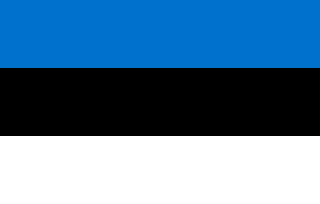
Estonia
Republic of Estonia
Population: UN WPP 2024, revision 1, projection for 1 July 2026. Sources and methodology.
Geography and territory
Estonia is the northernmost of the three Baltic states, occupying a position in northeastern Europe along the eastern shore of the Baltic Sea. Covering 45,227 square kilometers, the country borders Latvia to the south and Russia to the east, with Lake Peipus forming part of that eastern frontier. Despite its modest size, Estonia has an unusually jagged coastline stretching beyond 3,700 kilometers, punctuated by more than 2,200 islands and islets. The Gulf of Finland lies to the north, placing the capital within easy reach of Helsinki by sea.
The Estonian landscape is largely flat, with the country’s highest point, Suur Munamagi, reaching just 318 meters. That topographic modesty, however, conceals considerable natural richness. Forests cover more than half the territory, interspersed with lakes, bogs, marshes, and wetlands that make up ecologically significant habitats. One of Europe’s lowest population densities has allowed large stretches of near-pristine nature to survive largely undisturbed, and a substantial share of the country’s land area falls under some form of environmental protection.
Estonia’s islands form a world of their own. Saaremaa and Hiiumaa, the two largest, retain intact rural landscapes, historic windmills, and traditional ways of life. The climate is humid continental, tempered by the maritime influence of the Baltic, bringing mild, luminous summers with the famous white nights of June and long, dark winters during which parts of the sea can freeze over. Estonia also holds the world’s highest concentration of meteorite craters per capita, geological evidence of cosmic impacts that have shaped the land over millennia.
History
Estonia’s history is one of a small nation preserving its identity through centuries of foreign rule. The Estonians, of Finno-Ugric origin and linguistically related to the Finns, have inhabited the region for at least 5,000 years. In the 13th century, German and Danish crusaders conquered the territory, opening a long era of domination that would pass through the Teutonic Order, Sweden, and finally the Russian Empire.
Estonian national awakening took shape in the 19th century through a cultural movement that promoted the Estonian language, literature, and music, at a time when the local elite was still dominated by Baltic German landowners. The first national Song Festival was held in 1869, an event that would become a lasting symbol of national identity. On February 24, 1918, Estonia declared independence from the Russian Empire, establishing a democratic republic that lasted until Soviet occupation in 1940, followed briefly by Nazi German occupation during the war.
World War II and the subsequent Soviet occupation brought devastation: thousands of Estonians were deported to Siberia, and the country underwent intense Russification. The so-called Singing Revolution of 1988, in which hundreds of thousands of Estonians gathered to sing banned patriotic songs, proved a turning point that led to the restoration of independence in August 1991. Since then, Estonia has undergone a remarkable transformation, emerging as a global leader in digital governance and joining both NATO and the European Union in 2004.
Culture and society
Estonian culture remains closely tied to nature and to the ancestral traditions of a Finno-Ugric people that has preserved a distinct identity within Europe. Choral singing anchors that cultural identity: the Estonian Song Festival, held every five years and recognized by UNESCO as intangible cultural heritage, brings together tens of thousands of singers before crowds of well over 100,000, a display of national solidarity with few parallels anywhere in the world.
Estonian literature, though less widely known internationally, holds genuine depth. The epic poem Kalevipoeg, compiled in the 19th century by Friedrich Reinhold Kreutzwald, serves as the national epic, recounting the adventures of the mythical hero son of Kalev. In more recent times, novelist Jaan Kross was repeatedly considered for the Nobel Prize in Literature, and the work of Andrus Kivirahk, including his novel The Man Who Spoke Snakish, has won recognition well beyond Estonia’s borders.
Estonian society is also among the most digitally advanced in the world. Citizens can vote online, manage healthcare, education, and business matters digitally, and rely on a national digital identity system that simplifies interactions with government at every level. This is the country that pioneered e-Residency, letting entrepreneurs anywhere in the world set up and run an Estonian-registered digital business remotely. That forward-looking, tech-savvy streak coexists comfortably with a deep connection to nature: sauna culture is as central to Estonian life as it is in Finland, and seasonal foraging for wild mushrooms and berries remains a widely practiced ritual.
Economy
Estonia stands out as a remarkable case of economic transformation. After breaking away from a collapsing Soviet economy in 1991, the country pursued aggressive free-market reforms, rapid digitalization, and openness to foreign trade and investment. Today, with a GDP of approximately $47.03 billion, Estonia enjoys one of the highest income levels among the former Soviet states and is regarded as one of the most dynamic economies in the European Union.
Technology is the crown jewel of the Estonian economy. The country is the birthplace of Skype, and its startup ecosystem is one of the most vibrant in Europe, producing more tech unicorns per capita than almost any other nation. Companies such as Wise, the international money transfer service, Bolt, the mobility platform, and Pipedrive, a sales software firm, all trace their roots to Tallinn. The e-Residency program, allowing people anywhere in the world to establish a digital business in Estonia, remains a genuinely unprecedented policy innovation.
Beyond technology, the economy rests on manufacturing, including electronics, machinery, and wood products, along with logistics and financial services. The timber and forestry industry has long been significant, drawing on the country’s extensive woodlands. Tourism contributes meaningfully as well, with Tallinn an increasingly popular destination for both leisure travelers and cruise passengers touring the Baltic Sea. Ongoing challenges include emigration, an aging population, and managing the economic relationship with neighboring Russia, which has prompted efforts to diversify trade and energy supply toward Western European partners.
Food and cuisine
Estonian cuisine is a Nordic tradition shaped by German, Scandinavian, and Russian influences, adapted to a climate that calls for hearty, warming dishes. Dark rye bread, or leib, is the most emblematic staple, present at nearly every Estonian table and often made from family recipes passed down through generations. Bread holds such cultural weight that a dedicated museum celebrates it, and wasting it is regarded as something close to sacrilege.
Seafood occupies a central place in the diet. Herring, prepared marinated, smoked, or pickled, along with sprat and Baltic salmon, are everyday staples. Kiluvoileib, an open-faced sandwich of sprats on dark bread, is a classic of Estonian quick fare. Smoked meats, artisanal sausages, aged cheeses, and fermented dairy products such as kefir round out the traditional pantry.
Estonian baking includes kringel, a sweet braided bread, and kama, a mix of roasted grain and legume flours traditionally eaten with sour milk, alongside desserts built around wild berries such as blueberries, raspberries, and currants. Traditional drinks include craft beer, mead, and Vana Tallinn, a sweet herbal liqueur that has become a popular souvenir. In recent years, a new generation of Tallinn restaurants has reinvigorated Estonian cuisine, reinterpreting local ingredients with contemporary technique.
Tourism and landmarks
Tallinn, the capital, is one of the best-preserved medieval cities in Northern Europe. Its Old Town, a UNESCO World Heritage Site, looks almost like a fairy tale, with defensive towers, cobblestone streets, Gothic churches, and squares ringed by Hanseatic guild halls. The Town Hall Square, home to a pharmacy that has operated continuously since 1422, and the sweeping views from Toompea Hill are among the city’s most memorable experiences.
Beyond Tallinn, Estonia offers a wealth of unspoiled nature rarely matched elsewhere in Europe. Lahemaa National Park, east of the capital, combines forests, beaches, bays, and 18th-century manor houses. Soomaa National Park is famous for its “fifth season,” a period of spring flooding during which locals get around by canoe. The islands of Saaremaa and Hiiumaa offer intact rural landscapes, meteorite craters, and near-total tranquility.
Tartu, the country’s second city and home to the oldest university in the Baltics, founded in 1632, is a lively cultural and intellectual hub with a lower-key charm than the capital. Parnu, on the west coast, is known as Estonia’s “summer capital,” with sandy beaches and a festive atmosphere. Teutonic Order castles such as those at Kuressaare and Rakvere, wooden churches on the islands, and elevated bogs crossed by wooden boardwalks round out a diverse and authentic set of attractions that reward visitors who venture beyond Tallinn.
Fun facts about Estonia
- Estonia has the highest concentration of meteorite craters per capita in the world, including the Kaali crater on Saaremaa, formed roughly 7,500 years ago.
- The country was a global pioneer in internet voting: Estonians have been able to vote online in all elections since 2005.
- Skype, the video-calling application used by millions worldwide, was originally developed by programmers in Estonia in 2003.
- The Estonian Song Festival gathers tens of thousands of singers on a single open-air stage, an event that played a pivotal role in restoring the country’s independence.
- Estonia produces more startups and tech unicorns per capita than almost any other country in the world.
Estonia in numbers
Latest World Bank and UNDP observations, each with its own year. “World median” is the middle value among the countries that report the same indicator; “#” ranks from the highest value.
Population since 1960
Estonia had 1.2 million people in 1960 and 1.4 million in 2025 — 13% more.
The population peaked at 1.6 million in 1990 and has since declined.
People
70.7% of people live in towns and cities (world median 63.4%). 15.3% are under 15 and 21.8% are 65 or older — one of the oldest age structures in the world. Women have 1.18 children on average, below the replacement level of about 2.1 needed to keep a population stable in the long run without migration.
Economy
The economy grew by 0.6% in real terms in 2025. Consumer prices rose by 4.8% in 2025. Services make up the largest share of output (65.8% of GDP); agriculture contributes 1.6%.
Development and environment
UNDP rates human development in Estonia as very high, with an index of 0.905 in 2023 (rank 36 of 193). 92.2% of people use the internet and 100.0% have access to electricity. Forest covers 57.2% of the land (world median 32.8%).
Sources: World Bank, World Development Indicators (CC BY 4.0), most recent observation from 2015 onward; UNDP Human Development Report 2025. Retrieved 2026-10-10. Sector shares need not add up to 100% because taxes and subsidies on products are excluded. Missing values are left blank rather than estimated. Sources and methodology.
Climate of Estonia
Averaged across Estonia, the warmest month is July (17.8 °C) and the coolest is February (−4.3 °C), a seasonal swing of 22.1 °C. The annual mean is 6.3 °C.
4 months have a national mean temperature below freezing.
About 663 mm of precipitation falls in a typical year. August is the wettest month (77 mm) and March the driest (34 mm).
Show monthly values as a table
| Month | Mean °C | Low °C | High °C | Precipitation, mm |
|---|---|---|---|---|
| January | −4.0 | −6.6 | −1.5 | 49 |
| February | −4.3 | −7.2 | −1.4 | 39 |
| March | −0.9 | −4.5 | 2.7 | 34 |
| April | 5.3 | 0.8 | 9.8 | 35 |
| May | 10.8 | 5.6 | 16.0 | 46 |
| June | 14.8 | 9.9 | 19.8 | 64 |
| July | 17.8 | 13.0 | 22.6 | 69 |
| August | 16.9 | 12.4 | 21.5 | 77 |
| September | 12.2 | 8.3 | 16.1 | 60 |
| October | 6.5 | 3.6 | 9.4 | 73 |
| November | 1.8 | −0.3 | 4.0 | 63 |
| December | −1.6 | −3.8 | 0.6 | 55 |
Figures are 1991–2020 averages across the whole land area of Estonia, from the World Bank Climate Change Knowledge Portal, CRU TS 4.08 (CC BY 4.0). They are not readings from one weather station: the capital, the coast and high ground can be much warmer, cooler, wetter or drier.
Travel essentials for Estonia
The practical details visitors ask about first. Traffic in Estonia drives on the right, like most of the world. Mains electricity is 230 V at 50 Hz, so devices made only for 110–120 V (common in North America) need a converter unless they are dual-voltage — most phone and laptop chargers are.
- Emergency number
- 112
- Driving side
- Right
- Plug types
- Type C, Type FC: two round pins (Europlug); F: two round pins with side earth clips (Schuko)
- Voltage
- 230 V50 Hz
- Dialling code
- +372From abroad: your exit code, then 372 and the number
- Currency
- Euro (EUR)
- Time zone
- EET (UTC+2)Current local time in Estonia
Compiled from IEC plug and voltage standards, national emergency-service listings and the UN road-traffic conventions. Emergency numbers and local coverage can change — confirm them locally on arrival. Estonia's internet domain is .ee.
Where Estonia ranks in the world
Each position counts only the countries with data in that ranking guide. First place is the highest value — for price levels, the most expensive. Select a card to see the full table.
- Population155th of 1961.3 millionUN projection, July 2026
- Land area129th of 19542,730 km²World Bank, 2023
- Population density149th of 19432 per km²World Bank, 2023
- GDP (nominal)99th of 187$43.1BWorld Bank, 2024, current US$
- GDP per capita38th of 187$31,428World Bank, 2024, current US$
- Life expectancy44th of 19479.3 yearsWorld Bank, 2024
- Price level30th of 16573 (US = 100)ICP 2021, household consumption
Bordering countries of Estonia


Compare Estonia with another country
Frequently asked questions about Estonia
What is the capital of Estonia?
The capital of Estonia is Tallinn.
What is the population of Estonia?
The UN World Population Prospects projection for Estonia is 1,331,062 people (1.3 million) on 1 July 2026. National statistical offices may publish different estimates.
What language is spoken in Estonia?
The official language of Estonia is Estonian.
What currency is used in Estonia?
The currency of Estonia is the Euro (EUR).
How big is Estonia?
Estonia covers an area of 45,227 km².
What type of government does Estonia have?
Estonia is a parliamentary republic.
Which countries border Estonia?
Estonia shares land borders with Russia, Latvia.
What is the highest point in Estonia?
The highest point in Estonia is Suur Munamägi (318 m).


