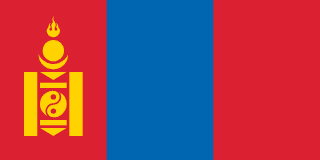
Mongolia
State of Mongolia
Population: UN WPP 2024, revision 1, projection for 1 July 2026. Sources and methodology.
Geography and territory
Landlocked between two giants, Russia to the north and China to the south, Mongolia sprawls across 1,564,116 square kilometers of high plateau, making it one of the largest countries on Earth by area yet one of the emptiest. With a population of just 3.6 million, it ranks among the most sparsely populated nations on the planet, and much of its territory looks today as it likely did a thousand years ago: rolling grassland stretching to a horizon unbroken by fences, wires, or buildings.
The country’s backbone is a plateau averaging roughly 1,580 meters in elevation. In the west, the Altai Mountains climb to 4,374 meters at Juiten, Mongolia’s highest peak, while the Khangai and Khentii ranges to the north give way to boreal forest that forms the southern edge of the Siberian taiga. The southern third of the country belongs to the Gobi, one of Asia’s great deserts, a land of golden dunes, red sandstone cliffs, and gravel plains that supports surprisingly resilient wildlife, including the critically endangered Gobi bear, one of the rarest large mammals on Earth.
Mongolia’s climate is fiercely continental, swinging between brutal winters that can plunge below -40°C and short, warm summers. Locals call their homeland the “Land of the Eternal Blue Sky,” a nod to the roughly 260 sunny days it enjoys each year. That sunshine comes at a price: punishing spring dust storms and the dzud, a devastating winter phenomenon of extreme cold and snow cover that can wipe out huge numbers of livestock, remain recurring threats that shape the rhythms of nomadic herding and the national economy alike.
History
Mongolia holds a singular place in world history as the birthplace of the largest contiguous land empire ever assembled. In 1206, a leader born Temujin united the fractious tribes of the steppe under a single banner and took the title Genghis Khan. Within a few generations, he and his heirs built a realm stretching from Korea to Hungary and from Siberia to the edges of India. The conquests were as destructive as they were transformative, ultimately knitting together trade routes across Eurasia that allowed goods, ideas, and technologies to move between East and West on a scale never before seen.
After the empire fragmented in the fourteenth century, Mongolia entered a long period of internal division and growing Chinese influence, culminating in more than two centuries of rule under China’s Qing dynasty. When that dynasty collapsed in 1911, Mongolia declared its independence, a status formalized in the years that followed. In 1924, under heavy Soviet influence, the Mongolian People’s Republic was proclaimed, making Mongolia the second communist state in the world after the Soviet Union itself. Decades of collectivization, religious suppression that saw hundreds of Buddhist monasteries destroyed, and diplomatic isolation followed.
The peaceful democratic revolution of 1990 transformed Mongolia into a multiparty democracy with a market economy. The early transition years were painful, marked by the collapse of centralized planning and a sharp rise in poverty. But the discovery and development of enormous mineral deposits fueled rapid growth in the twenty-first century, leaving today’s Mongolia to navigate the delicate balance between mining-driven prosperity and the preservation of its nomadic traditions and pristine landscapes.
Culture and society
Mongolian culture remains deeply rooted in the nomadic herding traditions of the steppe, a way of life that has endured for thousands of years and continues to define national identity. The ger, the circular felt dwelling known elsewhere as a yurt, is far more than a tent; it is a small cosmos governed by precise conventions of orientation, layout, and etiquette. Even in Ulaanbaatar, home to nearly half the country’s population, sprawling ger districts ring the modern city center.
Naadam, the great national festival held every July, is Mongolian culture at its most vivid. Centered on the “three manly games” of wrestling, horse racing, and archery, the festival features child jockeys as young as five racing across distances of up to thirty kilometers. The morin khuur, a two-stringed fiddle topped with a carved horse’s head, is the national instrument, its haunting tone said to echo the wind of the steppe. Khoomei, or throat singing, in which a single vocalist produces two or more pitches simultaneously, has been recognized by UNESCO as an Intangible Cultural Heritage of Humanity.
Tibetan Buddhism, adopted in the sixteenth century, shapes much of Mongolia’s spiritual life. Gandantegchinlen Monastery in Ulaanbaatar, home to a towering statue of Avalokiteshvara, stands as the country’s principal religious center. Shamanism, the older spiritual tradition of the steppe, has seen a notable revival since the end of communist rule and coexists comfortably alongside Buddhist practice. Ovoo, ceremonial cairns of stone found on hilltops and at crossroads throughout the country, are a constant presence in the landscape; travelers customarily circle them three times clockwise while leaving offerings for safe passage.
Economy
Mongolia’s economy has undergone a dramatic transformation in recent decades, driven largely by mining. The country sits atop world-class deposits of copper, gold, coal, uranium, and rare earth elements. The Oyu Tolgoi mine, one of the largest copper and gold deposits on Earth, and the Tavan Tolgoi coal complex represent assets worth billions of dollars that have drawn substantial foreign investment. That reliance on mineral exports, however, leaves the economy exposed to swings in global commodity prices, a vulnerability that has repeatedly tested the country’s fiscal stability.
Nomadic herding remains the livelihood of a significant share of the population. With tens of millions of head of livestock, including horses, camels, yaks, sheep, and goats, Mongolia has more grazing animals per capita than almost anywhere else on Earth. Its cashmere, sheared from steppe goats, makes the country one of the world’s leading producers, while meat, dairy, and wool remain staples of the rural economy.
Ulaanbaatar concentrates the country’s modern economic activity, with an expanding services sector, a nascent tech industry, and trade that benefits from Mongolia’s strategic position between Russia and China. Nature and adventure tourism, while still modest in absolute numbers, is growing steadily, drawn by the appeal of untouched landscapes, living nomadic traditions, and once-in-a-lifetime experiences such as riding across the open steppe or sleeping in a ger beneath some of the clearest night skies on the planet. With a gross domestic product of roughly $25.4 billion, Mongolia remains a small but fast-evolving economy working to diversify beyond its dependence on extractive industries.
Food and cuisine
Mongolian cuisine is a cuisine of survival, forged by the extreme conditions of steppe and desert, where meat and dairy form the near-total foundation of the traditional diet. Mongolians traditionally divide their food into “white foods,” dairy-based dishes that dominate the summer months, and “red foods,” meat-based dishes that take over in winter. This seasonal dichotomy reflects both the rhythm of nomadic life and the practical need to adapt one’s diet to extreme temperature swings.
Buuz, steamed dumplings filled with minced lamb or beef, are the closest thing Mongolia has to a national dish, appearing in vast quantities during Tsagaan Sar, the lunar new year celebration. Khuushuur, a fried cousin of the buuz, is the festive snack of choice during Naadam. Khorkhog, lamb slow-cooked with hot stones inside a sealed container, is the most spectacular preparation in Mongolian cooking and is reserved for special occasions; diners are traditionally handed the still-warm stones to pass between their hands as a gesture of good fortune.
Airag, fermented mare’s milk, is the quintessential traditional beverage, consumed in large quantities throughout the summer. Suutei tsai, a salty milk tea sometimes enriched with butter, is the everyday drink offered to any visitor who steps inside a ger. Aaruul, dried curds that keep almost indefinitely, and boortsog, fried pastries served alongside tea, round out the staple diet. In Ulaanbaatar, a growing urban food scene incorporates Korean, Chinese, and Western influences, though lamb and horse meat still reign supreme at the traditional Mongolian table.
Tourism and landmarks
Mongolia offers a travel experience unlike almost anywhere else, where a lack of conventional infrastructure is more than offset by vast, unspoiled landscapes and a nomadic culture that remains genuinely lived rather than staged for visitors. Gorkhi-Terelj National Park, just 70 kilometers from Ulaanbaatar, combines dramatic rock formations, clear rivers, and tourist ger camps, and sits near the towering stainless-steel Genghis Khan Equestrian Statue, from whose head visitors can survey the surrounding steppe.
The Gobi Desert ranks among the most fascinating landscapes on the planet, ranging from the singing dunes of Khongoryn Els, which stretch some 180 kilometers and rise up to 300 meters, to the Flaming Cliffs of Bayanzag, where explorer Roy Chapman Andrews discovered the first known dinosaur eggs in 1923. Yolyn Am, a narrow canyon that holds ice even in summer, and the prehistoric petroglyphs near Tsagaan Suvarga add further variety to an already extraordinary desert itinerary.
Central and northern Mongolia offer their own rewards: endless grassland, the deep blue waters of Lake Khövsgöl, sometimes called the “Blue Pearl of Asia” for the vast reserves of fresh water it holds, dense taiga forest, and the snow-capped Altai range, home to a small community of eagle hunters who still practice their ancient craft. Traveling through Mongolia on horseback or by four-wheel-drive vehicle, sleeping in gers with nomadic families who share their milk, meat, and stories around the fire, remains one of the last great adventures the world has to offer.
Fun facts about Mongolia
- Mongolia has one of the lowest population densities of any country on Earth, with roughly three million people spread across a territory larger than Alaska.
- At its height, the Mongol Empire built by Genghis Khan and his successors became the largest contiguous land empire in history.
- Naadam’s child jockeys, some as young as five, race horses across distances of up to thirty kilometers.
- The world’s first known dinosaur eggs were discovered in the Gobi Desert’s Flaming Cliffs in 1923.
- Khoomei throat singers can produce two or more distinct musical pitches simultaneously, a technique recognized by UNESCO as intangible cultural heritage.
- Nearly half of all Mongolians still live in gers, the traditional felt dwellings, including many residents of the capital, Ulaanbaatar.
Mongolia in numbers
Latest World Bank and UNDP observations, each with its own year. “World median” is the middle value among the countries that report the same indicator; “#” ranks from the highest value.
Population since 1960
Mongolia had 977,595 people in 1960 and 3.6 million in 2025 — 3.7 times as many.
People
71.1% of people live in towns and cities (world median 63.4%). 31.6% are under 15 and 5.4% are 65 or older — a young population. Women have 2.50 children on average, above the replacement level of about 2.1.
Economy
The economy grew by 6.8% in real terms in 2025. Consumer prices rose by 8.6% in 2025. Services make up the largest share of output (44.3% of GDP); agriculture contributes 8.9%.
Development and environment
UNDP rates human development in Mongolia as high, with an index of 0.747 in 2023 (rank 104 of 193). 85.1% of people use the internet and 99.1% have access to electricity. Forest covers 9.1% of the land (world median 32.8%).
Sources: World Bank, World Development Indicators (CC BY 4.0), most recent observation from 2015 onward; UNDP Human Development Report 2025. Retrieved 2026-10-10. Sector shares need not add up to 100% because taxes and subsidies on products are excluded. Missing values are left blank rather than estimated. Sources and methodology.
Climate of Mongolia
Averaged across Mongolia, the warmest month is July (19.2 °C) and the coolest is January (−19.9 °C), a seasonal swing of 39.1 °C. The annual mean is 1.0 °C.
5 months have a national mean temperature below freezing.
About 228 mm of precipitation falls in a typical year. July is the wettest month (59 mm) and January the driest (2 mm). What little rain there is falls mostly from June to August (65% of the total).
Less than 250 mm a year is typical of desert climates.
Show monthly values as a table
| Month | Mean °C | Low °C | High °C | Precipitation, mm |
|---|---|---|---|---|
| January | −19.9 | −26.1 | −13.7 | 2 |
| February | −15.2 | −22.3 | −8.1 | 3 |
| March | −6.3 | −13.6 | 1.0 | 5 |
| April | 3.9 | −3.4 | 11.1 | 10 |
| May | 10.7 | 3.3 | 18.2 | 19 |
| June | 16.6 | 9.7 | 23.6 | 41 |
| July | 19.2 | 12.8 | 25.6 | 59 |
| August | 17.1 | 10.6 | 23.6 | 49 |
| September | 10.6 | 3.6 | 17.6 | 22 |
| October | 1.8 | −5.0 | 8.6 | 9 |
| November | −9.2 | −15.4 | −2.9 | 6 |
| December | −17.0 | −22.9 | −11.2 | 4 |
Figures are 1991–2020 averages across the whole land area of Mongolia, from the World Bank Climate Change Knowledge Portal, CRU TS 4.08 (CC BY 4.0). They are not readings from one weather station: the capital, the coast and high ground can be much warmer, cooler, wetter or drier.
Travel essentials for Mongolia
The practical details visitors ask about first. Traffic in Mongolia drives on the right, like most of the world. Mains electricity is 230 V at 50 Hz, so devices made only for 110–120 V (common in North America) need a converter unless they are dual-voltage — most phone and laptop chargers are.
- Emergency number
- 105Police 102 · Ambulance 103 · Fire 101
- Driving side
- Right
- Plug types
- Type C, Type EC: two round pins (Europlug); E: two round pins, earth pin in the socket
- Voltage
- 230 V50 Hz
- Dialling code
- +976From abroad: your exit code, then 976 and the number
- Currency
- Tögrög (MNT)
- Time zone
- UTC+8Current local time in Mongolia
Compiled from IEC plug and voltage standards, national emergency-service listings and the UN road-traffic conventions. Emergency numbers and local coverage can change — confirm them locally on arrival. Mongolia's internet domain is .mn.
Where Mongolia ranks in the world
Each position counts only the countries with data in that ranking guide. First place is the highest value — for price levels, the most expensive. Select a card to see the full table.
- Population132nd of 1963.6 millionUN projection, July 2026
- Land area18th of 1951,558,500 km²World Bank, 2023
- Population density194th of 1942.2 per km²World Bank, 2023
- GDP (nominal)119th of 187$23.8BWorld Bank, 2024, current US$
- GDP per capita99th of 187$6,751World Bank, 2024, current US$
- Life expectancy112th of 19472.4 yearsWorld Bank, 2024
- Price level133rd of 16534 (US = 100)ICP 2021, household consumption
Bordering countries of Mongolia


Compare Mongolia with another country
Frequently asked questions about Mongolia
What is the capital of Mongolia?
The capital of Mongolia is Ulaanbaatar.
What is the population of Mongolia?
The UN World Population Prospects projection for Mongolia is 3,556,798 people (3.6 million) on 1 July 2026. National statistical offices may publish different estimates.
What language is spoken in Mongolia?
The official language of Mongolia is Mongolian.
What currency is used in Mongolia?
The currency of Mongolia is the Tögrög (MNT).
How big is Mongolia?
Mongolia covers an area of 1,564,116 km².
What type of government does Mongolia have?
Mongolia is a parliamentary republic.
Which countries border Mongolia?
Mongolia shares land borders with Russia, China.
What is the highest point in Mongolia?
The highest point in Mongolia is Juiten (4,374 m).


