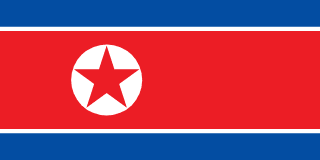
North Korea
Democratic People's Republic of Korea
Population: UN WPP 2024, revision 1, projection for 1 July 2026. Sources and methodology.
Geography and territory
North Korea occupies the northern half of the Korean Peninsula, covering 120,540 km² of largely mountainous terrain. To the south, it faces South Korea across the Demilitarized Zone, a roughly 4-kilometer-wide buffer strip that remains the most heavily fortified border on Earth despite its name. To the north, the Yalu and Tumen rivers trace natural boundaries with China and Russia, respectively, while the Sea of Japan (East Sea) and the Yellow Sea flank the country’s eastern and western coasts.
Roughly 80 percent of North Korea’s territory consists of mountains and hills, giving the country a rugged, compartmentalized geography. The Hamgyong Range runs along the jagged eastern coastline, while the Rangnim Mountains and the Myohyang range dominate the interior. Most fertile lowland and the bulk of the population are concentrated in the narrower western plains, home to Pyongyang and the country’s main agricultural zones. The highest point, Mount Paektu, rises 2,744 meters near the Chinese border and holds deep symbolic significance as a sacred site in Korean mythology and, in North Korean state narrative, as the legendary birthplace of the revolution.
The climate is continental, with long, bitterly cold winters, particularly in the mountainous north where temperatures can plunge well below freezing for extended stretches. Summers are short, hot, and humid, bringing the great majority of the year’s rainfall. Despite decades of economic hardship, North Korea retains substantial forested area and notable biodiversity, including habitat for endangered species such as the Amur leopard and the red-crowned crane.
History
North Korea’s history is inseparable from that of the Korean Peninsula as a whole, sharing millennia of common civilization with the South before the peninsula’s mid-twentieth-century division. Following Korea’s liberation from Japanese colonial rule in 1945, the peninsula was split along the 38th parallel into Soviet and American occupation zones. Backed by the Soviet Union, Kim Il-sung founded the Democratic People’s Republic of Korea on September 9, 1948, establishing the state that endures today.
The Korean War (1950-1953), triggered by North Korea’s invasion of the South, devastated the peninsula and killed millions before ending in an armistice that halted the fighting but never became a formal peace treaty, leaving the two Koreas technically still at war. In its aftermath, Kim Il-sung built a tightly controlled state around the Juche ideology of self-reliance and an extensive personality cult. The North’s economy, initially more industrialized than the South’s thanks to Japanese-era infrastructure and Soviet aid, gradually fell behind as the decades wore on.
Kim Il-sung died in 1994 and was succeeded by his son, Kim Jong-il, in the first hereditary succession within a communist state. The collapse of the Soviet Union soon after triggered a severe economic crisis and a devastating famine in the 1990s that claimed hundreds of thousands of lives. Kim Jong-un, grandson of the founder, took power in 2011 and has since accelerated the country’s nuclear weapons program, drawing sustained international sanctions and deepening North Korea’s isolation from the global economy.
Culture and society
North Korean cultural life is closely directed by the ruling Workers’ Party and centers heavily on the veneration of the Kim family. Arts, film, and public performance are produced under state guidance and generally oriented toward glorifying the leadership and its achievements. The Arirang Mass Games, a synchronized performance involving tens of thousands of participants, has been described as one of the largest choreographed spectacles in the world and exemplifies the collective discipline the state promotes.
Beneath the layer of state propaganda, North Korea retains genuine elements of the broader Korean cultural heritage it shares with the South, including traditional music and dance, ceramics, calligraphy, and martial arts. Pansori narrative singing, lunar calendar festivals, and traditional cuisine all preserve continuity with a common Korean identity that predates the division. Pyongyang’s monumental architecture, including the 170-meter Juche Tower, the Arch of Triumph, taller than its Parisian counterpart, and the unfinished, pyramid-shaped Ryugyong Hotel, reflects the state’s grand aesthetic ambitions.
North Korean society is organized around the songbun system, which classifies citizens into broad loyalty-based categories that heavily influence access to education, employment, and housing. Information from outside the country is tightly restricted: internet access is unavailable to most ordinary citizens, media is entirely state-controlled, and possession of foreign broadcasts or media can carry serious penalties. Military service is compulsory and lengthy, generally around ten years for men and shorter for women, reflecting the state’s continued emphasis on defense readiness.
Economy
North Korea’s economy is among the most closed and centrally planned in the world, officially organized around the Juche principle of self-sufficiency and estimated at roughly $28 billion in GDP. In practice it relies heavily on heavy industry, mining, and agriculture. International sanctions imposed over the country’s nuclear and missile programs have sharply constrained foreign trade, leaving China as by far its dominant trading partner, accounting for the overwhelming majority of North Korea’s external commerce.
Agriculture employs a large share of the workforce, but low mechanization, fertilizer shortages, and inadequate irrigation infrastructure keep productivity persistently low, and food shortages have recurred periodically since the crisis of the 1990s. Industry centers on military production, coal mining, and extraction of minerals such as zinc, iron, and magnesite, alongside a limited manufacturing base. The Kaesong Industrial Complex, a rare joint venture with South Korean investment, operated for over a decade before its closure in 2016 amid rising political tensions.
Despite the official emphasis on central planning, informal markets known as jangmadang have expanded significantly over recent decades, becoming an important source of consumer goods, many smuggled or imported informally from China. Cross-border trade and remittances from North Korean laborers working abroad also supplement the formal economy. The country is believed to hold substantial mineral wealth, particularly rare earth deposits valued potentially in the trillions of dollars, though most of this remains undeveloped due to a lack of investment and technology.
Food and cuisine
North Korean cuisine shares deep roots with the broader Korean culinary tradition, even as it has evolved somewhat independently over more than seven decades of division. Pyongyang cold noodles, or naengmyeon, made from buckwheat flour and served in a chilled meat broth with kimchi and boiled egg, are the country’s signature dish and gained international attention when served at the 2018 inter-Korean summit.
North Korean kimchi tends to be milder than its southern counterpart, using less chili and relying more on fermented fish broth for depth of flavor. The cuisine generally favors subtler seasoning and comforting soups, such as mandu-guk, a dumpling soup, and soft tofu stew. Meat-and-vegetable dumplings, red bean rice, and scallion pancakes are common everyday dishes. Dog meat soup, though controversial internationally, remains part of the traditional culinary repertoire as a seasonal summer specialty.
Chronic food scarcity has shaped North Korean cooking into something necessarily frugal, built around whatever staples are available, chiefly rice, corn, potatoes, and seasonal vegetables. Locally produced soju and beers, including Taedonggang, brewed with equipment originally imported from a British brewery, are the most widely consumed alcoholic beverages. In Pyongyang, a small number of upscale restaurants catering to the elite serve more refined interpretations of traditional dishes.
Tourism and landmarks
Tourism in North Korea is a tightly managed and unusual experience. Foreign visitors may enter only through officially sanctioned tour operators and must be accompanied at all times by state-approved guides, with independent travel effectively impossible. Despite these constraints, the country draws a steady stream of visitors curious to glimpse one of the world’s most closed societies. Pyongyang itself offers wide, largely traffic-free avenues and monumental architecture, including the Juche Tower, the Arch of Triumph, and the Grand People’s Study House.
Mount Paektu, revered as the mythical birthplace of the Korean nation, is the country’s most striking natural destination. Its crater holds the crystalline Heaven Lake, ringed by snow-capped peaks, and the mountain functions as both a spiritual pilgrimage site and a place of deep political symbolism tied to the founding Kim mythology. The city of Kaesong, near the southern border, preserves a historic old town from the Goryeo dynasty, recognized as a UNESCO World Heritage Site. The Kumgang Mountains, prized for their granite peaks and waterfalls, briefly hosted joint tourism with South Korea before that program was suspended.
The Kumsusan Palace of the Sun, where the embalmed bodies of Kim Il-sung and Kim Jong-il lie in state, is the country’s most solemn site and a mandatory stop for organized tours. The Joint Security Area at Panmunjom offers the North Korean vantage point on the DMZ. The Myohyang-san complex, with its museum of gifts presented to the country’s leaders, and the Chongsan-ri cooperative farm provide the officially curated view of North Korean society. The Pyongyang Metro, with ornately decorated stations featuring mosaics and chandeliers, is reputed to be among the deepest subway systems in the world.
Fun facts about North Korea
- North Korea uses its own calendar, the Juche calendar, which begins counting from 1912, the birth year of Kim Il-sung.
- Pyongyang’s Arch of Triumph stands roughly 60 meters tall, about ten meters taller than the Arc de Triomphe in Paris, and was built in 1982.
- Mount Paektu is considered sacred by Koreans on both sides of the border and is referenced in the national anthems of both North and South Korea.
- The country operates a single state television channel, broadcasting a limited number of hours each day to sets that can only receive government-approved stations.
- Rungrado 1st of May Stadium in Pyongyang, with a capacity of around 114,000, was for years the largest stadium in the world.
- No official Human Development Index figure is published for North Korea, as the government does not release the data the United Nations requires to calculate it.
North Korea in numbers
Latest World Bank and UNDP observations, each with its own year. “World median” is the middle value among the countries that report the same indicator; “#” ranks from the highest value.
Population since 1960
North Korea had 11.7 million people in 1960 and 26.6 million in 2025 — 2.3 times as many.
People
64.2% of people live in towns and cities (world median 63.4%). 18.9% are under 15 and 12.7% are 65 or older — a middle-aged population. Women have 1.78 children on average, below the replacement level of about 2.1 needed to keep a population stable in the long run without migration.
Economy
Development and environment
Forest covers 64.1% of the land (world median 32.8%).
Sources: World Bank, World Development Indicators (CC BY 4.0), most recent observation from 2015 onward; UNDP Human Development Report 2025. Retrieved 2026-10-10. Sector shares need not add up to 100% because taxes and subsidies on products are excluded. Missing values are left blank rather than estimated. Sources and methodology.
Climate of North Korea
Averaged across North Korea, the warmest month is August (21.5 °C) and the coolest is January (−10.1 °C), a seasonal swing of 31.6 °C. The annual mean is 7.0 °C.
4 months have a national mean temperature below freezing.
About 1,019 mm of precipitation falls in a typical year. July is the wettest month (251 mm) and January the driest (12 mm). The three wettest consecutive months, June to August, bring 60% of the year's total — a pronounced rainy season.
Show monthly values as a table
| Month | Mean °C | Low °C | High °C | Precipitation, mm |
|---|---|---|---|---|
| January | −10.1 | −15.5 | −4.8 | 12 |
| February | −6.7 | −12.3 | −1.1 | 17 |
| March | −0.1 | −5.5 | 5.3 | 29 |
| April | 7.5 | 1.4 | 13.6 | 49 |
| May | 13.5 | 7.5 | 19.5 | 91 |
| June | 17.9 | 12.6 | 23.2 | 118 |
| July | 21.3 | 17.1 | 25.5 | 251 |
| August | 21.5 | 17.1 | 25.8 | 239 |
| September | 16.1 | 10.7 | 21.5 | 101 |
| October | 9.3 | 3.4 | 15.2 | 50 |
| November | 0.8 | −4.2 | 5.8 | 41 |
| December | −7.5 | −12.4 | −2.6 | 20 |
Figures are 1991–2020 averages across the whole land area of North Korea, from the World Bank Climate Change Knowledge Portal, CRU TS 4.08 (CC BY 4.0). They are not readings from one weather station: the capital, the coast and high ground can be much warmer, cooler, wetter or drier.
Travel essentials for North Korea
The practical details visitors ask about first. Traffic in North Korea drives on the right, like most of the world. Mains electricity is 220 V at 50 Hz, so devices made only for 110–120 V (common in North America) need a converter unless they are dual-voltage — most phone and laptop chargers are.
- Emergency number
- Not recorded
- Driving side
- Right
- Plug types
- Type A, Type C, Type FA: two flat parallel pins; C: two round pins (Europlug); F: two round pins with side earth clips (Schuko)
- Voltage
- 220 V50 Hz
- Dialling code
- +850From abroad: your exit code, then 850 and the number
- Currency
- North Korean Won (KPW)
- Time zone
- KST (UTC+9)Current local time in North Korea
Compiled from IEC plug and voltage standards, national emergency-service listings and the UN road-traffic conventions. Emergency numbers and local coverage can change — confirm them locally on arrival. North Korea's internet domain is .kp.
Where North Korea ranks in the world
Each position counts only the countries with data in that ranking guide. First place is the highest value — for price levels, the most expensive. Select a card to see the full table.
Bordering countries of North Korea


Compare North Korea with another country
Frequently asked questions about North Korea
What is the capital of North Korea?
The capital of North Korea is Pyongyang.
What is the population of North Korea?
The UN World Population Prospects projection for North Korea is 26,633,691 people (26.6 million) on 1 July 2026. National statistical offices may publish different estimates.
What language is spoken in North Korea?
The official language of North Korea is Korean.
What currency is used in North Korea?
The currency of North Korea is the North Korean Won (KPW).
How big is North Korea?
North Korea covers an area of 120,540 km².
What type of government does North Korea have?
North Korea is a one-party socialist republic.
Which countries border North Korea?
North Korea shares land borders with South Korea, China, Russia.
What is the highest point in North Korea?
The highest point in North Korea is Mount Paektu (2,744 m).


