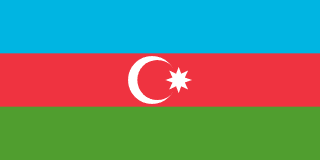
Azerbaijan
Republic of Azerbaijan
Population: UN WPP 2024, revision 1, projection for 1 July 2026. Sources and methodology.
Geography and territory
Azerbaijan is a transcontinental country situated at the crossroads of Eastern Europe and Western Asia, occupying the southern Caucasus region. Covering 86,600 square kilometers, it borders Russia to the north, Georgia to the northwest, Armenia to the west, Iran to the south, and Turkey to the southwest through the Nakhchivan exclave. Its long coastline along the Caspian Sea to the east gives the country strategic importance as a gateway between Europe and Asia.
The country’s terrain is remarkably varied. The Greater Caucasus range rises in the north, culminating in Mount Bazarduzu at 4,466 meters, the country’s highest point. The Lesser Caucasus occupies the southwest, while between the two ranges lies the fertile Kura-Aras lowland, the nation’s main agricultural belt. The Absheron Peninsula, home to the capital Baku, juts into the Caspian Sea and hosts one of the densest concentrations of mud volcanoes found anywhere on the planet.
Climate ranges from humid subtropical along the Caspian coast to dry continental in the central steppes and alpine conditions in the Caucasus highlands. Azerbaijan is often noted for possessing an unusually wide range of the world’s climate zones for a country of its size. Its mud volcanoes, of which there are several hundred, account for nearly half of all such formations known to exist worldwide, a distinctive geological feature that draws scientists and tourists alike.
The country’s rivers, chief among them the Kura and its tributary the Aras, drain much of the interior before emptying into the Caspian Sea, the world’s largest inland body of water. Azerbaijan’s forests, concentrated in the foothills of the Greater and Lesser Caucasus, shelter brown bears, lynx, and a variety of birdlife, while the lowlands support extensive farmland irrigated by the Kura-Aras basin. The exclave of Nakhchivan, separated from the main body of the country by Armenian territory, adds a further layer of geographic complexity to the nation’s borders.
History
Azerbaijan’s history is deeply tied to the civilizations that flourished at the meeting point of the Caucasus and the Caspian. The rock carvings of Gobustan, dated to tens of thousands of years old, testify to a human presence stretching back into deep prehistory. The region passed successively under the Medes, the Achaemenid Persians, Alexander’s Macedonian empire, and the Parthians. Caucasian Albania, an ancient kingdom that occupied part of present-day Azerbaijan, was an important cultural and religious center before the arrival of Islam in the seventh century.
Islamization reshaped the society profoundly, and the medieval period produced towering literary figures such as the poet Nizami Ganjavi, whose epic works remain landmarks of Persian-language literature. The territory was later contested between the Ottoman and Persian empires before being absorbed into the Russian Empire in the nineteenth century through the treaties of Gulistan and Turkmenchay. In 1918, Azerbaijan proclaimed the first democratic republic in the Muslim world, extending voting rights to women earlier than many European nations.
The Soviet era brought rapid industrialization, particularly around Baku’s oil industry, which by the early twentieth century supplied roughly half of the world’s petroleum output. Independence, achieved on 18 October 1991 as the Soviet Union dissolved, was overshadowed by the conflict over Nagorno-Karabakh with Armenia, which displaced hundreds of thousands of people. Following a 2020 war, Azerbaijan regained control of most of the disputed territory, closing a chapter of conflict that had lasted three decades.
Culture and society
Azerbaijani culture is a fascinating blend of Turkic, Persian, Caucasian, and Soviet influences. Mugham, a musical tradition combining classical poetry with vocal and instrumental improvisation, has been recognized by UNESCO as an element of intangible cultural heritage. Mugham singers, accompanied by the tar, a long-necked lute, and the kamancha, an upright bowed string instrument, are revered as custodians of an art form that demands years of study and exceptional vocal mastery.
Azerbaijani craftsmanship is rich and varied. Its carpets, prized for their intricate geometric and floral patterns, represent a textile tradition also inscribed on UNESCO’s intangible heritage list. Miniature painting, metalwork, and woodcarving round out a highly refined artisanal tradition, while traditional architecture blends Islamic elements with distinct Caucasian influences, visible in everything from mosque minarets to medieval fortress towers.
Novruz, the spring equinox celebration rooted in Zoroastrian tradition, is the most important date on the Azerbaijani calendar and is likewise recognized by UNESCO. For weeks beforehand, families prepare special sweets, light ceremonial bonfires, and celebrate the renewal of nature. Azerbaijani society is known for its generous hospitality and deep respect for elders, values expressed vividly in family gatherings and the ritual of tea drinking that accompanies almost every social occasion.
Economy
Azerbaijan’s economy, worth roughly $75.94 billion in gross domestic product, is anchored by its hydrocarbon sector, which forms the backbone of state revenue. The country is a significant producer of oil and natural gas in the Caspian basin, with the Azeri-Chirag-Guneshli field as its principal oil deposit and the Shah Deniz gas project serving as a cornerstone of the Southern Gas Corridor that delivers energy to European markets.
Oil revenues have financed the dramatic transformation of Baku, whose skyline now features futuristic structures such as the Flame Towers alongside modern infrastructure and major international events, including the 2015 European Games and a Formula 1 Grand Prix. The State Oil Fund of Azerbaijan manages a share of these revenues for future generations, following the sovereign wealth fund model used by other resource-rich nations.
Diversifying beyond oil and gas remains a national priority. Agriculture produces cotton, tea, fruits, vegetables, and nuts, while tourism is a growing sector still in relatively early development. Non-oil industries, including information technology, construction, and financial services, are expanding gradually. Azerbaijan’s position as a transit corridor between Asia and Europe, bolstered by projects such as the Baku-Tbilisi-Kars railway, offers significant long-term strategic opportunities.
The government has also invested heavily in reconstructing the territories recovered in and after the 2020 conflict with Armenia, launching major infrastructure and resettlement programs intended to revive agriculture, housing, and transport links in the region. Alongside these efforts, Baku has positioned itself as an increasingly important venue for international conferences and sporting events, using its oil wealth to build convention centers, stadiums, and hotels aimed at diversifying the economy through global visibility and services.
Food and cuisine
Azerbaijani cuisine is among the richest and most elaborate in the Caucasus, reflecting the country’s layered cultural history. Plov, saffron-scented rice typically served with lamb, dried fruit, and herbs, is the national dish. More than 40 regional and ceremonial variations of plov exist across the country, and its preparation is regarded as a genuine culinary art passed down through generations.
Azerbaijani kebab, made from marinated meats grilled over charcoal, comes in several distinct forms, including lule kebab of seasoned minced meat molded onto skewers, tike kebab of cubed lamb, and balig kebab made from Caspian fish. Dolma, in its Azerbaijani form featuring grape leaves, tomatoes, peppers, and eggplants stuffed with spiced fillings, has been recognized by UNESCO as an element of the country’s intangible heritage. Qutab, a thin savory pastry filled with meat, herbs, or pumpkin, is a popular everyday snack.
Black tea is the national drink, traditionally served in pear-shaped glasses called armudu, accompanied by homemade preserves, nuts, and sweets such as pakhlava, the local version of baklava, and shekerbura, a pastry filled with ground almonds and sugar. The tea ceremony is an essential ritual of hospitality at nearly any social or business gathering. Fresh fruit, especially the pomegranates of Goychay, which are celebrated with their own annual festival, form an important part of the everyday diet.
Tourism and landmarks
Baku offers a striking contrast between its medieval walled Old City, a UNESCO World Heritage Site, and the dramatic modernity of the Flame Towers and the Heydar Aliyev Center, a masterpiece of architecture designed by Zaha Hadid. The Maiden Tower, the Taza Pir Mosque, and the cobbled lanes of Icherisheher transport visitors to earlier eras, while the Caspian seafront boulevard offers a vibrant view of the contemporary city.
Gobustan National Park, another UNESCO World Heritage Site, preserves more than 6,000 petroglyphs dating back tens of thousands of years, alongside active mud volcanoes. The city of Sheki, nestled in the foothills of the Greater Caucasus, is renowned for the Palace of the Sheki Khans, adorned with elaborate stained glass and frescoes, and its traditional silk workshops. The village of Lahij, with its cobblestone streets and coppersmith craftsmen, offers a window into traditional Caucasian artisanship.
The Gabala region, often called the Switzerland of Azerbaijan, combines mountain scenery with modern resorts. The mountain villages of Khinalug, perched above 2,000 meters, are among the oldest continuously inhabited settlements in the world. The Nakhchivan exclave, with its Momine Khatun mausoleum and desert-like landscapes, and the therapeutic crude-oil baths of Naftalan round out a distinctive and varied array of destinations.
Fun facts about Azerbaijan
- Azerbaijan is known as the Land of Fire because of natural gas-fed flames such as the Ateshgah fire temple and the perpetually burning hillside of Yanar Dag.
- The country contains nearly half of all the mud volcanoes on Earth, with several hundred scattered across its territory.
- In 1918, Azerbaijan became the first Muslim-majority country in the world to grant women the right to vote.
- Tea is traditionally served in pear-shaped armudu glasses, a design intended to keep the top of the glass hot and the base cooler.
- Chess is extremely popular in Azerbaijan, which has produced world-class players, including former world champion Garry Kasparov, who was born in Baku.
- The petroglyphs of Gobustan drew the attention of Norwegian explorer Thor Heyerdahl, who theorized possible ancient links between Caucasian and Scandinavian civilizations.
Azerbaijan in numbers
Latest World Bank and UNDP observations, each with its own year. “World median” is the middle value among the countries that report the same indicator; “#” ranks from the highest value.
Population since 1960
Azerbaijan had 3.9 million people in 1960 and 10.2 million in 2025 — 2.6 times as many.
People
58.6% of people live in towns and cities (world median 63.4%). 21.2% are under 15 and 9.2% are 65 or older — a middle-aged population. Women have 1.43 children on average, below the replacement level of about 2.1 needed to keep a population stable in the long run without migration.
Economy
The economy grew by 1.4% in real terms in 2025. Consumer prices rose by 5.6% in 2025. Services make up the largest share of output (45.3% of GDP); agriculture contributes 5.9%.
Development and environment
UNDP rates human development in Azerbaijan as high, with an index of 0.789 in 2023 (rank 81 of 193). 90.8% of people use the internet and 100.0% have access to electricity. Forest covers 14.6% of the land (world median 32.8%).
Sources: World Bank, World Development Indicators (CC BY 4.0), most recent observation from 2015 onward; UNDP Human Development Report 2025. Retrieved 2026-10-10. Sector shares need not add up to 100% because taxes and subsidies on products are excluded. Missing values are left blank rather than estimated. Sources and methodology.
Climate of Azerbaijan
Averaged across Azerbaijan, the warmest month is July (25.0 °C) and the coolest is January (1.0 °C), a seasonal swing of 24.0 °C. The annual mean is 12.9 °C.
About 494 mm of precipitation falls in a typical year. May is the wettest month (60 mm) and August the driest (26 mm).
Show monthly values as a table
| Month | Mean °C | Low °C | High °C | Precipitation, mm |
|---|---|---|---|---|
| January | 1.0 | −2.9 | 4.9 | 27 |
| February | 1.9 | −2.1 | 5.9 | 34 |
| March | 6.1 | 1.6 | 10.6 | 46 |
| April | 12.0 | 6.7 | 17.4 | 52 |
| May | 16.8 | 11.4 | 22.2 | 60 |
| June | 22.0 | 16.3 | 27.7 | 47 |
| July | 25.0 | 19.2 | 30.8 | 33 |
| August | 24.6 | 18.7 | 30.5 | 26 |
| September | 20.2 | 14.8 | 25.7 | 42 |
| October | 14.3 | 9.2 | 19.3 | 53 |
| November | 7.7 | 3.2 | 12.3 | 45 |
| December | 2.7 | −1.3 | 6.6 | 28 |
Figures are 1991–2020 averages across the whole land area of Azerbaijan, from the World Bank Climate Change Knowledge Portal, CRU TS 4.08 (CC BY 4.0). They are not readings from one weather station: the capital, the coast and high ground can be much warmer, cooler, wetter or drier.
Travel essentials for Azerbaijan
The practical details visitors ask about first. Traffic in Azerbaijan drives on the right, like most of the world. Mains electricity is 220 V at 50 Hz, so devices made only for 110–120 V (common in North America) need a converter unless they are dual-voltage — most phone and laptop chargers are.
- Emergency number
- 112
- Driving side
- Right
- Plug types
- Type C, Type FC: two round pins (Europlug); F: two round pins with side earth clips (Schuko)
- Voltage
- 220 V50 Hz
- Dialling code
- +994From abroad: your exit code, then 994 and the number
- Currency
- Azerbaijani Manat (AZN)
- Time zone
- AZT (UTC+4)Current local time in Azerbaijan
Compiled from IEC plug and voltage standards, national emergency-service listings and the UN road-traffic conventions. Emergency numbers and local coverage can change — confirm them locally on arrival. Azerbaijan's internet domain is .az.
Where Azerbaijan ranks in the world
Each position counts only the countries with data in that ranking guide. First place is the highest value — for price levels, the most expensive. Select a card to see the full table.
- Population93rd of 19610.5 millionUN projection, July 2026
- Land area112th of 19582,650 km²World Bank, 2023
- Population density73rd of 194123 per km²World Bank, 2023
- GDP (nominal)83rd of 187$74.4BWorld Bank, 2024, current US$
- GDP per capita95th of 187$7,295World Bank, 2024, current US$
- Life expectancy91st of 19474.6 yearsWorld Bank, 2024
- Price level158th of 16528 (US = 100)ICP 2021, household consumption
Bordering countries of Azerbaijan


Compare Azerbaijan with another country
Frequently asked questions about Azerbaijan
What is the capital of Azerbaijan?
The capital of Azerbaijan is Baku.
What is the population of Azerbaijan?
The UN World Population Prospects projection for Azerbaijan is 10,454,855 people (10.5 million) on 1 July 2026. National statistical offices may publish different estimates.
What language is spoken in Azerbaijan?
The official language of Azerbaijan is Azerbaijani.
What currency is used in Azerbaijan?
The currency of Azerbaijan is the Azerbaijani Manat (AZN).
How big is Azerbaijan?
Azerbaijan covers an area of 86,600 km².
What type of government does Azerbaijan have?
Azerbaijan is a presidential republic.
Which countries border Azerbaijan?
Azerbaijan shares land borders with Russia, Georgia, Armenia, Iran, Turkey.
What is the highest point in Azerbaijan?
The highest point in Azerbaijan is Mount Bazardüzü (4,466 m).