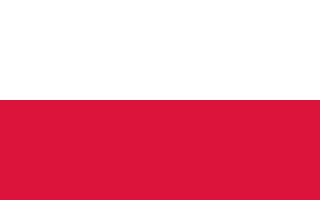
Poland
Republic of Poland
Population: UN WPP 2024, revision 1, projection for 1 July 2026. Sources and methodology.
Geography and territory
Poland sits at the crossroads of Central Europe, covering 312,696 square kilometers of land that makes it one of the largest countries on the continent. Its territory stretches from the sandy beaches of the Baltic Sea in the north to the Carpathian foothills and the jagged Tatra Mountains in the south, where Rysy rises to 2,499 meters on the border with Slovakia and stands as the country’s highest point. Poland shares borders with seven neighbors, Germany, the Czech Republic, Slovakia, Ukraine, Belarus, Lithuania, and Russia, a geographic position wedged between larger powers that has shaped nearly every chapter of its history.
Much of northern and central Poland is remarkably flat, forming part of the North European Plain. This lowland is dotted with thousands of glacial lakes, most famously in the Masurian Lake District, often called the Land of a Thousand Lakes. The Vistula and the Oder are the country’s two great rivers; the Vistula alone runs 1,047 kilometers, flowing past Kraków and Warsaw before emptying into the Baltic. Rolling uplands and low mountain ranges break up the plains further south, giving the landscape a gentle but varied texture.
In the country’s east lies one of Europe’s true natural wonders: the Białowieża Forest, shared with Belarus, the largest surviving fragment of the primeval woodland that once covered the European lowlands. It shelters the European bison, the continent’s heaviest land mammal, along with wolves, lynx, and a wealth of ancient oaks. Poland’s climate is temperate continental, bringing cold, snowy winters, particularly inland and in the mountains, and warm summers where temperatures can climb past 86 degrees Fahrenheit.
History
Poland’s history is one of the most dramatic in Europe, swinging between periods of remarkable power and episodes of near-total devastation. The Polish state traces its official founding to 966, when Duke Mieszko I accepted Christianity, binding the emerging kingdom to Western Christendom. Centuries later, in the 1500s and 1600s, the Polish-Lithuanian Commonwealth became the largest state in Europe, a pioneer of religious tolerance and parliamentary governance through its Sejm, and a flourishing center of Renaissance culture centered on the royal capital of Kraków.
That golden age gave way to catastrophe. In the late 18th century, neighboring Russia, Prussia, and Austria carved up Polish territory in three successive partitions (1772, 1793, and 1795), erasing Poland from the map for 123 years. Yet national identity endured through language, Catholic faith, and cultural figures such as composer Frédéric Chopin and poet Adam Mickiewicz. Poland reemerged as an independent republic on November 11, 1918, after the First World War redrew the map of Europe.
The Second World War brought the greatest tragedy in Polish history. The joint invasion by Nazi Germany and the Soviet Union in September 1939 launched six years of brutal occupation. Poland lost roughly six million citizens, about half of them Jewish, murdered in the Holocaust at extermination camps built on Polish soil, including Auschwitz-Birkenau, Treblinka, and Sobibor. Warsaw was reduced almost entirely to rubble after the 1944 Uprising. Decades later, under the communist regime imposed by the USSR, the Solidarity trade union movement, led by Lech Wałęsa, launched in 1980 a wave of resistance that helped topple communism across Eastern Europe. Poland joined the European Union in 2004, cementing its return to the community of Western democracies.
Culture and society
Polish culture blends the traditions of Western and Eastern Europe into something distinctly its own. Frédéric Chopin, the nation’s most celebrated composer, elevated Polish folk dances like the polonaise and mazurka into universal art, and his music remains a cornerstone of the piano repertoire worldwide. The International Chopin Piano Competition, held in Warsaw every five years, ranks among the most prestigious events in classical music.
Polish literature has earned five Nobel Prizes, awarded to Henryk Sienkiewicz, Władysław Reymont, Czesław Miłosz, Wisława Szymborska, and Olga Tokarczuk. Szymborska’s poetry, admired for its precision and quiet humanity, alongside the work of poet Zbigniew Herbert, gives Polish letters a distinctive intellectual voice. In the visual arts, Polish poster design developed into a globally recognized school, and Polish cinema, through directors such as Andrzej Wajda, Roman Polanski, and Krzysztof Kieślowski, has left a lasting mark on world film.
Catholicism runs deep in Polish society, and the Church played a central role in preserving national identity through foreign occupation and communist rule. The election of Karol Wojtyła, a Pole, as Pope John Paul II in 1978 was a moment of enormous national and global significance. Holiday traditions remain rich and specific: the Christmas Eve supper, Wigilia, features twelve meatless dishes and an empty place setting reserved for an unexpected traveler, a custom still observed in households across the country.
Economy
Poland’s economy ranks among the largest in the European Union and stands as one of the true success stories of postcommunist transition. Since 1989, per capita income has grown many times over, and Poland was the only EU country to avoid recession during the 2008 financial crisis. More than three decades of sustained growth have turned the country into an upper-middle-income economy with a dynamic private sector, reflected today in a gross domestic product of roughly $1.04 trillion.
Manufacturing forms a pillar of the economy, with Poland emerging as a major automotive production hub for brands including Volkswagen, Fiat, Toyota, and Opel. Business services and technology have also expanded rapidly, as cities like Kraków, Wrocław, and Gdańsk attract shared-service centers for multinational companies. Agriculture remains significant too, with Poland ranking among Europe’s leading producers of apples, potatoes, and pork.
Heavy investment in infrastructure, much of it financed through European Union structural funds, has transformed the country’s highways, airports, and urban centers. The energy sector is in transition, as Poland works to reduce its historic reliance on coal, which still generates a substantial share of its electricity. Special economic zones have drawn significant foreign direct investment, and a growing startup ecosystem, especially in video game development led by companies like CD Projekt (creator of The Witcher and Cyberpunk 2077), has earned international recognition.
Food and cuisine
Polish cuisine is hearty, comforting, and rooted in peasant tradition, shaped by influences from German, Jewish, Lithuanian, and Ukrainian cooking. Pierogi, dumplings filled with potato and cheese, meat, cabbage, or fruit, are the country’s signature dish, prepared in countless regional variations. Bigos, a stew of fermented cabbage simmered with assorted meats and mushrooms and known as hunter’s stew, tastes better with each reheating and is a fixture of holiday tables.
Soup holds a central place in Polish dining. Żurek, a tangy soup made from fermented rye flour with sausage and hard-boiled egg, is sometimes served in a hollowed-out loaf of bread. Barszcz, a clear beet soup often accompanied by uszka (small mushroom dumplings), is essential to the Christmas Eve meal. Sour cucumber soup and tomato soup with noodles round out an exceptionally varied soup tradition.
Poland’s charcuterie heritage is deep and diverse, with kiełbasa sausage appearing in dozens of regional forms, from smoky lisiecka to dry-cured krakowska. Pączki, doughnuts filled with rose or plum jam, are an irresistible treat eaten on Fat Thursday before Lent. Popular desserts also include sernik (cheesecake), makowiec (poppy seed roll), and kremówka, a cream cake famously favored by Pope John Paul II. Polish vodka rivals its Russian counterpart in quality and heritage, with brands such as Żubrówka, flavored with bison grass gathered from the Białowieża Forest.
Tourism and landmarks
Kraków is Poland’s crown jewel, a city that escaped major destruction in the Second World War and retains one of the most beautiful historic centers in Europe. Its Main Market Square, the largest medieval square on the continent, along with St. Mary’s Basilica and its wooden altarpiece, Wawel Castle, and the historic Jewish quarter of Kazimierz, form an exceptional cultural ensemble. Nearby stands Auschwitz-Birkenau, the former Nazi concentration and extermination camp now preserved as a museum, memorial site, and UNESCO World Heritage location.
Warsaw, the capital, literally rose from its own ashes after near-total wartime destruction. Its Old Town was painstakingly rebuilt from paintings and photographs, an achievement recognized by UNESCO as a World Heritage Site. The modern city is vibrant and cosmopolitan, home to the Warsaw Rising Museum, the Palace of Culture and Science (a gift from Stalin-era Soviet Union), and a thriving restaurant and nightlife scene. Gdańsk, on the Baltic coast, charms visitors with Hanseatic architecture and its history as the birthplace of the Solidarity movement.
The Tatra Mountains in the south offer the most accessible alpine scenery in Central Europe, with the resort town of Zakopane serving as a base for skiing and hiking, and a distinctive highland culture with its own music, food, and wooden architecture. The Wieliczka Salt Mine, worked continuously for 700 years and containing chapels carved from rock salt more than 100 meters underground, is another UNESCO World Heritage Site. Malbork Castle, the largest brick fortress in the world, built by the Teutonic Knights, is a striking monument to medieval power.
Fun facts about Poland
- Poland has produced 17 Nobel laureates in total, including five in literature and four Peace Prizes.
- Marie Curie, born Maria Skłodowska in Warsaw, was the first person to win two Nobel Prizes and the first woman to win one.
- Malbork Castle holds the record as the largest brick structure in the world.
- Poland is home to one of Europe’s largest populations of white storks, and foraging for wild mushrooms is practically a national pastime.
- Nicolaus Copernicus, who formulated the heliocentric theory that revolutionized astronomy, was born in Toruń, Poland, in 1473.
- Warsaw’s Old Town, though centuries old in appearance, was almost entirely rebuilt after 1945, making it one of the most successful historic reconstructions in the world.
Poland in numbers
Latest World Bank and UNDP observations, each with its own year. “World median” is the middle value among the countries that report the same indicator; “#” ranks from the highest value.
Population since 1960
Poland had 29.6 million people in 1960 and 36.4 million in 2025 — 23% more.
The population peaked at 38.7 million in 1998 and has since declined.
People
60.1% of people live in towns and cities (world median 63.4%). 14.5% are under 15 and 20.8% are 65 or older — one of the oldest age structures in the world. Women have 1.14 children on average, below the replacement level of about 2.1 needed to keep a population stable in the long run without migration.
Economy
The economy grew by 3.6% in real terms in 2025. Consumer prices rose by 3.8% in 2025. Services make up the largest share of output (59.7% of GDP); agriculture contributes 2.5%.
Development and environment
UNDP rates human development in Poland as very high, with an index of 0.906 in 2023 (rank 35 of 193). 88.6% of people use the internet and 100.0% have access to electricity. Forest covers 31.0% of the land (world median 32.8%).
Sources: World Bank, World Development Indicators (CC BY 4.0), most recent observation from 2015 onward; UNDP Human Development Report 2025. Retrieved 2026-10-10. Sector shares need not add up to 100% because taxes and subsidies on products are excluded. Missing values are left blank rather than estimated. Sources and methodology.
Climate of Poland
Averaged across Poland, the warmest month is July (19.5 °C) and the coolest is January (−2.6 °C), a seasonal swing of 22.1 °C. The annual mean is 8.8 °C.
3 months have a national mean temperature below freezing.
About 609 mm of precipitation falls in a typical year. July is the wettest month (92 mm) and February the driest (32 mm). The wettest stretch is June to August, with 37% of the year's total.
Show monthly values as a table
| Month | Mean °C | Low °C | High °C | Precipitation, mm |
|---|---|---|---|---|
| January | −2.6 | −4.7 | −0.6 | 37 |
| February | −1.3 | −3.8 | 1.2 | 32 |
| March | 3.5 | 0.0 | 7.0 | 36 |
| April | 9.7 | 4.9 | 14.5 | 36 |
| May | 13.9 | 8.8 | 19.0 | 60 |
| June | 17.2 | 12.3 | 22.2 | 70 |
| July | 19.5 | 14.6 | 24.5 | 92 |
| August | 19.0 | 13.9 | 24.1 | 67 |
| September | 14.2 | 9.9 | 18.6 | 56 |
| October | 9.2 | 5.8 | 12.7 | 48 |
| November | 3.8 | 1.7 | 6.0 | 38 |
| December | −1.0 | −2.8 | 0.8 | 39 |
Figures are 1991–2020 averages across the whole land area of Poland, from the World Bank Climate Change Knowledge Portal, CRU TS 4.08 (CC BY 4.0). They are not readings from one weather station: the capital, the coast and high ground can be much warmer, cooler, wetter or drier.
Travel essentials for Poland
The practical details visitors ask about first. Traffic in Poland drives on the right, like most of the world. Mains electricity is 230 V at 50 Hz, so devices made only for 110–120 V (common in North America) need a converter unless they are dual-voltage — most phone and laptop chargers are.
- Emergency number
- 112
- Driving side
- Right
- Plug types
- Type C, Type EC: two round pins (Europlug); E: two round pins, earth pin in the socket
- Voltage
- 230 V50 Hz
- Dialling code
- +48From abroad: your exit code, then 48 and the number
- Currency
- Polish Zloty (PLN)
- Time zone
- CET (UTC+1)Current local time in Poland
Compiled from IEC plug and voltage standards, national emergency-service listings and the UN road-traffic conventions. Emergency numbers and local coverage can change — confirm them locally on arrival. Poland's internet domain is .pl.
Where Poland ranks in the world
Each position counts only the countries with data in that ranking guide. First place is the highest value — for price levels, the most expensive. Select a card to see the full table.
- Population42nd of 19637.8 millionUN projection, July 2026
- Land area69th of 195306,270 km²World Bank, 2023
- Population density74th of 194120 per km²World Bank, 2023
- GDP (nominal)21st of 187$917.8BWorld Bank, 2024, current US$
- GDP per capita45th of 187$25,104World Bank, 2024, current US$
- Life expectancy48th of 19478.4 yearsWorld Bank, 2024
- Price level79th of 16548 (US = 100)ICP 2021, household consumption
Bordering countries of Poland


Compare Poland with another country
Frequently asked questions about Poland
What is the capital of Poland?
The capital of Poland is Warsaw.
What is the population of Poland?
The UN World Population Prospects projection for Poland is 37,843,188 people (37.8 million) on 1 July 2026. National statistical offices may publish different estimates.
What language is spoken in Poland?
The official language of Poland is Polish.
What currency is used in Poland?
The currency of Poland is the Polish Zloty (PLN).
How big is Poland?
Poland covers an area of 312,696 km².
What type of government does Poland have?
Poland is a parliamentary republic.
Which countries border Poland?
Poland shares land borders with Germany, Czech Republic, Slovakia, Ukraine, Belarus, Lithuania, Russia.
What is the highest point in Poland?
The highest point in Poland is Rysy (2,499 m).


