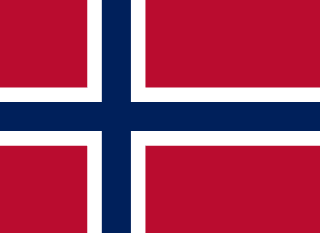
Norway
Kingdom of Norway
Population: UN WPP 2024, revision 1, projection for 1 July 2026. Sources and methodology.
Geography and territory
Norway stretches along the western edge of the Scandinavian Peninsula, running more than 1,750 kilometers from the North Sea in the south to the Arctic Ocean in the far north. Covering 385,207 square kilometers, the country boasts one of the most dramatic coastlines on Earth — a shoreline that, once every fjord and island inlet is counted, extends well beyond 100,000 kilometers. Its territory also includes the Arctic archipelago of Svalbard and the remote island of Jan Mayen.
Fjords are Norway’s defining geographic feature: deep sea inlets carved by glaciers during past ice ages, some reaching extraordinary dimensions. The Sognefjord, the longest in the country at 204 kilometers and plunging to depths of up to 1,308 meters, is the most famous example. The terrain overall is heavily mountainous, culminating at Galdhøpiggen, which at 2,469 meters is the country’s highest peak. Inland, glacial plateaus such as Jostedalsbreen — the largest glacier in mainland Europe — dominate the high country.
Climate varies enormously with latitude and with the moderating influence of the Gulf Stream, which keeps the western coast comparatively mild. While Bergen enjoys relatively gentle winters, the interior of the far north can plunge below minus 40 degrees Celsius. North of the Arctic Circle, the midnight sun bathes the landscape in continuous daylight through the summer months, while the polar night brings weeks of darkness in winter — a season when the aurora borealis often paints the sky in shifting curtains of green and violet.
History
The earliest settlements in Norway date to the end of the last ice age, roughly 12,000 years ago. The Viking Age, spanning the eighth through eleventh centuries, remains the most celebrated chapter of Norwegian history. Norwegian Vikings were extraordinary seafarers who colonized Iceland and Greenland and reached the shores of North America some five centuries before Columbus. Erik the Red and his son Leif Erikson stand as the most iconic figures of these voyages, and the remarkably preserved Viking ships unearthed at Oseberg and Gokstad, now displayed in Oslo museums, testify to their exceptional shipbuilding skill.
During the Middle Ages, Norway reached its greatest territorial extent under King Haakon IV in the thirteenth century, but the Black Death of 1349 devastated the population, killing more than a third of it. In 1380, Norway entered a union with Denmark that would endure for over four centuries. Following the Napoleonic Wars, Norway was ceded to Sweden in 1814, though Norwegians used the transition as an opportunity to draft their own constitution on May 17, 1814 — a date still celebrated as the national day.
Full independence arrived peacefully in 1905, when the union with Sweden was dissolved by referendum. The twentieth century brought Nazi occupation during the Second World War (1940–1945), a period in which the Norwegian resistance and a government-in-exile in London kept national sovereignty alive. The discovery of North Sea oil in the late 1960s transformed the economy almost overnight. Norwegians have twice voted, in 1972 and 1994, against joining the European Union, though the country remains closely tied to the bloc through the European Economic Area.
Culture and society
Norwegian culture is rooted deeply in the country’s relationship with nature, captured in the concept of friluftsliv, or outdoor living, which permeates nearly every aspect of daily life. Norwegians enjoy an ancient right of free access to the countryside known as allemannsretten, allowing anyone to hike, camp, and forage on uncultivated land. Skiing is close to a national religion, and it is often said that Norwegian children are born with skis on their feet.
Norwegian literature has produced figures of global stature, including Henrik Ibsen, widely regarded as the father of modern drama for works such as A Doll’s House and Peer Gynt, and Knut Hamsun, who won the 1920 Nobel Prize in Literature for Hunger. In music, Edvard Grieg composed masterworks steeped in Norwegian folk tradition, most famously the Peer Gynt Suite. In painting, Edvard Munch, creator of The Scream — one of the most recognizable images in modern art — captured existential anguish with unmatched force.
Norwegian society places great weight on equality, modesty, and solidarity, values often summarized by the informal cultural code known as the Law of Jante, which discourages individual boastfulness. Norway ranks among the world’s most gender-equal nations, with strong female representation in politics and the workforce. Its welfare state provides universal, high-quality education and health care, generous parental leave, and a robust pension system.
Economy
Norway possesses one of the wealthiest economies on the planet, with a GDP per capita consistently among the top three worldwide. That prosperity rests substantially on North Sea oil and natural gas, which account for roughly 40 percent of exports and about a fifth of GDP. What truly sets Norway apart, however, is its stewardship of that wealth through the Government Pension Fund Global — the world’s largest sovereign wealth fund, holding assets worth well over a trillion dollars, established to secure prosperity for future generations.
Beyond hydrocarbons, the economy is diversified across fishing and aquaculture, where Norway ranks as the world’s second-largest seafood exporter and the leading producer of farmed salmon. Maritime industry, energy technology, metals, and forestry round out the picture. The country is also a leader in the energy transition: more than 98 percent of its electricity comes from renewable sources, chiefly hydropower, and it has the highest proportion of electric vehicles per capita anywhere in the world.
Norway’s economic model blends an open market economy with substantial state involvement and close cooperation among government, employers, and labor unions, an arrangement often described as the “Nordic model.” Wages are high, as is the tax burden that funds first-rate public services. Unemployment stays consistently low, income inequality is modest by international standards, and the country regularly tops the United Nations Human Development Index.
Food and cuisine
Norwegian cuisine is closely tied to the sea and to centuries-old preservation techniques developed to survive the long Nordic winter. Salmon — fresh, smoked, cured, or prepared as gravlaks, marinated with dill, salt, and sugar — is the country’s culinary flagship and a globally recognized icon. Dried cod, known as klippfisk or tørrfisk, was for centuries a crucial export commodity and remains a cherished ingredient today.
Traditional dishes include fårikål, a lamb-and-cabbage stew often considered the national dish; lutefisk, an age-old preparation of cod treated with lye; rakfisk, fermented trout; and kjøttkaker, Norwegian meatballs. Brunost, a sweet, caramel-colored whey cheese, is a uniquely Norwegian specialty typically sliced thin over bread or waffles. Wild foods such as Arctic cloudberries, lingonberries, and reindeer or elk meat further enrich the national pantry.
New Nordic cuisine has reshaped Norway’s culinary scene in recent decades, exemplified by Oslo restaurants such as Maaemo, awarded three Michelin stars for its avant-garde reinterpretation of local ingredients. Coffee culture runs deep as well, with Norwegians among the world’s heaviest per-capita coffee drinkers. Aquavit, a caraway-flavored spirit, remains the traditional drink of choice at festive gatherings and celebrations.
Tourism and landmarks
Norway’s fjords are its premier attraction and rank among the most breathtaking natural landscapes on the planet. The Geirangerfjord and Nærøyfjord, both UNESCO World Heritage sites, offer scenes of waterfalls tumbling from sheer cliffs into crystalline water. Preikestolen, a rock plateau rising 604 meters above the Lysefjord, and Trolltunga, a rock spur suspended over a dramatic drop, draw hikers seeking some of Europe’s most spectacular viewpoints.
The North Cape, often regarded as continental Europe’s northernmost point accessible by road, offers visitors the experience of the midnight sun in summer. The Lofoten Islands dazzle with mountains rising sharply from the Arctic Ocean, red-painted fishing villages, and white-sand beaches set in a subarctic landscape. Tromsø, the largest city in northern Norway, is a favored base for aurora viewing and a gateway to the Arctic.
Oslo combines world-class museums — the Munch Museum, the Viking Ship Museum, and the new National Library among them — with striking contemporary architecture such as the Opera House and the Barcode buildings in the Bjørvika district. Bergen, home to the historic Bryggen wharf, a UNESCO World Heritage site, serves as the classic gateway to the fjords, its colorful wooden merchant houses lining the harbor front. The Flåm Railway, often ranked among the most scenic train journeys in the world, descends 866 meters over 20 kilometers of vertiginous scenery. Norway’s National Tourist Routes offer panoramic roads with architecture deliberately woven into the landscape, while cruise travel along the coastal route between Bergen and Kirkenes remains one of the most popular ways to experience the country’s dramatic shoreline.
Fun facts about Norway
- The Lærdal Tunnel, at 24.5 kilometers, is the longest road tunnel in the world
- Norway hosts the annual Nobel Peace Prize ceremony in Oslo, while all other Nobel Prizes are awarded in Stockholm
- The country’s coastline includes more than 1,000 fjords
- Svalbard is home to the Global Seed Vault, an underground facility preserving seed samples from around the world against future catastrophe
- Norwegians invented the paper clip, and during the Nazi occupation it was worn on lapels as a quiet symbol of resistance
Norway in numbers
Latest World Bank and UNDP observations, each with its own year. “World median” is the middle value among the countries that report the same indicator; “#” ranks from the highest value.
Population since 1960
Norway had 3.6 million people in 1960 and 5.6 million in 2025 — 57% more.
People
83.6% of people live in towns and cities (world median 63.4%). 15.9% are under 15 and 19.1% are 65 or older — an ageing population. Women have 1.45 children on average, below the replacement level of about 2.1 needed to keep a population stable in the long run without migration.
Economy
The economy grew by 1.1% in real terms in 2025. Consumer prices rose by 3.0% in 2025. Services make up the largest share of output (55.0% of GDP); agriculture contributes 1.6%.
Development and environment
UNDP rates human development in Norway as very high, with an index of 0.970 in 2023 (rank 2 of 193). 99.0% of people use the internet and 100.0% have access to electricity. Forest covers 33.2% of the land (world median 32.8%).
Sources: World Bank, World Development Indicators (CC BY 4.0), most recent observation from 2015 onward; UNDP Human Development Report 2025. Retrieved 2026-10-10. Sector shares need not add up to 100% because taxes and subsidies on products are excluded. Missing values are left blank rather than estimated. Sources and methodology.
Climate of Norway
Averaged across Norway, the warmest month is July (12.1 °C) and the coolest is January (−5.8 °C), a seasonal swing of 17.9 °C. The annual mean is 2.2 °C.
5 months have a national mean temperature below freezing.
About 1,122 mm of precipitation falls in a typical year. October is the wettest month (122 mm) and April the driest (60 mm).
Show monthly values as a table
| Month | Mean °C | Low °C | High °C | Precipitation, mm |
|---|---|---|---|---|
| January | −5.8 | −8.7 | −2.8 | 106 |
| February | −5.8 | −8.9 | −2.8 | 84 |
| March | −3.5 | −7.1 | 0.2 | 80 |
| April | 0.6 | −3.1 | 4.3 | 60 |
| May | 5.2 | 1.2 | 9.2 | 64 |
| June | 9.3 | 5.3 | 13.3 | 80 |
| July | 12.1 | 8.2 | 16.1 | 92 |
| August | 11.3 | 7.4 | 15.3 | 106 |
| September | 7.4 | 4.2 | 10.6 | 108 |
| October | 2.3 | −0.2 | 4.8 | 122 |
| November | −2.1 | −4.6 | 0.3 | 105 |
| December | −4.6 | −7.4 | −1.8 | 116 |
Figures are 1991–2020 averages across the whole land area of Norway, from the World Bank Climate Change Knowledge Portal, CRU TS 4.08 (CC BY 4.0). They are not readings from one weather station: the capital, the coast and high ground can be much warmer, cooler, wetter or drier.
Travel essentials for Norway
The practical details visitors ask about first. Traffic in Norway drives on the right, like most of the world. Mains electricity is 230 V at 50 Hz, so devices made only for 110–120 V (common in North America) need a converter unless they are dual-voltage — most phone and laptop chargers are.
- Emergency number
- 112Ambulance 113 · Fire 110
- Driving side
- Right
- Plug types
- Type C, Type FC: two round pins (Europlug); F: two round pins with side earth clips (Schuko)
- Voltage
- 230 V50 Hz
- Dialling code
- +47From abroad: your exit code, then 47 and the number
- Currency
- Norwegian Krone (NOK)
- Time zone
- CET (UTC+1)Current local time in Norway
Compiled from IEC plug and voltage standards, national emergency-service listings and the UN road-traffic conventions. Emergency numbers and local coverage can change — confirm them locally on arrival. Norway's internet domain is .no.
Where Norway ranks in the world
Each position counts only the countries with data in that ranking guide. First place is the highest value — for price levels, the most expensive. Select a card to see the full table.
- Population120th of 1965.7 millionUN projection, July 2026
- Land area62nd of 195364,270 km²World Bank, 2023
- Population density179th of 19415 per km²World Bank, 2023
- GDP (nominal)31st of 187$500.9BWorld Bank, 2024, current US$
- GDP per capita7th of 187$89,889World Bank, 2024, current US$
- Life expectancy15th of 19483.2 yearsWorld Bank, 2024
- Price level4th of 165117 (US = 100)ICP 2021, household consumption
Bordering countries of Norway


Compare Norway with another country
Frequently asked questions about Norway
What is the capital of Norway?
The capital of Norway is Oslo.
What is the population of Norway?
The UN World Population Prospects projection for Norway is 5,652,989 people (5.7 million) on 1 July 2026. National statistical offices may publish different estimates.
What language is spoken in Norway?
The official language of Norway is Norwegian (Bokmål and Nynorsk).
What currency is used in Norway?
The currency of Norway is the Norwegian Krone (NOK).
How big is Norway?
Norway covers an area of 385,207 km².
What type of government does Norway have?
Norway is a parliamentary constitutional monarchy.
Which countries border Norway?
Norway shares land borders with Sweden, Finland, Russia.
What is the highest point in Norway?
The highest point in Norway is Galdhøpiggen (2,469 m).


