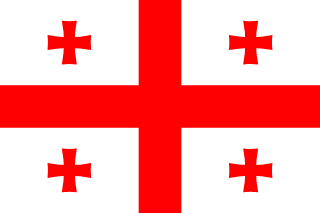
Georgia
Georgia
Population: UN WPP 2024, revision 1, projection for 1 July 2026. Sources and methodology.
Geography and territory
Georgia occupies a striking position at the crossroads of Europe and Asia, spread across the southern slopes of the Greater Caucasus range with the eastern shore of the Black Sea forming its western edge. Within its 69,700 square kilometers, the country packs in an astonishing range of landscapes for its size, from snow-capped Caucasus summits topping 5,000 meters to the subtropical coastline around Batumi and the fertile vineyard valleys of Kakheti.
The Greater Caucasus forms Georgia’s natural border with Russia to the north, home to peaks such as Mount Shkhara (5,193 meters) and Mount Kazbek (5,047 meters), among the tallest mountains in Europe. The Lesser Caucasus runs along the country’s southern edge, and between the two ranges lie the fertile Colchis lowlands in the west — the mythical land of the Golden Fleece — and the Kura River valley in the east. The Kura and Rioni rivers serve as the country’s principal waterways.
Climate shifts dramatically with elevation and geography. The Black Sea coast enjoys a humid subtropical climate with lush vegetation, palm trees, and citrus groves, while the eastern regions are drier and more continental, with hot summers and crisp winters. The Caucasus mountains generate a patchwork of microclimates that support remarkable biodiversity within a relatively compact area, ranging from coniferous forest and alpine meadow to semi-arid steppe, and glaciers still cling to the highest peaks year-round.
History
Georgia holds one of the oldest and richest histories in the Caucasus. The ancient kingdoms of Colchis and Iberia, famous from Greek mythology as the destination of Jason and the Argonauts, flourished in the first millennium BCE. Georgia was one of the first nations on Earth to adopt Christianity as its state religion, in 337 CE, under King Mirian III and the influence of Saint Nino — an event that has shaped Georgian national identity ever since.
The country’s Golden Age unfolded during the 11th and 12th centuries under King David the Builder and, above all, Queen Tamar, the first woman to rule Georgia with the title of king. During this period the kingdom reached its greatest territorial extent, stretching from the Black Sea to the Caspian, while culture flourished around works such as Shota Rustaveli’s epic poem “The Knight in the Panther’s Skin,” still regarded as the national literary masterpiece.
After centuries of invasion by Mongols, Persians, and Ottomans, which repeatedly fractured the kingdom into rival principalities, Georgia sought protection under the Russian Empire in the early 19th century. Russian rule gave way to Soviet control from 1921 onward, a period that brought industrialization alongside political repression and forced collectivization. Independence, regained in 1991, arrived amid turmoil, with civil conflict and separatist wars in Abkhazia and South Ossetia that culminated in a brief war with Russia in 2008, leaving both regions outside the central government’s control. Since then, Georgia has steadily oriented its foreign policy toward European and Euro-Atlantic integration, pursuing membership talks with the European Union.
Culture and society
Georgian culture is remarkably rich and distinctive. The Georgian language belongs to the Kartvelian family, unrelated to any other major language group, and is written in its own unique alphabet — one of only 14 independent writing systems in use in the world today, whose calligraphy has been recognized by UNESCO as intangible cultural heritage. Georgian literature, crowned in the medieval period by Rustaveli and carried into the modern era by poets like Galaktion Tabidze, reflects a deep and enduring poetic sensibility.
Georgian polyphonic singing, inscribed by UNESCO as intangible cultural heritage, is one of the oldest choral traditions in the world. Sung in three unaccompanied voices, it produces complex, emotionally charged harmonies performed at both religious ceremonies and festive gatherings. Georgian dance, marked by acrobatic footwork from male dancers moving on their toes and the ethereal grace of female performers, is a striking display of physical virtuosity and artistic expression.
The supra, Georgia’s traditional feast, is a central social institution. Presided over by a tamada, a toastmaster chosen for wit and eloquence, a supra unfolds as a long sequence of poetic toasts accompanied by abundant food and wine. Toasts follow a set order — to God, to the homeland, to the departed, to peace, to the hosts — and Georgian hospitality is legendary, resting on the belief that a guest is sent by God. The country is also overwhelmingly Orthodox Christian, and the Georgian Orthodox Church continues to play an influential role in public life, education, and national celebrations.
Economy
Georgia’s economy has undergone a striking transformation since the liberal reforms launched after the 2003 Rose Revolution. The country has earned recognition for its anti-corruption efforts and streamlined bureaucracy, ranking among the easiest places in the world to do business according to international indices. Tourism has become the leading economic engine, growing spectacularly over the past decade.
Agriculture remains important, particularly winemaking. Georgia is widely regarded as one of the birthplaces of wine, with archaeological evidence of winemaking stretching back more than 8,000 years. The traditional method of fermenting wine in qvevri — large clay vessels buried underground — has been recognized by UNESCO as intangible cultural heritage. The vineyards of Kakheti produce native varieties such as Saperavi and Rkatsiteli that have earned growing international acclaim.
The services sector dominates the modern economy, complemented by manganese and copper mining, hydroelectric power generation, and a nascent technology industry. Georgia’s position as a transit corridor between Asia and Europe, anchored by the Baku-Tbilisi-Ceyhan pipeline, gives it a geopolitical importance that outstrips its size, and the country has invested heavily in road and rail links to strengthen its role along the so-called Middle Corridor connecting China to Europe. Remittances from the Georgian diaspora and foreign investment also contribute significantly to economic growth.
Food and cuisine
Georgian cuisine is among the richest and most flavorful in the Caucasus, the product of thousands of years of culinary tradition at a crossroads of civilizations. Khachapuri, a flatbread filled with melted cheese, is the country’s most iconic dish, with regional variations that include the boat-shaped adjaruli from Batumi, topped with a raw egg and butter melted into the center, and the megruli version, blanketed with an extra layer of baked cheese.
Khinkali, large dumplings of thick dough filled with spiced meat, cilantro, onion, and cumin, are a culinary institution eaten by hand — diners sip the hot broth trapped inside before taking the first bite. Georgian cooking makes extensive use of walnuts, as in satsivi, chicken in a creamy walnut-garlic sauce, and pkhali, a vegetable-and-walnut spread flavored with pomegranate and cilantro, served as an appetizer.
Wine is inseparable from Georgian food culture. Deep-colored, firmly tannic Saperavi reds and amber Rkatsiteli whites, made in qvevri with extended skin contact, represent a winemaking tradition found nowhere else in quite the same form. Churchkhela, a candle-shaped sweet made from strung walnuts dipped repeatedly in thickened grape must, is the most popular treat, while tkemali, a tart wild-plum sauce, and adjika, a spicy pepper paste, accompany nearly every meal.
Tourism and landmarks
Tbilisi, the capital, charms visitors with its winding old-town streets, carved wooden balconies, and sulfur bathhouses that gave the city its name. The Narikala Fortress looms over the skyline, while the Holy Trinity Cathedral, completed in 2004, ranks among the largest Orthodox churches in the world. The Bridge of Peace, a glass-and-steel structure designed by Michele De Lucchi, captures the city’s blend of tradition and modernity.
The ancient capital of Mtskheta, a UNESCO World Heritage Site, is home to Svetitskhoveli Cathedral, said by tradition to house Christ’s robe, and Jvari Monastery, perched above the confluence of the Kura and Aragvi rivers. The Svaneti region, high in the Caucasus, preserves medieval stone defensive towers recognized as a World Heritage Site and offers some of the most spectacular trekking in Europe. Gergeti Trinity Church, set at the foot of Mount Kazbek, is one of the country’s most photographed sights.
Kakheti, Georgia’s premier wine region, invites visitors to tour centuries-old wineries and villages steeped in winemaking tradition. Batumi, on the Black Sea coast, pairs subtropical beaches with an eclectic skyline and a lively nightlife. The cave city of Vardzia, carved into a cliff face in the 12th century under Queen Tamar, and the David Gareja monastery complex, with its cave frescoes set in semi-arid terrain, testify to the depth of Georgian spirituality. Ski resorts such as Gudauri and Mestia have also grown popular in winter, drawing visitors to the same peaks that once made travel through the Caucasus so formidable.
Fun facts about Georgia
- Georgia is widely considered one of the birthplaces of wine, with evidence of winemaking dating back more than 8,000 years.
- The Georgian alphabet is one of just 14 independent writing systems used in the world today and has been recognized by UNESCO as intangible cultural heritage.
- At a traditional supra, a skilled tamada may deliver dozens of elaborate toasts over the course of a single evening.
- Georgia has its own traditional wrestling style, chidaoba, recognized as a national sport and UNESCO intangible heritage.
- Veryovkina Cave, in Abkhazia, is the deepest known cave on Earth, plunging more than 2,212 meters underground.
- The country’s own name for itself, Sakartvelo, bears no relation to “Georgia,” which likely derives instead from Saint George, the nation’s patron saint.
Georgia in numbers
Latest World Bank and UNDP observations, each with its own year. “World median” is the middle value among the countries that report the same indicator; “#” ranks from the highest value.
Population since 1960
Georgia had 3.6 million people in 1960 and 3.9 million in 2025 — 8% more.
The population peaked at 4.9 million in 1993 and has since declined.
People
61.2% of people live in towns and cities (world median 63.4%). 20.5% are under 15 and 16.0% are 65 or older — an ageing population. Women have 1.80 children on average, below the replacement level of about 2.1 needed to keep a population stable in the long run without migration.
Economy
The economy grew by 7.5% in real terms in 2025. Consumer prices rose by 3.9% in 2025. Services make up the largest share of output (63.9% of GDP); agriculture contributes 5.2%.
Development and environment
UNDP rates human development in Georgia as very high, with an index of 0.844 in 2023 (rank 57 of 193). 83.8% of people use the internet and 100.0% have access to electricity. Forest covers 44.6% of the land (world median 32.8%).
Sources: World Bank, World Development Indicators (CC BY 4.0), most recent observation from 2015 onward; UNDP Human Development Report 2025. Retrieved 2026-10-10. Sector shares need not add up to 100% because taxes and subsidies on products are excluded. Missing values are left blank rather than estimated. Sources and methodology.
Climate of Georgia
Averaged across Georgia, the warmest month is August (20.3 °C) and the coolest is January (−2.5 °C), a seasonal swing of 22.8 °C. The annual mean is 9.0 °C.
3 months have a national mean temperature below freezing.
About 1,081 mm of precipitation falls in a typical year. June is the wettest month (125 mm) and February the driest (72 mm).
Show monthly values as a table
| Month | Mean °C | Low °C | High °C | Precipitation, mm |
|---|---|---|---|---|
| January | −2.5 | −6.9 | 1.8 | 77 |
| February | −1.5 | −6.1 | 3.1 | 72 |
| March | 2.9 | −2.0 | 7.8 | 85 |
| April | 8.6 | 2.9 | 14.3 | 87 |
| May | 13.1 | 7.4 | 18.9 | 112 |
| June | 17.3 | 11.2 | 23.4 | 125 |
| July | 20.2 | 14.2 | 26.2 | 100 |
| August | 20.3 | 14.0 | 26.5 | 83 |
| September | 16.0 | 9.8 | 22.2 | 89 |
| October | 10.5 | 4.9 | 16.1 | 95 |
| November | 4.2 | −0.7 | 9.0 | 81 |
| December | −0.9 | −5.1 | 3.4 | 76 |
Figures are 1991–2020 averages across the whole land area of Georgia, from the World Bank Climate Change Knowledge Portal, CRU TS 4.08 (CC BY 4.0). They are not readings from one weather station: the capital, the coast and high ground can be much warmer, cooler, wetter or drier.
Travel essentials for Georgia
The practical details visitors ask about first. Traffic in Georgia drives on the right, like most of the world. Mains electricity is 230 V at 50 Hz, so devices made only for 110–120 V (common in North America) need a converter unless they are dual-voltage — most phone and laptop chargers are.
- Emergency number
- 112
- Driving side
- Right
- Plug types
- Type C, Type FC: two round pins (Europlug); F: two round pins with side earth clips (Schuko)
- Voltage
- 230 V50 Hz
- Dialling code
- +995From abroad: your exit code, then 995 and the number
- Currency
- Georgian Lari (GEL)
- Time zone
- GET (UTC+4)Current local time in Georgia
Compiled from IEC plug and voltage standards, national emergency-service listings and the UN road-traffic conventions. Emergency numbers and local coverage can change — confirm them locally on arrival. Georgia's internet domain is .ge.
Where Georgia ranks in the world
Each position counts only the countries with data in that ranking guide. First place is the highest value — for price levels, the most expensive. Select a card to see the full table.
- Population130th of 1963.8 millionUN projection, July 2026
- Land area118th of 19569,490 km²World Bank, 2023
- Population density132nd of 19453 per km²World Bank, 2023
- GDP (nominal)104th of 187$34.2BWorld Bank, 2024, current US$
- GDP per capita83rd of 187$8,968World Bank, 2024, current US$
- Life expectancy90th of 19474.7 yearsWorld Bank, 2024
- Price level136th of 16533 (US = 100)ICP 2021, household consumption
Bordering countries of Georgia


Compare Georgia with another country
Frequently asked questions about Georgia
What is the capital of Georgia?
The capital of Georgia is Tbilisi.
What is the population of Georgia?
The UN World Population Prospects projection for Georgia is 3,804,642 people (3.8 million) on 1 July 2026. National statistical offices may publish different estimates.
What language is spoken in Georgia?
The official language of Georgia is Georgian.
What currency is used in Georgia?
The currency of Georgia is the Georgian Lari (GEL).
How big is Georgia?
Georgia covers an area of 69,700 km².
What type of government does Georgia have?
Georgia is a parliamentary republic.
Which countries border Georgia?
Georgia shares land borders with Russia, Turkey, Armenia, Azerbaijan.
What is the highest point in Georgia?
The highest point in Georgia is Mount Shkhara (5,193 m).