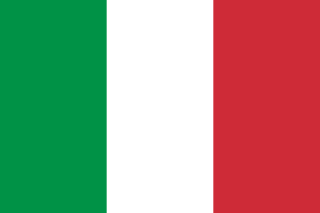
Italy
Italian Republic
Population: UN WPP 2024, revision 1, projection for 1 July 2026. Sources and methodology.
Geography and territory
Italy forms a boot-shaped peninsula reaching into the heart of the Mediterranean Sea, one of the most instantly recognizable outlines on the planet. Covering 301,340 square kilometers, it borders France, Switzerland, Austria, and Slovenia to the north, and encircles two microstates, San Marino and Vatican City, entirely within its territory. The country also includes the large islands of Sicily and Sardinia, along with numerous smaller archipelagos scattered across its surrounding seas.
The Alps form Italy’s natural northern boundary, with peaks exceeding 4,000 meters. The Apennine range runs the length of the peninsula from north to south like a spine, dividing the Adriatic and Tyrrhenian watersheds. The Po Valley, Italy’s largest plain, ranks among the most fertile agricultural regions in Europe. The country has roughly 7,600 kilometers of coastline, washed by the Tyrrhenian, Adriatic, Ionian, and Ligurian seas.
Italy sits in a geologically active zone, home to volcanoes such as Mount Etna in Sicily, the largest active volcano in Europe, Vesuvius near Naples, and Stromboli in the Aeolian Islands. The climate varies considerably across the country: alpine in the northern mountains, continental across the Po Valley, and classically Mediterranean in the center and south, with hot, dry summers and mild winters. Lakes such as Garda, Como, and Maggiore grace the alpine foothills of the north, drawing visitors to their shores year-round.
Italy’s administrative structure reflects its long history of regional autonomy, with the country divided into twenty regions, each possessing its own capital, distinct cuisine, and, in many cases, its own dialect or minority language. Five of these regions, including Sicily, Sardinia, and the alpine Trentino-Alto Adige, enjoy special autonomous status granting them additional legislative powers. This administrative patchwork echoes the centuries during which the peninsula was divided among independent city-states, kingdoms, and papal territories before unification.
History
Italy gave rise to one of the most influential civilizations in human history. The Etruscans, the Greek colonists of Magna Graecia, and various Italic peoples preceded the rise of Rome, which grew from a small city-state into the center of an empire that dominated the entire Mediterranean basin for centuries. The Roman Empire bequeathed to the world its system of law, engineering, monumental architecture, the Latin language from which the Romance languages descend, and a political and administrative organization without precedent in the ancient world.
After the fall of the Western Roman Empire in 476, the Italian peninsula fragmented into a patchwork of states, duchies, and republics. That very fragmentation, however, became fertile ground for the Renaissance, the cultural movement that emerged in Florence in the fourteenth century and transformed European art, science, and thought. Figures such as Leonardo da Vinci, Michelangelo, Raphael, Galileo Galilei, and Dante Alighieri remain foundational pillars of Western civilization.
Italian unification, known as the Risorgimento, was completed in 1861 under leaders including Giuseppe Garibaldi, Camillo Cavour, and Victor Emmanuel II, though Rome itself was not annexed to the new kingdom until 1870. Italy fought in both World Wars, and following the collapse of Mussolini’s fascist regime, it became a republic in 1946 through a national referendum that also abolished the monarchy. The postwar decades brought the so-called Italian economic miracle, which turned a largely agricultural country into an industrial power within a generation. Italy was a founding member of the European Economic Community and remains a pillar of the European Union today.
Culture and society
Italy’s cultural contribution to Western civilization is almost impossible to overstate. In the visual arts, from Giotto to Caravaggio and from Botticelli to Modigliani, Italy has produced an unrivaled concentration of artistic genius. Classical music has deep Italian roots as well: opera was born in Italy at the end of the sixteenth century, and composers such as Verdi, Puccini, Rossini, and Vivaldi created enduring masterpieces. Even the vocabulary of music itself — allegro, forte, piano, soprano — is Italian.
Italian cinema has left an indelible mark on film history. Directors such as Federico Fellini, Luchino Visconti, Vittorio De Sica, Pier Paolo Pasolini, and Roberto Benigni created works recognized the world over. Italian fashion, with houses like Gucci, Prada, Armani, Versace, Dolce & Gabbana, and Valentino, dominates international runways, and Milan is considered one of the world’s fashion capitals.
Italian society places great value on family, community life, and remarkable regional diversity. Nearly every region, city, and town maintains its own traditions, dialects, and culinary specialties. Soccer is a genuine national passion, with Serie A ranked among the most prestigious leagues in the world. Italian festivals, from the Carnival of Venice to the Palio di Siena, reflect a culture that remains vividly alive and deeply rooted in its history.
Economy
Italy is the third-largest economy in the eurozone and one of the largest in the world by nominal GDP, with output of roughly $2.55 trillion. Its economy is marked by a notable divide between an industrialized, prosperous north and a historically less developed south. The productive fabric of the country is dominated by small and medium-sized enterprises, many of them family-run, specializing in high-quality manufacturing.
Italy is a powerhouse in fashion and luxury goods, in the automotive industry with marques such as Ferrari, Lamborghini, Maserati, Fiat, and Alfa Romeo, and in precision mechanical manufacturing. The food industry is another economic pillar: Italy is Europe’s largest wine producer and one of the world’s leading exporters of pasta, olive oil, cheese, and cured meats. Italian industrial design, prized for its blend of aesthetics and function, enjoys worldwide recognition.
Tourism is a vital sector of the Italian economy, drawing more than 60 million international visitors annually and making Italy one of the five most visited countries on Earth. The country’s cultural and historical heritage, including 58 UNESCO World Heritage Sites — more than any other nation — represents an economic asset of the first order. Banking, telecommunications, and energy round out a diversified economic structure, and Italy’s extensive high-speed rail network and busy port cities such as Genoa and Trieste continue to support its role as a logistical crossroads for goods moving across southern Europe.
Food and cuisine
Italian cuisine is arguably the most popular and widespread in the world. Built on fresh, seasonal, top-quality ingredients, it has won over palates on every continent. Each region offers its own culinary universe: Neapolitan cooking with pizza as its universal emblem, Bolognese cuisine with its celebrated ragù, Sicilian cooking shaped by Arab and Greek influences, and Tuscan cuisine with its understated elegance built on simple farm produce.
Pasta, made in more than 350 different shapes, is the quintessential symbol of Italian cooking. Milanese risotto, Roman carbonara, Emilian lasagna, and potato gnocchi are all dishes that belong to the world’s shared culinary heritage. Italian cheeses such as Parmigiano Reggiano, buffalo mozzarella, gorgonzola, and pecorino, along with cured meats like Prosciutto di Parma and Bologna’s mortadella, are globally renowned products protected by strict designations of origin.
Italy produces more than 50 million hectoliters of wine each year, rivaling France for the title of the world’s largest wine producer. Regions such as Tuscany, Piedmont, Veneto, and Sicily produce world-class wines, from Barolo and Chianti to Prosecco and Amarone. Coffee culture is treated almost as sacred: espresso, cappuccino, and macchiato all originated in Italy. Artisanal gelato, Sicilian cannoli, and tiramisu round out an unparalleled culinary offering.
Tourism and landmarks
Italy is one of the most sought-after travel destinations in the world, and it is easy to see why: the country holds the largest number of UNESCO World Heritage Sites of any nation, at 58. Rome, the Eternal City, offers the Colosseum, the Roman Forum, the Pantheon, the Trevi Fountain, the Spanish Steps, and, within its boundaries, Vatican City with St. Peter’s Basilica and the Sistine Chapel. Nearly every corner of Rome bears living witness to more than two thousand years of history.
Florence is the cradle of the Renaissance, home to the Uffizi Gallery, the Duomo with Brunelleschi’s dome, the Ponte Vecchio, and Michelangelo’s David. Venice, built across more than 100 islands, enchants visitors with its canals, gondolas, St. Mark’s Square, and the Doge’s Palace. Milan houses Leonardo’s Last Supper and its Gothic cathedral, and serves as the country’s capital of fashion and design. Naples and the Amalfi Coast offer dreamlike scenery alongside the ruins of Pompeii and Herculaneum.
Tuscany, with its vineyard- and olive-grove-covered hills, medieval towns such as San Gimignano and Siena, and cities like Pisa with its famous leaning tower, is a rural paradise. The Italian Lakes region, the colorful cliffside villages of Cinque Terre, the island of Capri, the crystalline beaches of Sardinia, and Sicily with its layered cultural history and majestic Mount Etna round out an extraordinarily rich and diverse tourism landscape.
Fun facts about Italy
- Italy is estimated to hold between 60% and 70% of the world’s art treasures, giving it more works of art per square kilometer than any other country.
- The University of Bologna, founded in 1088, is the oldest continuously operating university in the Western world.
- Italians affectionately call their country “lo Stivale,” the Boot, a nickname children learn from an early age because of the peninsula’s unmistakable shape.
- Italy has more than 1,500 lakes, with Lake Garda ranking as the largest.
- The Margherita pizza was created in Naples in 1889 in honor of Queen Margherita of Savoy, its toppings echoing the colors of the Italian flag: tomato for red, mozzarella for white, and basil for green.
Italy in numbers
Latest World Bank and UNDP observations, each with its own year. “World median” is the middle value among the countries that report the same indicator; “#” ranks from the highest value.
Population since 1960
Italy had 50.2 million people in 1960 and 58.9 million in 2025 — 17% more.
The population peaked at 60.3 million in 2014 and has since declined.
People
69.7% of people live in towns and cities (world median 63.4%). 11.7% are under 15 and 25.1% are 65 or older — one of the oldest age structures in the world. Women have 1.18 children on average, below the replacement level of about 2.1 needed to keep a population stable in the long run without migration.
Economy
The economy grew by 0.5% in real terms in 2025. Consumer prices rose by 1.5% in 2025. Services make up the largest share of output (64.5% of GDP); agriculture contributes 2.1%.
Development and environment
UNDP rates human development in Italy as very high, with an index of 0.915 in 2023 (rank 29 of 193). 89.2% of people use the internet and 100.0% have access to electricity. Forest covers 31.8% of the land (world median 32.8%).
Sources: World Bank, World Development Indicators (CC BY 4.0), most recent observation from 2015 onward; UNDP Human Development Report 2025. Retrieved 2026-10-10. Sector shares need not add up to 100% because taxes and subsidies on products are excluded. Missing values are left blank rather than estimated. Sources and methodology.
Climate of Italy
Averaged across Italy, the warmest month is August (22.6 °C) and the coolest is January (4.9 °C), a seasonal swing of 17.7 °C. The annual mean is 13.2 °C.
About 816 mm of precipitation falls in a typical year. November is the wettest month (105 mm) and July the driest (45 mm).
Show monthly values as a table
| Month | Mean °C | Low °C | High °C | Precipitation, mm |
|---|---|---|---|---|
| January | 4.9 | 1.6 | 8.1 | 63 |
| February | 5.4 | 1.8 | 9.0 | 55 |
| March | 8.2 | 4.2 | 12.2 | 57 |
| April | 11.4 | 7.2 | 15.7 | 67 |
| May | 15.7 | 11.2 | 20.2 | 66 |
| June | 19.8 | 15.1 | 24.6 | 58 |
| July | 22.5 | 17.6 | 27.5 | 45 |
| August | 22.6 | 17.8 | 27.5 | 52 |
| September | 18.5 | 14.2 | 22.9 | 80 |
| October | 14.3 | 10.6 | 18.0 | 91 |
| November | 9.6 | 6.4 | 12.9 | 105 |
| December | 5.8 | 2.8 | 8.9 | 78 |
Figures are 1991–2020 averages across the whole land area of Italy, from the World Bank Climate Change Knowledge Portal, CRU TS 4.08 (CC BY 4.0). They are not readings from one weather station: the capital, the coast and high ground can be much warmer, cooler, wetter or drier.
Travel essentials for Italy
The practical details visitors ask about first. Traffic in Italy drives on the right, like most of the world. Mains electricity is 230 V at 50 Hz, so devices made only for 110–120 V (common in North America) need a converter unless they are dual-voltage — most phone and laptop chargers are.
- Emergency number
- 112
- Driving side
- Right
- Plug types
- Type C, Type F, Type LC: two round pins (Europlug); F: two round pins with side earth clips (Schuko); L: three round pins in a row (Italian)
- Voltage
- 230 V50 Hz
- Dialling code
- +39From abroad: your exit code, then 39 and the number
- Currency
- Euro (EUR)
- Time zone
- CET (UTC+1)Current local time in Italy
Compiled from IEC plug and voltage standards, national emergency-service listings and the UN road-traffic conventions. Emergency numbers and local coverage can change — confirm them locally on arrival. Italy's internet domain is .it.
Where Italy ranks in the world
Each position counts only the countries with data in that ranking guide. First place is the highest value — for price levels, the most expensive. Select a card to see the full table.
- Population25th of 19658.9 millionUN projection, July 2026
- Land area72nd of 195295,720 km²World Bank, 2023
- Population density52nd of 194199 per km²World Bank, 2023
- GDP (nominal)8th of 187$2.38TWorld Bank, 2024, current US$
- GDP per capita27th of 187$40,430World Bank, 2024, current US$
- Life expectancy9th of 19484.0 yearsWorld Bank, 2024
- Price level23rd of 16582 (US = 100)ICP 2021, household consumption
Bordering countries of Italy


Compare Italy with another country
Frequently asked questions about Italy
What is the capital of Italy?
The capital of Italy is Rome.
What is the population of Italy?
The UN World Population Prospects projection for Italy is 58,926,166 people (58.9 million) on 1 July 2026. National statistical offices may publish different estimates.
What language is spoken in Italy?
The official language of Italy is Italian.
What currency is used in Italy?
The currency of Italy is the Euro (EUR).
How big is Italy?
Italy covers an area of 301,340 km².
What type of government does Italy have?
Italy is a parliamentary republic.
Which countries border Italy?
Italy shares land borders with France, Switzerland, Austria, Slovenia, San Marino, Vatican City.
What is the highest point in Italy?
The highest point in Italy is Mont Blanc de Courmayeur (4,748 m).


